

Overview
Setting the stage
Having had multiple recent discussions related to portfolio management, I thought I’d share some thoughts relative to disciplined operations, in terms of the aforementioned subject and on the associated toolsets as well. This is a substantial topic, but I’ll try to hit the main points and address more detailed questions as and when they arise.
In getting started, given all the buzz around GenAI, I asked ChatGPT “What are the most important dimensions of portfolio management in technology?” What was interesting was that the response aligned with most discussions I’ve had over time, which is to say that it provided a process-oriented perspective on strategic alignment, financial management, and so on (a dozen dimensions overall), with a wonderfully summarized description of each (and it was both helpful and informative). The curious part was that it missed the two things I believe are most important: courageous leadership and culture.
The remainder of this article will focus more on the process dimensions (I’m not going to frame it the same as ChatGPT for simplicity), but I wanted to start with a fundamental point: these things have to be about partnership and value first and process second. If the focus becomes the process, there is generally something wrong in the partnership or the process is likely too cumbersome in how it is designed (or both).
Portfolio Management
Partnership
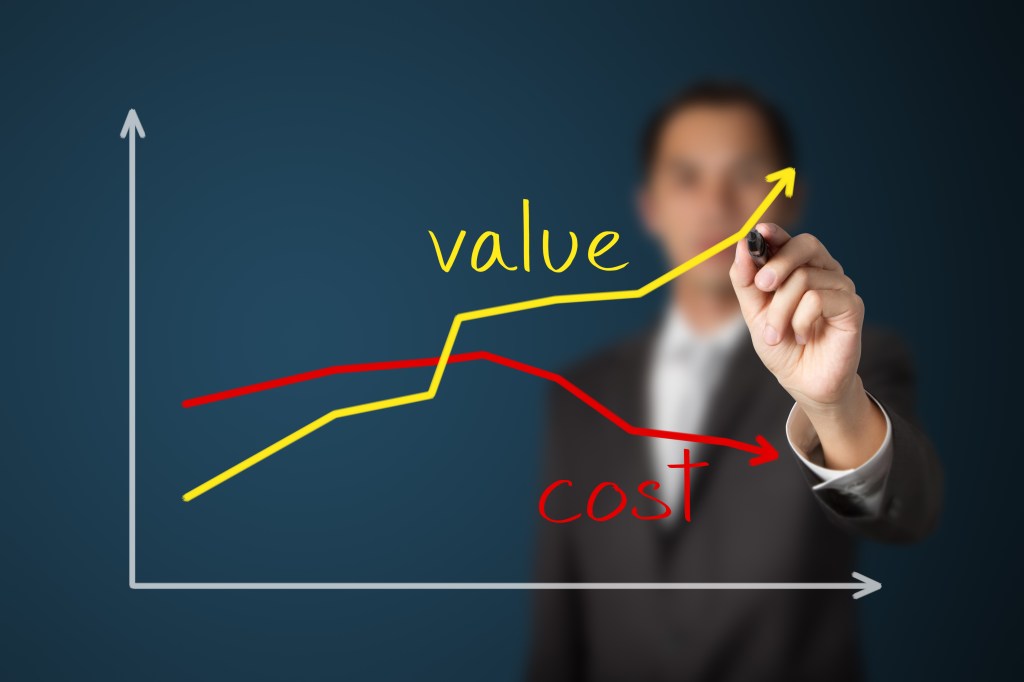
Portfolio management needs to start with a fundamental partnership and shared investment between business and technology leaders on the intended outcome. Fortunately, or unfortunately, where the process tends to get the most focus (and part of why I’ve heard it so much in the last couple years) is in a difficult market/economy where spend management is the focus, and the intention is largely related to optimizing costs. Broadly speaking, when times are good and businesses grow, the processes for prioritization and governance can become less rigorous in a speed-to-market mindset, the demand for IT services increases, and a significant amount of inefficiency, delivery and quality issues can arise as a result. The reality is that discipline should always be a part of the process because it’s in the best interest of creating value (long- and short-term) for an organization. That isn’t to suggest artificial constraints, unnecessary gates in a process, or anything to hinder speed-to-market. Rather, the goal of portfolio management should be to have a framework in place to manage demand through delivery in a way that facilitates predictable, timely, and quality delivery and a healthy, secure, robust, and modern underlying technology footprint that creates significant business value and competitive advantage over time. That overall objective is just as relevant during a demand surge as it is when spending is constrained.
This is where courageous leadership becomes the other critical overall dimension. It’s never possible to do everything and do it well. The key is to maintain the right mix of work, creating the right outcomes, at a sustainable pace, with quality. Where technology leaders become order takers is where a significant amount of risk can be introduced that actually hurts a business over time. The primary results being that taking on too much without thoughtful planning can result in critical resources being spread too thin, missed delivery commitments, poor quality, and substantial technical debt, all of which eventually undermine the originally intended goal of being “responsive”. This is why partnership and mutual investment in the intended outcomes matters. Not everything has to be “perfect” (and the concept itself doesn’t really exist in technology anyway), but the point is to make conscious choices on where to spend precious company resources to optimize the overall value created.
End-to-End Transparency
Shifting focus from the direction to the execution, portfolio management needs to start with visibility in three areas:
- Demand management – the work being requested
- Delivery monitoring – the work being executed
- Value realization – the impact of what was delivered
In demand management, the focus should ideally be on both internal and external factors (e.g., business priorities, customer needs, competitive and industry trends), a thoughtful understanding of the short- and long-term value of the various opportunities, the requirements (internal and external) necessary to make them happen, and the desired timeframe for those results to be achieved. From a process standpoint, notice of involvement and request for estimate (RFE) processes tend to be important (depending on the scale and structure of an organization), along with ongoing resource allocation and forecast information to evaluate these opportunities as they arise.
Delivery monitoring is important, given the dependencies that can and do exist within and across efforts in a portfolio, the associated resource needs, and the expectations they place on customers, partners, or internal stakeholders once delivered. As and when things change, there should be awareness as to the impact of those changes on upcoming demand as well as other efforts within a managed portfolio.
Value realization is a generally underserved, but relatively important part of portfolio management, especially in spending constrained situations. This level of discipline (at an overall level) is important for two primary reasons: first, to understand the efficacy of estimation and planning processes in the interest of future prioritization and planning and, second, to ensure investments were made effectively in the right priorities. Where there is no “retrospective”, a lot of learnings may be being lost in the interest of continuous improvement and operational efficiency and effectiveness over time (ultimately having an adverse impact on business value created).
Maintaining a Balanced Portfolio
Two concepts that I believe are important to consider in how work is ultimately allocated/prioritized within an IT portfolio:
- Portfolio allocation – the mix of work that is being executed on an ongoing basis
- Prioritization – how work is ultimately selected and the process for doing so
A good mental model for portfolio allocation is a jigsaw puzzle. Some pieces fit together, others don’t, and whatever pieces are selected, you ultimately are striving to have an overall picture that matches what you originally saw “on the box”. While you also can operate in multiple areas of a puzzle at the same time, you also generally can’t focus in on all of them concurrently and expect to be efficient on the whole.
What I believe a “good” portfolio should include is four key areas (with an optional fifth):
- Innovation – testing and experimenting in areas where you may achieve significant competitive advantage or differentiation
- Business Projects – developing solutions that create or enable new or enhanced business capabilities
- Modernization – using an “urban renewal” mindset to continue to maintain, simplify, rationalize, and advance your infrastructure to avoid significant end of life, technical debt, or other adverse impacts from an aging or diverse technology footprint
- Security – continuing to leverage tools and technologies that manage the ever increasing exposure associated with cyber security threats (internal and external)
- Compliance (where appropriate) – investing in efforts to ensure appropriate conformance and controls in regulatory environments / industries
I would argue that, regardless of the level of overall funding, these categories should always be part of an IT portfolio. There can obviously be projects or programs that provide forward momentum in more than one category above, but where there isn’t some level of investment in the “non-business project” areas, likely there will be a significant correction needed at some point of time that could be very disruptive from a business standpoint. It is probably also worth noting that I am not calling out a “technology projects” category above on purpose. From my perspective, if a project doesn’t drive one of the other categories, I’d question what value it creates. There is no value in technology for technology’s sake.
From a prioritization standpoint, I’ve seen both ends of the spectrum over the course of time: environments where there is no prioritization in place and everything with a positive business case (and even some without) are sent into execution to ones where there is an elaborate “scoring” methodology, with weights and factors and metrics organized into highly elaborate calculations that create a false sense of “rigor” in the efficacy of the process. My point of view overall is that, with the above portfolio allocation model in place, ensuring some balance in each of the critical categories of spend, a prioritization process should include some level of metrics, with an emphasis on short- and long-term business/financial impact as well as a conscious integration of the resource commitments required to execute the effort by comparison with other alternatives. As important as any process, however, is the discussions that should be happening from a business standpoint to ensure the engagement, partnership, and overall business value being delivered through the portfolio (the picture on the box) in the decisions made.
Release Management
Part of arriving at the right set of work to do also comes down to release management. A good analogy for release management is the game Tetris. In Tetris, you have various shaped blocks dropping continually into a grid, with the goal of rotating and aligning them to fit as cleanly with what is already on the radar as possible. There are and always will be gaps and the fit will never be perfect, but you can certainly approach Tetris in a way that is efficient and well-aligned or in a way that is very wasteful of the overall real estate with which you have to work.
This is great mental model for how project planning should occur. If you do a good job, resources are effectively utilized, outcomes are predictable, there is little waste, and things run fairly smoothly. If you don’t think about the process and continually inject new work into a portfolio without thoughtful planning as to dependencies and ongoing commitments, there can and likely will be significant waste, inefficiency, collateral impact, and issues in execution.
Release management comes down to two fundamental components:
- Release strategy – the approach to how you organize and deliver major and minor changes to various stakeholder groups over time
- Release calendar – an ongoing view of what will be delivered at various times, along with any critical “T-minus” dates and/or delivery milestones that can be part of a progress monitoring or gating process used in conjunction with delivery governance processes
From a release strategy standpoint, it is tempting in a world of product teams, DevSecOps, and CI/CD pipelines to assume everything comes down to individual product plans and their associated release schedules. The two primary issues here are the time and effort it generally takes to deploy new technology and the associated change management impact to the end users who are expected to adopt those changes as and when they occur. The more fragmented the planning process, the more business risk there is that ultimately end users or customers will be either under or overserved at any given point in time, where a thoughtful release strategy can help create predictable, manageable, and sustainable levels of change over time across a diverse set of stakeholders being served.
The release calendar, aside from being an overall summary of what will be delivered when and to whom, also should ideally provide transparency into other critical milestones in the major delivery efforts so that, in the event something moves off plan (which is a very normal occurrence in technology and medium to larger portfolios), the relationship to other ongoing efforts can be evaluated from a governance standpoint to determine whether any rebalancing or slotting of work is required.
Change Management
While I won’t spend a significant amount of time on this point, change management is often an area where I’ve seen the process managed very well and relatively poorly. The easy part is generally managing change relative to a specific project or program and that governance often exists in my experience. The issue that can arise is when the leadership overseeing a specific project is only taking into account the implications of change on that effort alone, and not the potential ripple effect of a schedule, scope, or financial adjustment on the rest of the portfolio, future demand, or on end users in the event that releases are being adjusted.
On Tooling
Pivoting from processes to tools, at an overall level, I’m generally not a fan of over-engineering the infrastructure associated with portfolio management. It is very easy for such an infrastructure to take a life of its own, become a significant administrative burden that creates little value (beyond transparency), or contain outdated and inaccurate information to the degree that the process involves too much data without underlying ownership and usage of the data obtained.
The goal is the outcome, not the tools.
To the extent that a process is being established, I’d generally want to focus on transparency (demand through delivery) and a healthy ongoing discussion of priorities in the interest of making informed decisions. Beyond that, I’ve seen a lot of reporting that doesn’t generally result in any level of actions being taken, which I consider to be very ineffective from a leadership and operational standpoint.
Again, if the process is meant to highlight a relationship problem, such as a dashboard being created requiring a large number of employees to capture timesheets to be rolled up, marked to various projects, all to have a management discussion to say “we’re over allocated and burning out our teams”, my question would be why all of that data and effort was required to “prove” something, whether there is actual trust and partnership, whether there are other underlying delivery performance issues, and so on. The process and tools are there to enable effective execution and the creation of business value, not drain effort and energy that could better be applied in delivery with administrivia.
Wrapping Up
Overall, having spent a number of years seeing well developed and executed processes as well as less robust versions of the same, effective portfolio management comes down to value creation. When the focus becomes about the process, the dashboard, the report, the metrics, something is amiss in my experience. It should about informing engaged leadership, fostering partnership, enabling decisions, and creating value. That is not to say that average utilization of critical resources (as an example) isn’t a good thing to monitor and keep in mind, but it’s what you do with that information that matters.
I hope the ideas were worth considering. Thanks for spending the time to read them. Feedback is welcome as always.
-CJG 07/29/2024








 Organized Chaos