Having spent time on an extended road trip the last couple months, I had the ability to reflect on a number of things, both personal and professional. In the professional sense: the journey I’ve been on across nearly thirty-two years and seven employers, what has worked, where I’ve had challenges, what I’ve learned, and, looking forward, what I’d like to learn and to be part of my next opportunity on the road ahead. A critical element in that experience certainly relates to culture and the ability to both be valued and make a difference as part of an organization.
To that end, while the backlog of topics for this blog is quite expansive already, I thought that it would be worth sharing some thoughts on culture as a critical component in setting the stage for excellence in an organization.
The remainder of this article will focus on culture at an overall level as well as a set of core values that I believe are a good starting point for what healthy workplace environment should include… As with all things on my blog, this is my point of view and I’m definitely interested in other ways of thinking about this, values that are important that I may have overlooked, or questions on what is presented… the insight gained through the dialogue, especially where culture is concerned, can be extremely valuable.
Looking Beyond the Language
Culture in Action
Action, Not Words.
This simple phrase pretty well sums up how I feel about culture at an overall level. Culture is not about what you write down or say publicly, culture is about how you behave and what you value when it matters or when no one is looking. The latter point is akin to the question of whether you would run a red light in the middle of nowhere in the middle of the night. Some people definitely would… and it’s the same way with culture.
Having been employed by seven organizations and worked with many clients who have had cultures of their own, I’ve seen many variations of this over the years. From places where the culture is relegated to a tagline printed across a set of internal collateral, to sets of values or principles that are a combination of words or phrases and a contextual explanation of what they are meant to represent in practice. I’ve seen them referenced rarely and frequently, depending on the organization. I’ve also seen where what is said publicly is completely different than what happens privately through words, actions, or both. And, in one case, I’ve seen where there was a wonderful alignment of what was said to what was put into practice and reinforced across the organization…
The last example was in my early days at Sapient and its core values in the late 90s. While I feel strongly about not mentioning any specific companies in the course of my writing, this is a case where there was such a concerted effort to live into the culture that it seems appropriate to acknowledge the organizational accomplishment. Arguably, as the company grew and went through a period of acquisitions, evolving and adapting that culture became a challenge, but it was something that went far beyond words on a page to something we, as employees, aspired to, and that’s definitely a good thing. The fact that I remember the original and (eventually) modified core values over twenty years since I left the organization says something about the level to which we internalized them at the time. I also remember how the phrase “In the spirit of Openness…” (one of our core values) as the opening to a sentence meant that you were about to get some direct, unfiltered feedback about something you needed to do differently, because it didn’t align to the culture or expectations of the organization as a whole. It was brutal feedback at times, but it applied equally to everyone, from the co-CEOs to the developers, and something about that made it feel more acceptable and genuine, however it may have been delivered in the moment. I also remember a client remarking to us in a sales meeting that, when they asked us about our culture, everyone in the team nearly jumped out of their chair or had a story to tell. It was something we fundamentally believed in, and that energy and excitement was palpable. It also translated into the experience we created for our clients (as part of “Client-Focused Delivery”) as well as a non-existent attrition rate we used to talk about in Chicago because we didn’t lose a single employee for the first eighteen months I was in the office which, in consulting, is nearly unheard of.
So, with that as the benchmark on the positive side, suffice is to say that I’ve seen other organizations show up differently, and with varying levels of impact on morale, performance, attrition, and other things that matter from a business perspective. The point is consistency in words and actions, because values become the pillars upon which an organization establishes the foundation for operating performance. They are the rules of the road and, when they aren’t followed consistently, employee experience and ultimately business performance will suffer.
Culture in Applicability
All animals are equal, but some animals are more equal than others. (Animal Farm, George Orwell)
In concert with culture being action-oriented within an organization, the concept that it apply equally is also critical to giving it credibility at a broader level, which is why I thought of the Orwell quote in this regard.
To the degree that there is a different set of rules that apply to “leadership” from the remainder of an organization, it can cause a ripple effect whereby people develop an “us and them” mentality and, by extension, a negative perception and lack of trust in senior leaders, regardless of the messaging they hear in public forums. That perception can extend to strong performers not wanting to contribute at a stand out level for fear of becoming part of that environment, which clearly can and would hinder overall organizational results over time. I do believe the standards for behavior and expectations of senior leaders should be higher as a consequence of their increased responsibilities to an organization, but with regard to the subject of this article, that would translate into being more true to the culture as its principal advocates.
The Foundation for a Healthy Environment
So, if given a blank sheet of paper, below are the core values I would start with (as part of a leadership discussion) in the interest of trying to establish a healthy and productive workplace.
Integrity
Culture has to start with an intention to do the right thing, promote honesty, and discourage passive aggressive behaviors. This applies to how business matters are handled internally and externally, with high ethical standards that are fair but don’t waiver. This is probably the most challenging core value to establish consistently in an organization in my experience, which is why I put it first on the list.
Respect
This core value is about treating everyone fairly and consistently, regardless of their background and experience, ensuring their voice is heard, and that inclusive diversity is part of the workplace, including its representation in leadership.
Transparency
Transparency is critical in establishing an environment of trust, free of unspoken agendas, promoting an environment where employees can seek understanding, ask questions, and engage in dialogue surrounding critical decisions and actions in the interest of advancing the organization overall. People with nothing to hide, hide nothing… and, notwithstanding situations that require confidentiality for business reasons, my experience of people who are not open with their intentions and actions has generally not been very positive.
Collaboration
An environment that promotes respect also should recognize that there is power in collaboration that extends the capabilities of an organization far more than a group of “individual contributors” working in silos ever could (something I discuss in The Power of N). This also implies a degree of humility within and across an organization, as the idea an individual or team is “better than” others in some form or fashion can create an environment that excludes people or ideas in a way that ultimately hinders growth and evolution.
Leadership
This core value can be somewhat of a catchall given its implications are fairly broad. I will fall back on the Sapient definition of “getting a group of people from where they are to where they need to be” as a characterization, but the overall point is to accept, drive, and encourage innovation, change, and evolution as critical to business success.
Impact
Finally, I believe it’s important to focus on value creation, in whatever way that manifests itself. Results ultimately matter and should be part of how a culture and set of behaviors across an organization are established and evaluated on an ongoing basis.
Wrapping Up
I know there are many dimensions to establishing a healthy and thriving culture beyond what I’ve covered here, but minimally I wanted to share some concepts in the interest of stirring discussion on something that is critical to establishing operating agility and performance.
Above anything else, one thing is definitely true: culture can change in a negative direction quickly, particularly with poor and/or inexperienced leadership, but to make culture healthy and thrive to the extent it becomes a sustainable part of an organization takes a lot of time and reinforcement because of the level of behavioral change involved.
Some questions to consider:
Are the core values in an organization well established and defined in a manner such that they can be applied to people’s work on a daily basis?
Do senior leaders live by those values at a level equal or greater to that which they expect from the average employee?
Is the culture strong enough and understood to create value at a level that the average employee would advocate it as a reason to join or work with the organization to a third-party?
To what extent is “culture” a reason articulated as a reason people stay or exit an organization?
I hope the ideas were worth considering. Thanks for taking the time to read them. Feedback is welcome as always.
I’ve spent a reasonable amount of time in recent years considering data strategy and how to architect an enterprise environment responsive and resilient to change. What’s complicated matters is the many dimensions to establishing a comprehensive data strategy and the pace with which technologies and solutions have and continue to be introduced, none of which appears to be slowing down… quite the opposite. At the same time, the focus on “data centricity” and organizations’ desire to make the most of the insights embedded within and across their enterprise systems has created a substantial pull to drive experimentation and create new solutions aimed at monetizing those insights for competitive advantage. With the recent advent of Generative AI and large language models, the fervor surrounding analytics has only garnered more attention as to the potential it may create, not all to a favorable end.
The problem with the situation is that, not unlike many other technology “gold rush” situations that have occurred over the last thirty-one years I’ve been working in the industry, the lack of structure and discipline (or an overall framework) to guide execution can lead to a different form of technical debt, suboptimized outcomes, and complexity that ultimately doesn’t scale to the enterprise. Hopefully this article will unpack the analytics environment and provide a way to think about the various capabilities that can be brought to bear in a more structured approach, along with the value in doing so.
Ultimately, analytics value is created in insight-driven, orchestrated actions taken, not on presentment or publication of data itself.
Drawing a “Real World” Comparison
The anecdotal hallmark of “traditional business intelligence” is the dashboard, which in many cases, reflects a visual representation of data contained in one or more underlying system, meant to increase end user awareness of the state of affairs, whatever the particular business need may be (this is a topic I’ve peripherally addressed in my On Project Health and Transparency article).
Having leased a new car last summer, I was both impressed and overwhelmed by the level of sophistication available to me through the various displays in the vehicle. The capabilities have come a long way from a bunch of dials on the dashboard with a couple lights to indicate warnings. That being said, there was a simplicity and accessibility to that design. You knew the operating condition of the vehicle (speed, fuel, engine temp, etc.), were warned about conditions you could address (add oil, washer fluid), and situations where expert assistance might be needed (the proverbial “check engine” light).
What impressed me about the current experience design was the level of configurability involved, what I want to see on each of the displays, from advanced operating information, to warnings (exceeding the speed limit, not that this ever happens…), to suggestions related to optimizing engine performance and fuel efficiency based on analytics run over the course of a road trip.
This isn’t very different than the analytics environment available to the average enterprise, the choices are seemingly endless, and they can be quite overwhelming if not managed in some way. The question of modeling the right experience comes down to this: starting with the questions/desired outcome, then working backwards in terms of capabilities and data that need to be brought to bear to address those needs. Historical analytics can feel like it becomes a “data- or source-forward” mental model, when the ideal environment should be defined from the “outcome-backwards”, where the ultimate solution is rooted in a problem (or use case) meant to be solved.
Where Things Break Down
As I stated in the opening, the analytics landscape has gotten extremely complex in recent years and seemingly at an increasing pace. What this can do, as is somewhat the case with large language models and Generative AI right now, is create a lot of excitement over the latest technology or solution without a sense of how something can be used or scaled within and across an enterprise. I liken this to a rush to the “cool” versus the “useful”, and it becomes a challenge the minute it becomes a distraction from underlying realities of the analytics environment.
Those realities are:
Business ownership and data stewardship are critical to identifying the right opportunities and unlocking the value to be derived from analytics. Technology is normally NOT the underlying issue in having an effective data strategy, though disciplined delivery can obviously be a challenge depending on the capabilities of the organization
Not all data is created equal, and it’s important to discriminate in what data is accessed, moved, stored, curated, governed… because there is a business and technology cost for doing so
Technologies and enabling capabilities WILL change, so the way they are integrated and orchestrated is critically important to leveraging them effectively over time
It is easy to develop solutions that solve a specific need or use case but not to scale and integrate them as enterprise-level solutions. In an Intelligent Enterprise, this is where orders of magnitude in value and longer-term competitive advantage is created, across digitally connected ecosystems (including those with partners), starting with effective master data management and extending to newer capabilities that will be discussed below
At an overall level, while it’s relatively easy to create high-level conceptual diagrams or point solutions in relation to data and analytics, it takes discipline and thought to architect an environment that will produce value and agility at scale… that is part of what this article is intended to address.
Thoughts on “Data Centricity”
Given there is value to be unlocked through an effective data strategy, “data centricity” has become fairly common language as an anchor point in discussion. While I feel that calling attention to opportunity areas can be healthy and productive, there is also a risk that concepts without substance (the antithesis of what I refer to as “actionable strategies”) can become more of a distraction than a facilitator of progress and evolution. A similar situation arguably exists with “zero trust” right now, but that’s a topic worthy of its own article at a future date.
In the case of being “data centric”, the number of ways the language can be translated has seemed problematic to me, largely because I fundamentally believe data is only valuable to the extent it drives a meaningful action or business outcome. To that end, I would much rather be “insight-centric” or “value-focused”, “action-oriented”, or some other phrase that leans towards what we are doing with the data we acquire and analyze, not the fact that we have it, can access, store, or display it. Those things may be part of the underlying means to an end, but they aren’t the goal in itself, and place emphasis on the road versus the destination of a journey.
To the extent that “data centricity” drives a conversation on what data a business has that may, if accessed and understood, create value, fuel innovation, and provide competitive advantage, I believe there is value in pursuing it, but a robust and thoughtful data strategy requires end-to-end thinking at a deeper level than a catch phrase or tagline on its own.
What “Good” Looks Like
I would submit that there are two fundamental aspects of having a robust data strategy once you address business ownership and stewardship as a foundational requirement: asking the right questions, and architecting a resilient environment.
Asking the Right Questions
Arguably the heading is a bit misleading here, because inference-based models can suggestimprovements to move from an existing to a desired state, but the point is to begin with the problem statement, opportunity, or desired outcome, and work back to the data, insights, and actions required to achieve that result. This is a business-focused activity and is, therefore, why establishing ownership and stewardship is so critical.
“We can accomplish X if we optimize inventory across Y locations while maintaining a fulfillment window of Z”
The statement above is different than something more “traditional” in the sense of producing a dashboard that shows “inventory levels across locations”, “fulfillment times by location”, etc. that then is intended to inform someone who ultimately may make a decision independent of secondary impacts or, better yet, recommends or enables actions to keep the inventory ecosystem calibrated in a dynamic way that continuously recalibrates to changing conditions, within defined business constraints.
While the example itself may not be perfect, the point is whether we think about analytics as presentment-focused or outcome-focused. To the degree we focus on enabling outcomes, the requirements of the environment we establish will likely be different, more dynamic, and more biased towards execution.
Architecting a Resilient Environment
With the goals identified, the technology challenge becomes about enabling those outcomes, but architecting an environment that can and will evolve as those needs change and as the underlying capabilities continue to advance in what we are able to do in analytics as a whole.
What that means, and the next section will explore, is having a structured and layered approach so that capabilities can be applied, removed, and evolved with minimal disruption to other aspects of the overall environment. This is, at its essence, a modular and composable architecture that enables interoperability through standards-based interaction across the layers of the solution in a way that will accelerate delivery and innovation over time.
The benefit to designing an interoperable environment is simple: speed, cost, and value. As I mentioned in where things tend to break down, in technology, there should always a bias towards rapid delivery. That being said, focusing solely on speed can tend to create a substantial amount of technical debt and monolithic solutions that don’t create cumulative or enterprise-level value. Short-term, they may produce impact, but medium- to longer-term, they make things considerably worse once they have to be maintained and supported and the costs for doing so escalate. Where a well-designed environment can help is in creating a flywheel effect over time to accelerate delivery using common infrastructure, integration standards, and frameworks so that the distance between idea and implementation is significantly reduced.
Breaking Down the Environment
The following diagram represents the logical layers of an analytics environment and some of the solutions or capabilities that can exist at each tier. While the diagram could arguably be drawn in various ways, the reason I’ve drawn it like this is to show the separation of concerns between where content and data originates and ultimately where it’s consumed, along with the layers of processing that can occur in between.
Having the separation of concerns defined and standards (and reference architecture) established, the ability to scale, integrate new solutions and capabilities over time, and retire or modernize those that don’t create the right level of value, becomes considerably easier than when analytics solutions are purpose built in an end-to-end manner.
The next section will elaborate on each the layers to provide more insight on why they are organized in this manner.
Consume and Engage
The “outermost” tier of the environment is the consumption layer, where all of the underlying analytics capabilities of an organization should be brought to bear.
In the interest of transforming analytics, as was previously mentioned in the context of “data centricity”, the dialogue needs to move from “What do you want to see?” in business terms to “What do you want to accomplish and how do you want that to work from an end user standpoint?”, then employing capabilities at the lower level tiers to enable that outcome and experience (both).
The latter dimension is important, because it is possible to deliver both data and insights and not enable effective action, and the goal of a modern analytics environment is to enable outcomes, not a better presentment of a traditional dashboard. This is why I’ve explicitly called out the role of a Digital Experience Platform (DXP) or minimally an awareness of how end users are meant to consume, engage, and interact with the outcome of analytics, ideally as part of an integrated experience that enables or automates action based on the underlying goals.
As analytics continue to move from passive and static to more dynamic and near real-time solutions, the role of data apps as an integrated part of applications or a digital experience for end users (internal or external) will become critical to delivering on the value of analytics investments.
Again, the requirements at this level are defined by the business goals or outcomes to be accomplished, questions to be answered, user workflows to be enabled, etc. and NOT the technologies to be leveraged in doing so. Leading with technologies is almost certainly a way to head down a path that will fail over time and create technical debt in the process.
At an overall level, the reason for separating consumption and thinking of it independent of anything that “feeds” it, is that, regardless of how good the data or insights produced in the analytics environment are, if the end user can’t take effective action upon what’s delivered, there will be little value created in the solution.
Understand and Analyze
Once the goal is established, the capabilities to be brought to bear becomes the next level of inquiry:
If there is a set of activities associated with this outcome that requires workflow, rules, and process automation, orchestration should be integrated into the solution
If defined inputs are meant to be processed against the underlying data and a result dynamically produced, this may be a case where a Generative AI engine could be leveraged
If natural language input is desired, a natural language processing engine should be integrated
If the goal is to analyze the desired state or outcome against the current environment or operating conditions and infer the appropriate actions to be taken, causal models and inference-based analytics could be integrated. This is where causal models take a step past Generative AI in their potential to create value at an enterprise level, though the “describe-ability” of the underlying operating environment would likely play a key role in the efficacy of these technologies over time
Finally, if the goal is simply to run data sets through “traditional” statistical models for predictive analytics purposes (as an example), AI/ML models may be leveraged in the eventual solution
Having referenced the various capabilities above there are three important points to understand in why this layer is critical and separated from the rest:
Any or all of these capabilities may be brought to bear, regardless of how they are consumed by an end user, and regardless of how the underlying data is sourced, managed, and exposed.
Integrating them in ways are standards-based will allow them to be applied as and when needed into various solutions to create considerable cumulative analytical capability at an enterprise level
These capabilities definitely WILL continue to evolve and advance rapidly, so thinking about them in a plug-and-play based approach will create considerable organizational agility to respond and integrate innovations as and when they emerge over time, which translates into long-term value and competitive advantage.
Organize and Expose
There are three main concepts I outlined in this tier of the environment:
Virtualization – how data is exposed and accessed from underlying internal and external solutions
Semantic Layer – how data is modeled for the purpose of allowing capabilities at higher tiers to analyze, process, and present information at lower levels of the model
Data Products – how data is packaged for the purposes of analysis and consumption
These three concepts can be implemented with one or more technologies, but the important distinction being that they offer a representation of underlying data in a logical format that enables analysis and consumption, not necessarily that they are a direct representation of the source data or content itself.
With regard to data products in particular, while there is a significant amount of attention paid to their identification and development, they represent marginal value in an overall data strategy, especially when analytical capabilities and consumption models have evolved to such a great degree. Where data products should be a focus (as a foundational step) is where the underlying organization and management of data is in such disarray that an examination of how to restructure and clean up the environment is important to reducing the chaos that exists in the current state. What that implies, however, is less distractions and potential technical debt by extension, but not the kind of competitive advantage that comes from advanced capabilities and enabled consumption. The other scenario where data products create value in themselves is when they are packaged and marketed for external consumption (e.g., credit scores, financial market data). It’s worth noting in this case, however, that the end customer is assuming the responsibility of analyzing, integrating, and consuming those products as they are not an “end” in themselves in an overall analytics value chain.
Manage, Structure, and Enrich
While I listed a number of different types of solutions that can comprise a “storage” layer in the analytics environment, the best-case scenario would be that it doesn’t exist at all. Where the storage layer creates value in analytics is providing a means to map, associate, enrich, and transform data in ways that would be too time consuming or expensive to do “on the fly” for the purposes of feeding the analytics and consumption tiers of the model. There is certainly value, for instance, in graph databases for modeling complex many-to-many relationships across data sets, marts and warehouses for dealing with structured data, and data lakes for archival, managing unstructured data, and training of analytical models, but where source data can be exposed and streamed directly to the downstream models and solutions, there will be lower complexity, cost, and latency in the overall solution.
Acquire and Transmit
As capabilities continue to advance and consumption models mature, the desire for near real-time analytics will almost certainly dominate the analytics environment. To that end, leveraging event-based processing, whether through an enterprise service or event bus, will be critical. To the degree that enterprise integration standards can be leveraged (and canonical objects, where defined), further simplification and acceleration of analytics efforts will be possible.
Given the varied capabilities across cloud platforms (AWS, Azure, and GCP), not to mention the probability that data will be distributed between enterprise systems that could be hosted in a different cloud platform than its documents (as those in Office 365), the ability to think critically about how to integrate and synthesize across platforms is also important. Without a defined strategy for managing multi-cloud in this domain in particular, costs for egress/ingress of data could be substantial depending on the scale of the analytics environment itself, not to mention the additional complexities that would be introduced into governance and compliance efforts surrounding duplicated content across cloud providers.
Generate and Provide
The lowest tier of the model is the simplest to describe, given it’s where data and content originate, which can be a combination of applications, databases, digital devices and equipment, and so forth, internal and external to an organization. Back to the original point on business ownership and stewardship of data, if the quality of data emanating from these sources isn’t managed and governed, everything downstream will bear the fruit of the poisoned tree depending on the degree of issues involved.
Given the amount of attention given to large language models and GenAI right now, I thought it was worth noting that I consider these as another form of content generation more logically associated with the other types of solutions at this tier of the analytics model. It could be the case that generated content makes its way through all the layers as a “data set” delivered directly to a consumer in the model, but by orienting and associating it with the rest of the sources of data, we create the potential to apply other capabilities at the next tiers of processing to that generated content, and thereby could enrich, analyze, and do more interesting things with it over time.
Wrapping Up
As I indicated at the opening, the modern analytics environment is complex and highly adaptive, which presents a significant challenge to capturing the value and competitive advantage that is believed to be resident in an organization’s data.
That being said, through establishing the right level of business ownership, understanding the desired outcomes, and applying disciplined thinking in how an enterprise environment is designed and constructed, there can be significant and sustainable value created for an enterprise.
I hope the ideas were thought provoking. I appreciate those taking the time to read them.
Given the challenging economic environment, I thought it would be a good time to revisit something that was an active part of my work for several years, namely IT cost optimization.
In the spirit of Excellence by Design, I don’t consider cost optimization to be a moment in time activity that becomes a priority on a periodic (“once every X years”) or reactive basis. Optimizing the value/cost ratio is something that should always be a priority in the interest of having disciplined operations, maintaining organizational agility, technical relevance, and competitive advantage.
In the consulting business, this is somewhat of a given, as most clients want more value for the money they spend on an annualized basis, especially if the service is something provided over a period of time. Complacency is the fastest path to lose a client and, consequently, there is a direct incentive to look for ways to get better at what you do or provide equivalent service at a lower cost to the degree the capability itself is already relatively optimized.
On the corporate side, however, where the longer-term ramifications of technology decisions bear out in accumulated technical debt and complexity, the choices become more complex as they are less about a project, program, or portfolio and become more focused on the technology footprint, operating model, and organizational structure as a whole.
To that end, I’ll explore various dimensions of how to think about the complexity and makeup of IT from a cost perspective along with the various levers to explore in how to optimize value/cost. I’m being deliberate in mentioning both because it is very easy to reduce costs and have an adverse impact on service quality or agility, and that’s why thoughtful analysis is important in making informed choices on improving cost-efficiency.
Framing the Problem
Before looking at the individual dimensions, I first wanted to cover the simple mental model I’ve used for many years in terms of driving operating performance:
The model above is based on three connected components that feed each other in a continuous cycle:
Transparency
We can’t govern what we can’t see. The first step in driving any level of thoughtful optimization is having a fact-based understanding of what is going on
This isn’t about seeing or monitoring “everything”. It is about understanding thecritical, minimum information that is needed to make informed decisions and then obtaining as accurate a set of data surrounding those points as possible.
Governance
With the above foundation in place, the next step is to have leadership engagement to review and understand the situation, and identify opportunities to improve.
This governance is a critical step in any optimization effort because, if there are not sustainable organizational or cultural changes made in the course of transforming, the likelihood of things returning to a similar condition will be relatively high.
Improvement
Once opportunities are identified, executing effectively on the various strategies becomes the focus, with the goal of achieving the outcomes defined through the governance process
The outcomes of this work should then be reflected in the next cycle of operating metrics and the cycle can be repeated on a continuing basis.
The process for optimizing IT costs is no different than what is expressed here: understand the situation first, then target areas of improvement, make adjustments, continue. It’s a process, not a destination. From here, we’ll explore the various dimensions of complexity and cost within IT, and the levers to consider in adjusting them.
At an Operating-Level
Before delving into the footprint itself, a couple areas to consider at an overall level are portfolio management and release strategy.
Portfolio management
Given that I am mid-way through writing an article on portfolio management and am also planning a separate one on workforce and sourcing strategy, I won’t explore this topic much beyond saying that having a mature portfolio management process can help influence cost-efficiency.
That being said, I don’t consider ineffective portfolio management to be a root cause of IT value/cost being imbalanced. An effective workforce and sourcing strategy that aligns variable capacity to sources of demand fluctuation (within reasonable cost constraints) should enable IT to deliver significant value even during periods of increased business demand. That being said, a lack of effective prioritization, disciplined estimation and planning, resource planning, and sourcing strategy in combination with each other can have significant and harmful effects on cost-efficiency and, therefore, generally provide opportunities for improvement.
Some questions to consider in this area:
Is prioritization effective in your organization? When “priority” effort arise, are other ongoing efforts stopped or delayed to account for them or is the general trend to take on more work without recalibrating existing commitments?
Are estimation and planning efforts benchmarked, reviewed, analyzed and improved, so the integrity of ongoing prioritization and slotting of projects can be done effectively?
Is there a defined workforce and sourcing strategy to align variable capacity to fluctuating demand so that internal capacity can be reallocated effectively and sourcing scaled in a way that doesn’t disproportionately have an adverse impact on cost? Conversely, can demand decline without significant need for recalibration of internal, fixed capacity? There is a situation I experienced where we and another part of the organization took the same level of financial adjustment, but they had to make 3x the level of staffing adjustment given we were operating under a defined sourcing strategy and the other organization wasn’t. This is an important reason to have a workforce and sourcing strategy.
Is resource planning handled on an FTE (e.g., role-based) or resource-basis (e.g., named resource), or some combination thereof? What is the average utilization of “critical” resources across the organization on an ongoing basis?
Release strategy
This is an area that often seems overlooked in my experience (outside product delivery environments) as a means to both improve delivery effectiveness, manage cost, and improve overall quality.
Having a structured release strategy that accounts for major and minor releases, with defined criteria and established deployment windows, versus an arbitrary or ad-hoc approach can be a significant benefit both from an IT delivery and business continuity perspective. Generally speaking, delivery cycles (in a non-CI/CD, DevSecOps-oriented environment) tend to consume time and energy that slows delivery progress. The more windows that exist, the more disruption that occurs over a calendar year. When those windows are allowed to occur on an ad-hoc basis, the complexities of integration testing, configuration management, and coordination from a project, program, and change management perspective tends to increase proportional to the number of release windows involved. Similarly, the risk of quality issues occurring within and across a connected ecosystem increases as the process for stabilizing and testing individual solutions, integrating across solutions, and managing post-deployment production issues is spread across multiple teams in overlapping efforts. Where standard integration patterns and reference architecture is in place to govern interactions across connected components, there are means to manage and mitigate risk, but generally speaking, it’s better and more cost-effective to manage a smaller set of larger, scheduled release windows than allow a more random or ad-hoc environment to exist at scale.
Applications
In the application footprint, larger organizations or those built through acquisition tend to have a fairly diverse and potentially redundant application landscape, which can lead to significant cost and complexity, both in maintaining and integrating the various systems in place. This is also true when there is a combination of significant internally (custom) developed solutions working in concert with external SaaS solutions or software packages.
Three main levers can have a significant influence along the lines of what I discuss in The Intelligent Enterprise:
Ecosystem Design
Whether one chooses to refer to this as business architecture, domain-driven design, component architecture, or something else, the goal is to identify and govern a set of well-defined connected ecosystems that are composable, made up of modular components that provide a clear business (or technical) capability or set of services
This is critical enabler to both optimizing the application footprint as well as promoting interoperability and innovation over time, as new capabilities can be more rapidly integrated into a standards-based environment
Where complexity comes about is where custom or SaaS/package solutions are integrated in a way that blurs these component boundaries and creates functional overlaps that create technical debt, redundancy, data integrity issues, etc.
Integration strategy
With a set of well-defined components, the secondary goal is to leverage standard integration patterns with canonical objects to promote interoperability, simplification, and ongoing evolution of the technology footprint over time.
Without standards for integration, an organization’s ability to adopt new, innovative technologies will be significantly hindered over time and the leverage of those investments marginalized, because of the complexity involved in bringing those capabilities into the existing environment rapidly without having refactor or rewrite a portion of what exists to leverage them.
At an overall level, it is hard to argue that technologies are advancing at a rate faster than any organization’s ability to adopt and integrate them, so having a well-defined and heavily leveraged enterprise integration strategy is critical to long-term value creation and competitive advantage.
Application Rationalization
Finally, with defined ecosystems and standards for integration, having the courage and organizational leadership to consolidate like solutions to a smaller set of standard solutions for various connected components can be a significant way to both reduce cost and increase speed-to-value over time.
I deliberately focused on the organizational aspects of rationalization, because one of the most significant obstacles in technology simplification is the courageous leadership needed to “pick a direction” and handle the objections that invariably result in those tradeoff decisions being made.
Technology proliferation can be caused by a number of things, but organizational behaviors can certainly contribute when two largely comparable solutions exist without one of them being retired solely based on resistance to change or perceived control or ownership associated with a given solution.
At a capability-level, evaluating similar solutions, understanding functional differences and associating the value with those dimensions is a good starting point for simplifying what is in place. That being said, the largest challenge in application rationalization doesn’t tend to be identifying the best solution, it’s having the courage to make the decision, commit the investment, and execute on the plan given “new projects” tend to get more organizational focus and priority in many companies than cleaning up what they already have in place. In a budget-constrained environment, the new, shiny thing tends to win in a prioritization process, which is something I’ll write about in a future article.
Overall, the larger the organization, the more opportunity may exist in the application domain, and the good news is that there are many things that can be done to simplify, standardize, rationalize, and ultimately optimize what’s in place in ways that both reduce cost and increase the agility, speed, and value that IT can deliver.
Data
The data landscape and associated technologies, especially when considering advanced analytics, has significantly added complexity (and likely associated cost) in the last five to ten years in particular. With the growing demand for AI/ML, NLP, and now Generative AI-enabled solutions, the ability to integrate, manage, and expose data, from producer to ultimate consumer has taken on significant criticality.
Some concepts that are directionally important in my opinion in relation to optimizing value/cost in data and analytics enablement:
Managing separation of concerns
Similar to the application environment, thinking of the data and analytics environment (OLTP included) as a set of connected components with defined responsibilities, connected through standard integration patterns is important to reducing complexity, enabling innovation, and accelerating speed-to-value over time
Significant technical debt can be created where the relationship of operational data stores (ODS), analytics technologies, purpose-built solutions (e.g., graph or time series databases) master data management tools, data lakes, lake houses, virtualization tools, visualization tools, data quality tools, and so on are not integrated in clear, purposeful ways.
Where I see value in “data centricity” is in the way it serves as a reminder to understand the value that can be created for organizations in leveraging the knowledge embedded within their workforce and solutions
I also, however, believe that value will be unlocked over time through intelligent applications that leverage knowledge and insights to accelerate business decisions, drive purposeful collaboration, and enable innovation and competitive advantage.Data isn’t the outcome, it’s an enabler of those outcomes when managed effectively.
Minimizing data movement
The larger the landscape and number of solutions involved in moving source data from the original producer (whether it’s a connected application, device, or piece of equipment) to the end consumer (however that consumption is enabled) has a significant impact on innovation and business agility.
As such, concepts like data mesh / data fabric, enabling distributed sourcing of data in near-real time with minimized data movement to feed analytical solutions and/or deliver end user insights is critical in thinking through a longer-term data strategy.
In a perfect world, where data enrichment is not a critical requirement, the ability to virtualize, integrate, and expose data across various sources to conceptually “flatten” the layers of the analytics environment is an area where end consumer value can be increased while reducing cost typically associated with ETL, storage, and compute spread across various components of the data ecosystem
Concepts like zero ETL, data sharing, and virtualization are also key enablers that have promise in this regard
Limiting enabling technologies
As in the application domain, the more diverse and complex a data ecosystem is, the likelihood that a diverse set of overlapping technologies is in place, with overlapping or redundant capabilities.
At a minimum, a thoughtful process for reviewing and governing any new technology introductions, to evaluate how they complement, replace, or are potentially redundant or duplicative with solutions already in place is an important capability to have in place
Similarly, it is not uncommon to introduce new technologies with somewhat of a “silver bullet” mindset, without considering the implications for supporting or operating those solutions, which can increase cost and complexity, or having a deliberate plan to replace or retire other solutions that provide a similar capability in the process.
Simply said, technical debt accumulates over time, through a set of individually rationalized and justified, but overall suboptimized short-term decisions.
Rationalize, simplify, standardize
Finally, where defined components exist, data sourcing and movement is managed, and technologies introductions are governed, there should be an ongoing effort to modernize, simplify, and standardize what is already in place.
Data solutions can tend to be very “purpose-built” in their orientation to the degree that the enable a specific use case or outcome. The problem that occurs in this situation is if the desired business architecture becomes the de facto technical architecture and significant complexity is created in the process.
Using a parallel, smaller scale analogy, there is a reason that logical and physical data modeling are separate activities in application development (the former in traditional “business design” versus the latter being part of “technical design” in waterfall-based approaches). What makes sense from a business or logical standpoint likely won’t be optimized if architected as defined in that context (e.g., most business users don’t think intuitively in third normal form, nor should they have to).
Modern technologies allow for relatively cheap storage and giving thought to how the underlying physical landscape should be designed from producer to consumer is critical in both enabling insight delivery at speed, but also doing so within a managed, optimized technology environment.
Overall, similar to the application domain, there are significant opportunities to enable innovation and speed-to-value in the data and analytics domain, but a purposeful and thoughtful data strategy is the foundation for being cost-effective and creating long-term value.
Technologies
I’ve touched on technologies through the process of discussing optimization opportunities in both the application and data domains, but it’s important to understand the difference between technology rationalization (the tools and technologies you use to enable your IT environment) and application or data rationalization (the solutions that leverage those underlying technologies to solve business problems).
The process for technology simplification is the same as described in the other two domains, so I won’t repeat the concepts here beyond reiterating that a strong package or technology evaluation process (that considers the relationship to existing solutions in place) and governance of new technology introductions with explicit plans to replace or retire legacy equivalents and ensure organizational readiness to support the new technologies in production is critical to optimizing value/cost in this dimension.
Infrastructure
At an overall level, unless there is a significant compliance, competitive, privacy, or legal reason to do so, I would argue that no one should be in the infrastructure business unless it IS their business. That may be a somewhat controversial point-of-view, but at a time when cloud and hosting providers are both established and mature, arguing the differentiated value of providing (versus managing) these capabilities within a typical IT department is a significant leap of faith in my opinion. Internal and external customer value and innovation is created in the capabilities delivered through applications, not the infrastructure, networking, and storage underlying those solutions. This isn’t to say these capabilities aren’t a critical enabler. They definitely are, though, the overall organizational goal in infrastructure from my perspective should be to ensure quality of service at the right cost (through third party providers to the maximum extent possible), and then manage and govern the reliability and performance of that set of environments, focusing on continuous improvement and enabling innovation as required by consuming solutions over time.
There are a significant number of cost elements associated with infrastructure, a lot of financial allocations involved, and establishing TCO through these indirect expenses can be highly complex in most organizations. As a result, I’ll focus on three overall categories that I consider significant and acknowledge there is normally opportunity to optimize value/cost in this domain beyond these three alone (cloud, hosted solutions, and licensing). This is partially why working with a defined set of providers and managing and governing the process can be a way to focus on quality of service and desired service levels within established cost parameters versus taking on the challenge of operationalizing a substantial set of these capabilities internally.
Certainly, a level of core network and cyber security infrastructure is necessary and critical to an organization under any circumstances, something I will touch on in a future article on the minimum requirements to run an innovation-centric IT organization, but even in those cases, that does not imply or require that those capabilities be developed or managed internally.
Cloud
With the ever-expanding set of cloud-enabled capabilities, there are three critical watch items that I believe have significant impact on cost optimization over time:
Innovation
Cloud platform providers are making significant advancements in their capabilities on an annual basis, some of which can help enable innovation
To the extent that some of the architecture and integration principles above are leveraged, and a thoughtful, disciplined process is used to evaluate and manage introduction of new technologies over time, organizations can benefit from their leverage of cloud as a part of their infrastructure strategy
Multi-cloud Integration
The reality of cloud providers today is also that no one is good at everything and there is differentiated value in various services provided from each of them (GCP, Azure, AWS)
The challenge is how to integrate and synthesize these differentiated capabilities in a secure way without either creating significant complexity or cost in the process
Again, having a modular, composable architecture mindset with API- or service-based integration is critical in finding the right balance for leveraging these capabilities over time
Where significant complexity and cost can be created is where data egress comes into play from one cloud platform to another and, consequently, the need for such data movement should be minimized in my opinion to situations where the value of doing so (ideally without persisting the data in the target platform) greatly outweighs the cost to operate in that overall environment
FinOps Discipline
The promise of having managed platforms that convert traditional capex to opex is certainly an attractive argument for moving away from insourced and hosted solutions to the cloud (or a managed hosting provider for that matter). The challenge is in having a disciplined process for leveraging cloud services, understanding how they are being consumed across an organization, and optimizing their use on an ongoing basis.
Understandably, there is not a direct incentive for platform providers to optimize this on their own and tools largely provide transparency into spend related to consumption of various services over time.
Hopefully, as these providers mature, we’ll see more of an integrated platform within and across cloud providers to help continuously optimize a footprint so that it provides reliability and scalability, but also without promoting over provisioning or other costs that don’t provide end customer value in the process.
Given the focus of this article is cost optimization and not cloud strategy, I’m not getting into cloud modernization, automation and platform services, containerization of workloads, or serverless computing, though arguably some of those also can provide opportunities to enable innovation, improve reliability, enable edge-based computing, and optimize value/cost as well.
Internally Managed / Hosted
Given how far we are into the age of cloud computing, I’m assuming that legacy environments have largely been moved into converged infrastructure. In some organizations, this may not be the case and should be evaluated along with the potential for outsourcing the hosting and management of these environments where possible (and competitive) at a reasonable value/cost level.
One interesting anecdote is how organizations don’t tend to want to make significant investments in modernizing legacy environments, particularly those in financial services resting on mainframe or midrange computing solutions. That being said, given that they are normally shared resources, as the burden of those costs shift (where teams selectively modernize and move off those environments) and allocations of the remaining MIPS and other hosting charges are adjusted, the priority in revisiting those strategies tends to change. Being proactive on modernization should be a continuous, proactive process rather than a reactive one, because the resulting technology decisions can otherwise be suboptimized and turned into lift-and-shift based approaches versus true modernization or innovation opportunities (I’d consider this under the broader excellence topic of relentless innovation).
Licensing
The last infrastructure dimension that I’d call out in relation to licensing. While I’ve already addressed the opportunity to promote innovation and optimize expense through rationalizing applications, data solutions, or underlying technologies individually, there are three other dimensions that are worth consideration:
Partner Optimization
Between leverage of multi-year agreements on core, strategic platforms and consolidation of tools (even in a best-of-breed environment) to a smaller set of strategic, third-party providers, there are normally opportunities to reduce the number of technology partners and optimize costs in large organizations
The watch item would be to ensure such consolidation efforts consider volatility in the underlying technology environment (e.g., the commitment might be too long for situations where the pace of innovation is very high) while also ensuring conformance to the component and integration architecture strategies of the organization so as not to create dependencies that would make transition of those technologies more complex in the future
Governance and Utilization
Where licensing costs are either consumption-based or up for renewal, having established practices for revisiting the value and usage of core technologies over time can help in optimization. This can also be important in ensuring compliance to critical contract terms where appropriate (e.g., named user scenarios, concurrent versus per-seat agreements)
In one example a number of years ago, we decided to investigate indirect expense coming through software licenses and uncovered nearly a million dollars of software that had been renewed on an annual basis that wasn’t being utilized by anyone. The reality is that we treated these as bespoke, fixed charges and no one was looking at them at any interval. All we needed to do in that case was pay attention and do the homework.
Transition Planning
The most important of these three areas is akin to having a governance process in place.
With regard to transition, establishing a companion process to the software renewal cycle for critical, core technologies (i.e., those providing a critical capability or having significant associated expense). This process would involve a health check (similar to package selection, but including incumbent technologies/solutions) at a point commensurate with the window of time it would take to evaluate and replace the solution if it was no longer the best option to provide a given capability.
Unfortunately, depending on the level of dependency that exists for third-party solutions, it is not uncommon for organizations to lack a disciplined process to review technologies in advance of their contractual renewal period and be forced to extend their licenses because of a lack of time to do anything else.
The result can be that organizations deploy new technologies in parallel with ones that are no longer competitive purely because they didn’t plan in advance for those transitions to occur in an organic way
Similar to the other categories, where licensing is a substantial cost component of IT expense, the general point is to be proactive and disciplined about managing and governing it. This is a source of overhead that is easy to overlook and that can create undue burden on the overall value/cost equation.
Services
I’m going to write on workforce and sourcing strategy separately, so I won’t go deeply into this topic or direct labor in this article beyond a few points in each.
In optimizing cost of third-party provided services, a few dimensions come to mind:
Sourcing Strategy
Understanding and having a deliberate mapping of primary, secondary and augmentation partners (as appropriate) for key capabilities or portfolios/solutions is the starting point for optimizing value/cost
Where a deliberate strategy doesn’t exist, the ability to monitor, benchmark, govern, manage, and optimize will be both complex and effective only on a limited basis
Effective sourcing and certain approaches to how partners are engaged can also be a key lever in both enabling rapid execution of key strategies, managing migration across legacy and modernized environments, establishing new capabilities where a talent base doesn’t currently exist internal to an organization, and in optimizing expense that may be either fragmented across multiple partners or enabled through contingency labor in ad-hoc ways, all of which can help optimize the value/cost ratio on an ongoing basis
Vendor Management
Worth noting that I’m using the word “vendor” here because the term is fairly well understood and standard when it comes to this process. In practice, I never use the word “vendor” in deference to “partner” as I believe the latter signals a healthy approach and mindset when it comes to working with third-parties.
Having worked in several consulting organizations over a number of years, it was very easy to tell which clients operated in a vendor versus a partnership mindset and the former of the two can be a disincentive to making the most of these relationships
That being said, organizations should have an ongoing, formalized process for reviewing key partner relationships, performance against contractual obligations, on-time delivery commitments, quality expectations, management of change, and achievement of strategic partner objectives.
There should also be a process in place to solicit ongoing feedback both on how to improve effectiveness and the relationship but also to understand and leverage knowledge and insights a partner has on industry and technology trends and innovation opportunities that can further increase value/cost performance over time.
Contract Management
Finally, having a defined, transparent, and effective process for managing contractual commitments and the associated incentives where appropriate can also be important to optimizing overall value/cost
It is generally true that partners don’t deliver to standards that aren’t established and governed
Defining service levels, quality expectations, utilizing fixed price or risk sharing models and so on and then reviewing and holding both partners and the internal organization working with those partners accountable to those standards is important in having both a disciplined operating and a disciplined delivery environment
There’s nothing wrong with assuming everyone will do their part when it comes to living into the terms of agreements, but there also isn’t harm in keeping an eye on those commitments and making sure that partner relationships are held to evolving standards that promote maturity, quality, and cost effectiveness over time
Similar to other categories, the level of investment in sourcing, whether through professional service firms or contingent labor, should drive the level of effort involved in understanding, governing, and optimizing it, but some level of process and discipline should be in place almost under any scenario.
Labor
The final dimension to optimizing value and cost is direct labor. I’m guessing, in writing this, that it’s fairly obvious I put this category last and I did so intentionally. It is often said that “employees are the greatest source of expense” in an organization. Interestingly enough “people are our greatest asset” has also been said many times as well.
In the section on portfolio management, I mentioned the importance of having a workforce and sourcing strategy and understanding the relationship between the alignment of people to demand on an ongoing basis. That is a given and should be understood and evaluated with a critical eye towards how things flex and adjust as demand fluctuates. It is also a given and assumed that an organization focused on excellence should be managing performance on a continuing basis (including times of favorable market conditions) so as not to create organizational bloat or ineffectiveness. Said differently, poor performance that is unmanaged in an organization drags down average productivity, has an adverse impact on quality, and ultimately a negative impact on value cost because the working capacity of an organization isn’t being applied to ongoing demand and delivery needs effectively. Where this is allowed to continue unchecked over too long a duration, the result may be an over-correction that also can have adverse impacts on performance, which is why it should be an ongoing area of focus by comparison with an episodic one.
Beyond performance management, I believe it’s important to think of all of the expense categories before this one to be variable, which is sometimes not the case in the way they are evaluated and managed. If non-direct labor expense is substantial, a different question to consider is the relative value of “working capacity” (i.e., “knowledge workers”) by comparison with expense consumed in other things. Said differently, a mental model that I used with a team in the past was that “every million dollars we save in X (insert dimension or cost element here… licensing, sourcing, infrastructure, applications) is Y people we can retain to do meaningful work.”
Wrapping Up
Understanding that this has been a relatively long article, but still only a high-level treatment of a number of these topics, hopefully it has been useful in calling out many of the opportunities that are available to promote excellence in operations and optimize value/cost over time.
In my experience, having been in multiple organizations that have realigned costs, it takes engaged and courageous leadership to make thoughtful changes versus expedient ones… it matters… and it’s worth the time invested to find the right balance overall. In a perfect world, disciplined operations should be a part of the makeup of an effectively led organization on an ongoing basis, not the result of a market correction or fluctuation in demand or business priorities.
Excellence always matters, quality and value always matter. The discipline it takes to create and manage that environment is worth the time it takes to do it effectively.
Thank you for taking the time to read the thoughts. As with everything I write, feedback and reactions are welcome. I hope this was worth the investment in time.
In discussing the five dimensions of Excellence By Design, I began with the criticality of courageous leadership, because of the influence it has on everything else.
The question is: What should the focus of a leader be to optimize value and effectiveness? The goal of this article is to explore this concept in a couple dimensions: how a leader engages with their team and how they engage with their customers.
Over the course of thirty years and seven organizations, I’ve had the benefit of working with pretty much every form of leader, and it’s relatively safe to say that almost no one operates with one “leadership style” 100% of the time. The question is how a leader engages in their work on an average basis, at what level of detail, and with what level of ownership. The implications on both their team and the operating performance of the organization as a whole can be significant, which is why considering these dimensions is important.
It’s somewhat discouraging to consider is how many “managers” there are in the world and so few “leaders”… and yet, this is what creates opportunity for leaders to truly make a difference…
It isn’t particularly noteworthy to say that engaged, motivational leadership can raise the performance of a team (and the individuals therein). Unfortunately, the converse is also true, which is that ineffective leadership can and likely will erode the value an otherwise capable group will produce as well.
The good news is that I believe any leader who is invested in developing their capabilities can be coached in a manner that will ultimately increase value and impact, but an awareness of their starting point and how they engage on an average basis is a critical foundation for that journey to begin.
For discussion’s sake, consider the following conceptual diagram:
Working With Teams
Looking first at team engagement, there are two opposing ends of the spectrum:
The Autocrat/Order Giver
On one end, there are managers who lead by intimidation and threats, or by micro-managing things to the point that individual creativity is nearly snuffed out
The impact on a working environment is likely one ruled by “compliance” behavior, fear, and apprehension
In these situations, risk taking seems ill-advised and team members will have to accept that, to the extent they express a more autonomous working approach, there will come a point where they may be labeled “insubordinate”, “difficult”, or “not a team player” because of being misaligned to leadership expectations
This situation simply doesn’t scale from a leadership standpoint. No one with any significant level of responsibility can possibly be involved in the details of every decision, no matter how competent they are. The result is either that the leader will become a bottleneck on decisions and the organization will lose agility or they will rush into making expedient and potentially short-sighted decisions that will also compromise long-term value and quality.
The Conscious Delegator
On the other hand, there are managers who fully delegate authority and decision making to the point where they can become disconnected with meaningful actions being taken on an ongoing basis
This type of environment is a double-edged sword for the team members, because they can have a significant amount of autonomy and freedom of action on an ongoing basis to execute on the responsibilities of their job. The flip side is that they will tend to take 100% of the blame if something goes wrong.
Consequently, while a fully delegated approach may initially seem to promote a high level of “empowerment”, the level of risk that team members will eventually take will be influenced by the trust they have in their leader providing air cover if things don’t go to plan. In the event that they believe they won’t have support, they will be less likely to take risks and provide courageous leadership themselves, and the quality or value coming from their work will be compromised
So where does the Engaged Leader fall by comparison? In terms of engaging with a team, I would argue that they should seek to be near the middle on average.
How I would describe the “ideal” environment:
The leader is engaged and aware of critical and high priority issues, where they stand, dependencies, challenges, etc. and are taking an active role in helping the team navigate those situations
They enable their team by providing direction and decisions, while promoting an inclusive and diverse environment, where individuals are encouraged to contribute, innovate, and take informed risks and action in the interest of maximizing value and enabling ongoing transformation (see the article The Power of N for more on this)
They are “informed” even where they are not heavily “engaged”, so they can take appropriate action and intervene as and when required in the interest of supporting and enabling their team
Where someone is closer to one of the endpoints described above, a “Conscious Delegator” can be encouraged to increase awareness and engagement and an “Order Giver” can be encouraged to trust and enable their team while relinquishing a degree of control.
Working With Customers
Looking at customer engagement, the two opposing ends of the spectrum are:
In the digital business environment of today, it is difficult to argue why leaders should be apprehensive about engaging on how advanced technologies can enable competitive advantage and differentiation.
There is a history of business-driven technology strategy that can and should become more balanced with the critical role that IT has in disrupting established models and helping to establish what’s possible in a world of connected ecosystems and The Intelligent Enterprise
The caveat being that, business value and strategies inform technology strategy, and therefore, being at an extreme end of the scale may suggest a leader isn’t receptive to or understanding of their business partners goals and needs, which would ultimately be ineffective for an organization
Order Taker
On the other hand, if a business relationship is best described as one of subservience, one could reasonably question why an IT leader is needed at all
In this situation, arguably you could accomplish the same level of operating results by having someone working directly for a business leader who takes direction and executes on assigned responsibilities without providing any level of feedback
The only way this type of model would be moderately effective is when the business leader is exceptionally capable both in setting business and technology strategy, and that is an extremely rare situation that likely would work only at a very limited or narrow scale (in terms of scope)
Looking back at operating performance of a broader team, there would likely be a limited amount of innovation occurring, because the team wouldn’t believe there is an avenue for such ideas to take hold with their customer and eventually stop trying to contribute in any material way
So where does the Engaged Leader fall by comparison? In terms of this dimension, as the star in the diagram indicates, I would argue that they should seek to be above the center line on average.
How I would describe the “ideal” environment:
A collaborative partnership exists where technology innovation opportunities are actively discussed and integrated with business strategies and priorities where appropriate
Technology leaders understand not only the overall business direction, but the “why” behind operating and market strategies to better inform their efforts to enable their partners to leverage strategic technologies in the most effective manner possible
Where someone is closer to one of the endpoints described above, a “Thought Leader” can be asked to make sure they are balancing business needs with proactive ideas and an “Order Taker” can be encouraged to develop trust with their customer and build a more collaborative partnership over time.
Wrapping Up
Hopefully the above concepts were useful food for thought. Again, no leader in my experience acts in a completely consistent manner, and that’s probably a good thing, because adaptive leadership is ultimately about placing focus where it needs to be, when it needs to be there.
One final point in line with a concept in the Engaged Leadership and Setting the Tone is that regardless of the leadership style of someone’s immediate manager or customer, every leader has the ability to decide what kind of leader they want to be themselves. That is ultimately an individual accountability and not something to “externalize” to someone else.
Ultimately, we all can make a difference.
We can all strive to maximize value and impact in the work we do every day.
I hope the ideas were helpful. As always, feedback is welcome and appreciated.
It’s been a while since I’ve had a chance to post an article, so I thought I’d take a pause on two of them that are in process and write about the relationship I’ve seen between music and work, because it’s been the source of reflection at different points in time over the years.
To set the stage, I’ve been playing the drums for over forty years, performing various styles of music, from trio jazz and big band, to blues, R&B, fusion, rock, pop music, and probably others I’m not remembering at the moment. At my busiest time, I played forty jobs with eight groups over the course of a year separate from my “day job”, which was a lot to handle, but very fun at the same time. Eventually, when there wasn’t time to “play out”, I started a YouTube channel where I continue to record and share music to the extent that I can. The point being that music has been a lifelong passion, and I’ve learned things over time that have parallels to what I’ve experienced in the work environment, which I wanted to share here.
To provide some structure, I’ll tackle this in three parts:
Performing and high-performance teams
Being present in the moment
Tenacity, commitment, and role of mentoring
Performing and High-Performance Teams
I’ll start with a simple point: the quality of the music you hear in a live performance is not solely about the competence of the individual musicians, it’s how they play as a group.
Having performed with many musicians over the years, one of the amazing feelings that occurs is when you are in the middle of a song, everyone is dialed in, the energy level is palpable, and it feels like anything is possible with where the music could go. It’s particularly noticeable in settings like small group jazz, where you can change the style of the song on the fly, with the nod of your head or a subtle rhythmic cue to the other musicians, and suddenly everyone moves in a different direction. The same is possible in other styles of music, but sometimes with less range of options. The energy in those moments is amazing, both for the performers and the audience, in part because everyone is creating together and the experience is very fluid and dynamic as it unfolds.
There are three things that make an experience like this possible:
Everyone has to be engaged in what’s going on
Everyone has to be listening, communicating, and collaborating in an effective manner
The group has to be comprised of highly capable players, because the overall quality of the experience will be limited by the least effective or competent of the collaborators
It’s not difficult to see how this relates to a business setting, where high performance teams achieve greater results because of their ability to make the most of everyone’s individual contributions through effective communication and collaboration. Where teams don’t communicate or adapt and evolve together, productivity and impact are immediately compromised.
The litmus test for the above could be asking the questions:
Is everyone on a team engaged?
Is everyone listening, contributing, and collaborating effectively (regardless of their role)?
Is everyone “on their game” at an individual performance level?
If any of the above isn’t a resounding “yes”, then there is probably opportunity to improve.
Being Present In the Moment
The second observation also relates to performing and handling mistakes.
One thing that I’ve always enjoyed about performing live is the challenge of creating an incredible experience for the audience. That experience really comes down to the energy they feel from the performers and putting everything you have out there over the course of a show so there is nothing left to give by the time you’re done.
What is very liberating and fun in that environment is that an audience doesn’t care what you do “as a day job” when they arrive at the venue or club where you’re performing. As far as they are concerned, you’re “in the band” and the expectation (at some level) is that you’re going to be a professional and perform at a level that meets or exceeds their expectations.
Two things are interesting by comparison with a work environment in this regard:
First, it doesn’t matter as a performer what you did yesterday, last week, last month, or last year when you step on stage. The only thing the audience cares about is how you show up that night. It’s a great mental model for the business environment, where it can be easy to become complacent, fall back on things that one did in the past and forget that we prove ourselves in the value we create each day.
Second, the minute you make a mistake on stage (and the more you stretch for things in the course of a performance, the more likely it will occur), you recover and you move forward. You don’t waste time looking backwards because music is experienced in the moment you create it, the moment passes, and there is a new opportunity to make something special happen. This is something I’ve struggled with and worked on over time because, as a highly motivated person, it’s frustrating to make mistakes and that can lead to a tendency to beat yourself up over them when they happen. Unfortunately, while there is a benefit to reflecting and learning from mistakes, the most important thing when they occur is not to let one mistake lead to another one, but rather to focus, recover, and make adjustments so the next set of things you do are solid.
On the latter point, it’s worth noting that when I record music for my channel, I try to do so using a single take every time. I do that because it’s the most like live performance and forces a level of focus and intensity as a result. The approach can lead to a mistake here or there in a recording, and that’s ok. I’d rather make mistakes reaching for something difficult than do something “perfectly” that is easy by comparison.
Tenacity, Commitment, and the Role of Mentoring
The final portion of this article is a story in a couple stages, and it’s about dealing with adversity.
Dealing with Failure
When I arrived my freshman year at the University of Illinois, I signed up for tryouts for both the concert and jazz bands. In the case of concert band, I knew what to expect (for the most part), given there were prepared selections, a couple solo pieces you were asked to prepare, and a level of sightreading that you were asked to do in the audition itself. The audition was in front of a set of fourteen people, including all of the directors, and, while relatively uncomfortable, I nailed the parts pretty well, made the First Concert Band, and I was set. Felt good… Check the box.
For jazz band, I didn’t know what to expect, other than going to sign up for a time slot at the Music building, showing up, and just doing whatever was needed. Having played for at least two years in high school leading up to the audition, I thought I had things together and wasn’t really worried. That was probably my first mistake: complacency. What I didn’t consider was that, in any given year, there were between 24-32 drummers trying out for between 6-8 spots in the four jazz bands at the time, and some positions were already assumed given guys returning from the previous year (even though they were in the pool of people “auditioning”). Generally speaking, none of the people auditioning were bad players either and it was much more competitive than I realized or prepared for. As is probably obvious, I did the audition, didn’t necessarily mess anything up, but I also didn’t crush it either. I didn’t make it and was massively disappointed, because I didn’t want to have to give up on playing for an entire year.
This is where the first pivot happened, which is that I decided, regardless of having failed, I wasn’t going to stop playing. I brought my drums down to school, even though I had to squeeze them into the closet of my dorm room. I met with the director of the second jazz band and told him that, while I didn’t make it, I wanted to form a small group and to be able to have a place to practice, and asked for his help. In response, he not only got me access and permission to have a room in the music building where I could go to practice (myself or with others), but also he gave me the contact sheet for everyone who made the four jazz bands. I then called everyone on the list, starting with the top band, asking if anyone was interested in getting together to play. Eventually, I was able to cobble together a group between members of the third and fourth band, we met a number of times over the course of the year, I had a friend help shuttle me and my equipment to the music building, and I was able to keep playing despite the situation.
Separately, I also attended many of the performances of the bands over the course of the year, so I could see the level of ability of the drummers who did make the cut as well as the style and relative difficulty of the music they had to play. In this regard, I wanted to understand what was expected so I could prepare myself effectively the following year.
The learning for me from this, many years before I experienced it in a professional setting, was that I don’t look at challenges or adversity as a limiting constraint, I see them as something to be worked around and overcome. That is ultimately about tenacity and commitment. I could have spent that year on the sidelines, but instead I found another way to get valuable experience, play with musicians who were in the bands and build some relationships and, probably (to a degree) make an impression on one of the directors that I was willing to do whatever it took to keep playing.
The Role of a Mentor
Having found a way to stay active, the other primary thing that was on my mind heading into the summer after my freshman year was doing everything I could to not fail again.
I sought out a teacher who was very well known, with an exceptional reputation in Chicago, having taught for probably forty years at the time. He was teaching through a local community college, so I signed up to a “class” for private instruction and we scheduled two, one-hour lessons a week. In preparation, he told me to buy two books, both of which looked like they were printed in 1935 (ok, probably more like 1952), and I immediately thought I might have made a mistake.
Despite the painful learning of the previous year, I somehow went into my first lesson thinking, “ok, I’m going to impress him, and he’ll help me figure out what went wrong last fall and fix it.” That wasn’t how things went. Rather than have me play anything on the drum set, he had me read from one of the books, on a practice pad, in a way that felt like I was back in third grade doing basic percussion stuff I hadn’t really thought about in a long time. That was my first lesson: it took him less than 5 minutes to establish where I was at and rip me down to my foundation. There was no “impressing” him, there was work to do and seemingly quite a lot of it. He then took notes in each of the books and gave me assignments to work on, the last of which was to apply patterns from the second book to the drum set, which was essentially a third activity in itself. That lesson was on Monday. I had until Thursday. I left thinking “there is literally no way I’m going to be ready.”
And so, it began. I set up my drums and a practice pad in my parents’ garage, and set out practicing two hours a day, every day. I wanted to show him I could do it. I got to the next lesson and nailed every one of the exercises perfectly. He nodded his approval marked up both books again… and I left thinking “there is literally no way I’m going to be able to do that again.” The next lesson was Monday.
I did the same thing, practiced two hours a day, nailed it all, he gave me more, and the cycle repeated. By the end of the summer, we completed both books, a set of work on brush techniques, latin music styles, and some other things he had in his bag of tricks. I never missed a single lesson. I never missed a day of practice the entire summer.
Overall, once I got past those first couple lessons, two things happened:
I didn’t want to disappoint him
I didn’t want to blow the streak I had going. I wanted to finish with a perfect record
Returning in the fall, I was completely in control of what I was doing and I made the fourth jazz band. He told me I was one of the best students he ever had, which was very humbling given what an exceptional teacher he was and over so many decades and students he taught.
In retrospect, part of what really drove me was the level of respect I had for him as a teacher and mentor. He was very direct and not always gentle in his choice of words, but his goal was discipline and excellence, and it was clear that he was only invested in making me as good as I could be if I put in the work.
The parallels to the work environment are pretty obvious here as well, which is the value of hard work itself and having a good mentor to guide you along the way. A great coach knows how to help you address your gaps in the interest of being the best you can be, but you also have to be open and receptive to that teaching and that’s not always easy when all of us want to believe we’re fundamentally doing a “good job”. Sometimes our greatest challenges are basic blocking and tackling issues that he made evident to me within five minutes of our first lesson.
Wrapping Up
I’ve said for many years that I wish I could think of things “at work” the way that I do when I perform. In both cases, I strive for excellence, but in the case of music, I think I’ve historically been more accepting of the reality that mistakes are part of learning and getting better, probably because I don’t believe as much is “at stake” when I play versus when I work.
Hopefully some of the ideas have been worth sharing. Thanks for taking the time to read them. Feedback and reactions are welcome as always.
In line with establishing the right environment to achieve Excellence by Design, I thought it would be worthwhile to explore the various dimensions that define a great workplace.
In my experience, these conversations can tend to be skewed in one or two directions, but rarely seem holistic in terms of thinking through the various aspects of the employee experience. Maintaining a healthy workplace and driving retention is ultimately about striking the right balance for an individual on terms ultimately defined by them.
I’ll cover the concept at an overall level, then address each of the dimensions in how I think of them in our current post-covid and employee-driven environment.
The Seven Dimensions
At a broad-level, the attributes that I believe define an employee’s experience are:
What you do
Who you work for
Who you work with
Where you work
What you earn
Culture
Work/life balance
In terms of maintaining a productive workplace, I believe that a motivated, engaged employee will ultimately want the majority of the above dimensions to be in line with their expectations.
As a litmus test, take a look at each of the above attributes and ask whether that aspect of your current job is where it should be (in a “yes”/”no”/”sort of” context). If “sort of” was an answer, I’d argue that should be counted as a “no”, because you’re presumably not excited, or you would have said “yes” in the first place. If three or more of your answers are “no”, you probably aren’t satisfied with your job and would consider the prospect of a change if one arose.
While it can be the case that a single attribute (e.g., being significantly undercompensated, having serious issues with your immediate manager) can lead to dissatisfaction and (ultimately) attrition, my belief is that each of us tend to consider most of the above dimensions when we evaluate the conditions of our employment or other opportunities when they arise.
From the perspective of the employer, the key is to think through how the above dimensions are being addressed to create balance and a positive environment for the employees at an individual level. Anecdotally, that balance translates into how someone might describe their job to a third-party, such as “I work a lot of long hours… BUT… I’m paid very well for what I do”. In this example, while work/life balance may be difficult, compensation is indexed in a way that it makes up for the difference and puts things into balance. Similarly, someone could say “I don’t make a lot of money… BUT… I love the people I work with and what I get to do each day.”
The key question from a leadership standpoint is whether we only consider one or two dimensions in “attracting and retaining the best talent” or if instead we are thoughtful and deliberate about considering the other mechanisms that drive true engagement. What we do with intention turns into meaningful action… and what we leave to chance, puts employees in a potentially unhealthy situation that exposes companies to unnecessary risk of attrition (not to mention a poor reputation in the marketplace as a prospective employer).
Having laid that overall foundation, I’ll provide some additional thoughts on the things that I believe matter in each dimension.
What you do
Fundamental to the employee experience is the role you play, the title you hold, how well it aligns to your aspirations, and whether you derive your desired level satisfaction from it, even if that manifestation is as simple as a paycheck.
Not everyone wants to solve world hunger and that’s ok. Aligning individual needs and capabilities to what people do every day creates the conditions for success and job satisfaction.
One simple thing that can be done from an employer’s standpoint beyond looking for the above alignment is to recognize and thank people for the work they do on an ongoing basis. It amazes me how the easiest thing to do is say “thank you” when people do a good job, and yet how often that isn’t acknowledged. Recognition can mean so much to the individual, to know their work is appreciated and valued, yet it is something I’ve seen lacking in nearly every organization I’ve worked over the last thirty years. Often the reasoning given is that leaders are “too busy”, which is unfortunate, because no one should ever be so busy that a “thank you” isn’t worth the time it takes to send it.
Who you work for
There is an undeniable criticality to the relationship between an employee and their immediate manager, but I believe the perception of the broader leadership in the organization matters as well.
Starting at the manager, the litmus test for a healthy situation could be some of the following questions:
Is there trust between the individual and their manager?
Does the employee believe their manager has their best interest at heart and is invested in them, personally and professionally?
Does the employee believe their manager will be an effective advocate for them in terms of compensation, advancement, exposure to other opportunities, etc.?
Does the employee see their manager as an enabler or as an obstacle when it comes to decision making?
Does the employee derive meaningful feedback and coaching that helps them learn and develop their capabilities over time?
Does the employee feel comfortable, supported, and recognized in their day-to-day work, especially when they take risks in the interest of pursuing innovation and stretch goals?
At an organizational level, the questions are slightly different, but influence the situation as well:
Does the organization recognize, appreciate, and promote individual contributions and accomplishments?
Does the organization promote and demonstrate a healthy and collaborative climate amidst and across its leadership?
Do the actions of leaders follow their words? Is there integrity and transparency overall?
Again, while the tendency is to think about the employee experience in terms of their immediate manager, how they perceive the organizational leadership as a whole matters, because it can contribute to their willingness to stay and possibly become part of that leadership team down the road. Is that environment a desirable place for an employee to be? If not, why would they contribute at a level that could lead them there?
Who you work with
The people you work with in the context of your job can take on multiple dimensions, especially when you are in a services business (like consulting), where your environment is a combination of people from your organization and the clients with whom you work on an ongoing basis. Having worked with some highly collaborative and also some very aggressive clients over the years, those interactions can definitely have an impact on your satisfaction with what you do, particularly if those engagements are longer-term assignments.
From an “internal” standpoint, your team (for those leading others), your peers, your internal customers, and so on tend to define your daily experience. While I consider culture separate from the immediate team, there is obviously a relationship between the two.
Regardless of the overall culture of the organization, as I wrote about in my Engaged Leadership and Setting the Tone article, our day-to-day interactions with those directly collaborating with us can be very different.
Some questions to consider in this regard:
Do individuals contribute in a healthy way, collaborate and partner effectively, and maintain a generally positive work environment?
Do people listen and are they accepting of alternate points of view?
Does the environment support both diversity and inclusion?
Is there a “we” versus a “me” mentality in place?
Do you trust the people with whom you’re working on an ongoing basis?
Can you count on the people with whom you work to deliver on their commitments, take accountability, communicate with you effectively, and help you out when you need it?
Again, there are many dimensions that come into the daily experience of an employee, and it depends on the circumstances and role in terms of what to consider in evaluating the situation.
Where you work
In the post-covid era, I think of location in terms of three dimensions, the physical location of where you work, whether you can work remotely, and the level of travel that is required as part of your job.
For base location, there can be various considerations that weigh in on the employee experience, assuming they physically need to go to the workplace. Ease of access (e.g., if it’s in a congested metropolitan area), nearby access to other points of interest (e.g., something major cities offer, but smaller, rural locations generally don’t), the level and nature of commuting involved (and whether that is manageable), cost of living considerations, the safety of the area surrounding the workplace itself, etc.
Where remote work is an option, I’m strongly biased towards leaning in the direction of employee preference. If an individual wants to be in the office, then there should be reasonable accommodation for it, but conversely, if they prefer a fully remote environment, then that should be supported as well. In the world of technology, given that distributed teams and offshoring have been in place for decades, it’s difficult to argue that it’s impossible to be effective in an environment where people aren’t physically co-located. Where collaboration is beneficial, certainly it is possible to bring people together in a workshop-type setting and hammer out specific things. My belief is, however, that it’s possible to work in a largely remote setting and maintain healthy relationships so long as people are more deliberate (e.g., scheduling individual meetings to connect) than when they are physically co-located.
Finally, when it comes to travel, this is again measured on the preferences of an individual. I’ve gone from jobs where there was little to no travel involved to one where I did the “road warrior” life and traveled thirty-three weeks in one year… and it was grueling. That being said, I have friends who have lived on the road for many years (largely in consulting) and loved it, so empirically the impact of travel on job satisfaction depends on lot on the person and whether they enjoy it.
What you earn
Compensation is actually one of the easier dimensions to cover, because it’s tangible and measurable. As an employer, you either compensate people in relation to the market value of the work they are performing, or you don’t, but the data is available and employees can do their own due diligence to ascertain whether your compensation philosophy is to be competitive or not. With market conditions being what they are, it seems self-defeating to not be competitive in this regard, because there are always abundant opportunities out there for capable people, and not paying someone fairly seems like a very avoidable reason to lose talent.
Where I have apprehension in the discussion, both as an employee and a person who has communicated it to individuals, is when an organization approaches the conversation as “let’s educate you on how to think about total compensation”… and then presents a discussion on everything other than base pay. Is there a person who doesn’t consider their paycheck as their effective compensation on an ongoing basis? Conversely, is there anyone who has left a job because the primary reason was they didn’t like the choice in healthcare provider in the benefit plan or the level of a 401(k) matching contribution? The latter scenarios are certainly possible, though I doubt they represent the majority of compensation-related attrition situations.
Of course, variable compensation can and does matter from an overall perspective, as do other forms of incentives such as options, equity, and so forth. I’ve worked in organizations and seen models that involve pretty much every permutation, including where variable compensation is formula-based (with or without performance inputs), fixed at certain thresholds, or determined on a largely subjective basis. That being said, in a tough economy with the cost of about everything on the rise, most people aren’t going to look towards a non-guaranteed variable income component (discretionary or otherwise) to help them cover their ongoing living expenses. Nice to have? Absolutely. The foundation for a sense of employee security in an organization? Definitely not.
Culture
Backing up to the experience of the workplace as a whole, I separate culture from the people with whom an employee works for a reason. In most organizations, culture is manifest in two respects: what a company suggests it is and what it actually is.
Across the seven organizations where I’ve been fortunate to work over the last thirty years, only two of them actually seemed to live into the principles or values that they expressed as part of their culture. The implication for the other five organizations was that the actual culture was something different and, to the extent that reality was not always healthy, it had a negative impact on the desirability of the workplace overall.
The role culture can play can be both energizing and engaging to the degree it is a positive experience. If it is the opposite, then the challenge becomes what was referenced in the team section, which is your ability to establish a “culture within the culture” that is healthier for the individual employee. This is somewhat of a necessary evil from my perspective, because changing an overall culture within an organization is extremely challenging (if not impossible) and takes a really long time, even with the best of intentions. In practice, having a sub-culture that is associated with a team is, at best, a short-term fix however, because ultimately most teams need to partner and collaborate with others outside their individual unit and unhealthy behaviors and communication in a culture at large will eventually erode the working dynamics within that high performance team.
Work/life balance
The final dimension is somewhat obvious and, again, very subjective, which is the level of work/life balance an individual is able to maintain and how well that aligns to their goals and needs. In some cases, it can be that someone works more than is “required” because they enjoy what they are doing, are highly motivated, or seeking to expand their knowledge or capability in some way. The converse, however, can also be true where an individual works in an unsustainable way, their personal needs suffer, and they end up eventually becoming less productive at work.
From the perspective of the employer, at a minimum it is a good idea to have managers check in with their team members to understand where they are in terms of having the right balance and do what they can to help enable employees to be in a place that works for them. To the extent these discussions don’t happen, then some of the aspects of the relationship between an employee and their immediate manager may suffer and the impact from this dimension could be felt in other areas as well.
Wrapping up
So, bringing things together, the goal was to introduce the various dimensions of what makes a work environment engaging and positive for an employee, along with some thoughts on how I think of each of them.
If I were to attach a concept/word to each to define what good looks like, I would suggest:
What you do – REWARDING
Who you work for – TRUSTED
Who you work with – ENERGIZING
Where you work – CONVENIENT
What you earn – REASONABLE
Culture – EMPOWERING
Work/life balance – ALIGNED
To the degree that leaders pay attention to how they are addressing each of these seven areas, individually and collectively, I believe it will have a positive impact on the average employee experience, productivity and engagement, and the performance of the organization overall.
I hope the thoughts were worth the time spent reading them. Feedback, as always, is welcome.
When looking towards the Delivering at Speed dimension of Excellence by Design, it’s worthwhile to understand roles and responsibilities and, more importantly, the criticality of effective communication and collaboration in delivery. To that end, I wanted to provide a quick commentary on the value and risk of RACI as an enabler in the process.
Many who have worked with me know that I’m not a fan of the RACI tool. In this article, I’ll cover what I consider good and not so good about it. Hopefully the concepts will be helpful.
At the end of the day, what makes teams effective is a collective investment in success. That takes courage and a willingness to do whatever it takes to deliver, particularly if a project is complex or high risk. Where individuals and teams don’t lean into that discomfort, things can easily become imbalanced, inefficient, and ineffective… and the opportunity for excellence is lost. The ultimate reality is that technology delivery is messy and complex, it involves dealing with adversity and is not for the faint of heart, which is why courageous leadership is the first and most critical dimension to driving excellence in an organization.
A Quick Refresher
For those who may be unfamiliar, the RACI tool is used to help clarify roles and responsibilities across a set of constituents against a defined set of activities, deliverables, or whatever is relevant to the conversation.
The process is generally to have a facilitator populate a grid in two dimensions, with stakeholders or teams as a set of rows and the activities or deliverables across an entire project lifecycle (as an example) as the columns. Once the teams and work are clarified, the team then typically goes a column at a time, noting which teams have which responsibilities using the RACI notation to indicate who is:
R – Responsible (DOER – primarily responsible for performing the activity)
A – Accountable (LEADER – ultimately accountable for the execution)
C – Consulted (ADVISOR – asked to provide input, in a supporting role)
I – Informed (LISTENER – notified of the status or outcome, but not involved)
A conceptual example of a completed RACI chart could look something like this:
Generally, there should only be one “Accountable” party per activity, though there can be more than one individual or team “Responsible” for performing the work. In many cases, “R” and “A” go together, though there can be situations where someone is playing a general contractor-type role who is Accountable, but someone else is actually playing a subcontracting-type role who is Responsible for performing the work. In one of my previous employers, we occasionally collapsed the “R” and “A” categories into a single “Owner” (O) role, which indicated the individual or team who was both responsible and accountable and simplified the facilitation of the exercise.
What’s Good about RACI
In my experience, the value of a RACI discussion is in the conversation, not the tool.
The conversation is helpful in two primary respects:
Clarifying the scope and breadth of activities/ deliverables/ responsibilities that are associated with whatever the cross-functional team is trying to accomplish
Having an understanding of the anticipated interactions of that cross-functional team against those activities
On the latter point, the exercise can be particularly helpful for a newly formed team or on a new type of effort where the combination of activities is emerging and the interactions across the team against those activities isn’t clearly understood.
The discussion itself gives the team a chance to engage, interact, experience the various communication and leadership styles and, in the process, talk about the work they need to perform.
Where Things Go Awry
…So what’s the problem?
Well, the problem is sometimes in the mindset of the participants as they enter the discussion and how the tool is ultimately used in practice.
Things to watch for in a RACI discussion:
Asserting Control / Promoting Exclusion
There are times when participants use the tool and process as a way to establish their authority to make decisions (as the “Accountable” party) in a way that excludes others
In these cases, the RACI tool can become a hammer that enables dysfunction and empowers poor leadership
Showing a Lack of Accountability
There are times when the tone of discussion shifts towards an “us” and “them” conversation and the concept of “team” is subjugated to who is accountable if something goes wrong.
In this situation, the tool becomes a hammer to assign blame and undermine partnership
Encouraging a Lack of Collaboration
Finally, the stronger the contrast between “RA” and “C” comes across, there is risk of an underlying level of dysfunction that goes beyond activities and deliverables
While the tool and process are meant to help foster healthy discussion on primary accountability and roles, an extreme version of its use can feel like there is a lot of “throwing things over the wall”… and that is normally something you can hear in the discussion itself
Summing this up, while RACI can be a useful tool, it can also be a mechanism to stratify dysfunction in an organization, enable poor leadership, assign blame, and do more harm than good.
Breaking Down the Model
In thinking about the above, the question arises: “Ok, so what do you do about it?”
In a previous employer where we conducted a lot of client workshops, we would start with a predefined set of ground rules and allow the clients to add to the list as they saw fit. Depending on the group assembled, there were times when that flexibility actually would go astray and the rules became a long, laundry list of “what not to dos”.
If the discussion started to feel unhealthy, we would suggest that we reset the list back to two things:
Do what makes sense
Do the right thing
In practice, almost any situation that would arise in a workshop setting could be addressed with those two principles and they are simple and broad enough that they cover what you need to facilitate a session on about any topic.
Going back to RACI, when the discussions go astray, the same type of principles may be helpful to set the tone for collaboration as part of the effort.
Summing It Up
Stepping back from the tools and process, the critical point to remember is the importance of communication and collaboration in a cross-functional team.
In my experience, when people are effective collaborators and the underlying relationships are sound, there isn’t a need for RACI discussions. People work past boundaries, sometimes swap responsibilities where the capabilities of individuals are roughly equivalent, and the team is focused less on “who owns what” and doing what they need to do to meet the conditions of success. There is a mindset of mutual support and partnership… and the efficiency of the execution will be much higher by extension.
Most of the time, when I hear someone request or suggest a RACI discussion, I assume there is an underlying issue or source of dysfunction. It doesn’t mean the conversations can’t be useful in helping to surface and address those concerns and challenges, but it is important to understand they are not a cure all if the outcome is just a snapshot of something that wasn’t working effectively in the first place.
Hopefully the concepts were helpful. As always, feedback is welcome and appreciated.
Before addressing the subject at hand, just an acknowledgement that I’m considerably behind where I want to be in writing this blog. With another eight topics in the backlog, it may take a while to get “caught up”, a concept that I pray is achievable in practice, or I need to hire some ghost writers. Hopefully the concepts will continue to be worth the time spent reading them. Feedback and other ideas for articles are welcome. These continue to be an expression of my point-of-view. There is plenty of room for debate and dialogue, and it’s welcome. That is, after all, where innovation and improvement originate.
With regard to mentoring, in my earlier article on Excellence by Design, I referenced the importance of talent development in relation to Operating with Agility. I’ll write separately about workforce and sourcing strategy in an upcoming post, but the purpose of this article is to explore the mentoring process, both from the perspective of the mentor and mentee.
Setting the Stage
First of all, the mentoring process itself requires two critical components: a willing coach and an engaged participant.
Mentoring isn’t something you can “kind of” do if you expect to have an impact on an individual. You need to meet them where they are in their journey, be mindful of their aspirations and needs, and find the right way to provide guidance that will lead to sustainable, long-term growth. Mentoring, from my perspective, is more than “feedback”, insofar as the latter is generally situational in nature and somewhat transactional or provided within the context of a current role or assignment. Mentoringis really about longer-term capability development when done properly and requires more of a strategic focus on behaviors and overall career goals. In a talent development sense, this is akin to why there is a difference in many organizations between performance reviews and career development plans, which contemplate longer-term goals of the individual, not limited to execution of their current responsibilities.
From the standpoint of the person being mentored, it is equally important to be engaged in the process in a healthy way. Looking back at my own experiences, there were times when I was receiving good career advice that I was either too inexperienced, too insecure, or probably too headstrong to receive and learn the lessons I needed to at the time they were being provided. Fortunately or unfortunately for me, as has been said many times, when you don’t learn those lessons or take them to heart, they will keep re-presenting themselves to you, sometimes painfully so, until you actually are open and receptive to them. Success ultimately requires humility, reflection, and a fundamental acceptance that we’re all on a journey, no matter what stage we are in our careers, and there is always something to learn if we want to be better at what we do.
Said very simply: if the mentor or the mentee don’t engage effectively, the process will fail, and both individuals actually will lose opportunity as a result.
Looking back on the last thirty years of my career and seven employers, I’m very grateful to the leaders, some of whom were not my direct managers, who took the time to help move me forward in my journey. In many ways, my success is their success because, without those little nudges and sometimes very pointed smacks upside my head to get me to the right place, I wouldn’t be where I am, and I owe very much to them for caring enough to spend that time helping me along. While I may be very motivated and self-directed, I do want and need that advice and guidance just as much now as I did when I was a kid out of college writing software for a living.
Putting “Growth” in Perspective
When talking about mentoring, I believe it’s important to spend a couple moments on “growth” (in terms of promotions) by comparison with capability development.
While, in a perfect world, developing your capabilities would ideally go hand-in-hand with your level of responsibility or relative seniority in an organization (whether that’s in a management capacity or not), the reality is that they often don’t.
Promotions take three things in my experience:
Opportunity – There has to be a spot to which you can move with the desired role
Advocacy – You need someone from a management standpoint to make the case for change
Accomplishment – You need to have delivered something or created value that helps to substantiate your worthiness to assume more organizational seniority
If any of the above is missing, in the vast majority of cases, you won’t be promoted and, if you find yourself in an organization where advocacy and opportunity are enough for people to be promoted without actual accomplishments… you’re probably not in a high-performing organization, because results and/or proven leadership should be part of the process, otherwise it would suggest people are promoted for other reasons than demonstrated capability (yes, I’m an advocate for meritocracy).
So, the fact that these things can be out of synch having been acknowledged, here’s my overall point-of-view when it comes to career development: focus on your capabilities and the recognition will catch up in time. Said differently, when you build your skills and knowledge, they become part of who you are and what you bring to an organization. If those things go underappreciated over time, you will eventually find other opportunities that align to your capabilities where those talents are recognized and valued, presumably you will pursue those situations (at some point), and things will be in sync again.
Why being a mentor is so important
From the perspective of the mentor, it is worth stating that it is a primary responsibility of a leader to help develop others and make the organization better, whether in a managerial capacity or not. Sharing knowledge, providing feedback and advice, and actively collaborating with others in solutioning situations are things that anyone can do, regardless of their role, and all of which contribute to helping develop and grow others. Whether that is, in a “formal” sense, mentoring or not, informally it can very much help advance the cause of developing talent over time. It makes others better, it creates value for the organization, and makes you a more valuable contributor to the organization as well.
Another lens to put on being an effective coach is that, when done well, it actually makes you a better performer by extension.
Thinking back on a non-work example, I coached baseball for nearly ten years in my twenties. As a coach, it was important to me to understand the fundamentals of what I was sharing with our team and individual players in the interest of helping them improve. In an area like hitting, with all the years I played baseball growing up, I don’t think I ever really thought about the mechanics of a swing at the same level I did when I started trying to coach others… primarily because I was committed to doing the best I could to making them better players. Oddly, what I found was that, aside from imparting that knowledge, I also became a much better hitter myself and the process of internalizing those things stuck in a way I didn’t expect.
Coaching in a professional setting is very much the same thing, because ideally a good mentor should be thinking through the mechanics of what they are recommending to an individual and, in doing so, it becomes a very healthy reminder and opportunity to “sharpen the saw” yourself.
My overall advice to the prospective “mentee”
From the perspective of the individual wanting to be mentored, my advice would fall into four areas:
Find and develop relationships with mentors who can help you over time and who are committed to your personal and professional success. I mention the personal dimension, because so much of developing over the course of a career involves soft skills and behaviors that extend beyond the workplace into daily life. Good mentors should ideally be people who you respect and trust, and who you view as being knowledgeable and capable in areas you’d like to develop yourself. This doesn’t need to be an immediate manager, though it’s great when that happens. It also doesn’t necessarily have to be someone “senior” to you in an organization, as the process is more about developing skills and capabilities that you lack than the relative position of the person that is helping you. In reality, mentors can span positions and jobs, so it’s more important to choose the right person(s) than the expedient one(s). Mentors can also come and go over time, and that’s fine as well, as long as you benefit and learn through the experience.
Have a clear idea (or a reasonably clear one) in terms of what you want from an aspirational standpoint. Your goals matter, they can be everything from a behavioral quality or actual capability you would like to excel in to a position you’d ultimately like to hold (even if that’s only a short distance from where you currently are). Make sure your mentor is aware of those goals, and guide them in terms of where you’re seeking the most help. A good mentor should be able to evaluate where you are and help provide the right guidance based on your needs and the circumstances, but it doesn’t mean your input is any less important to the process. It’s your life, it’s your career, and you have the ultimate vote in whether the process works for you. At the end of the day, the only person accountable for managing your career and ultimate success is you.
Remember thatyou can learn the most from those who differ from you and you don’t need to have just “one” mentor. Over the years, I’ve been lucky enough to cultivate an amazing set of coaches who help me improve, but they come in all shapes and sizes for different needs, and that’s great from my perspective. I have mentors who help me on a more strategic and broader level and others who help guide me on more tactical, skill-based needs. The mixture is something that works for me. Some of the best coaches I’ve had are also those who have behaviors or approaches that are polar opposite of mine. Those relationships have been extremely helpful, given those with similar thoughts and approaches as me won’t as easily be able to provide insight on my blind spots or opportunities to think differently as those who actually are different. Whether you ultimately choose to model or learn their behaviors or not, you can always seek to understand and learn from those perspectives and that will make you a more well-rounded contributor over time.
Finally, it’s important to recognize that your career is a long-term investment, and one of the most important ones you make in life. Investing in the right coaches and committing yourself to continuous learning is the best way to increase your probability of success, in whatever it is you choose to do (and being exceptional at it over time).
Keeping the above points in mind should help make the process more effective as long as you continue to engage with it in a positive and productive way.
The connection into Excellence by Design
In an earlier blog article, I wrote about the “The Power of N” and maximizing the collective potential of a team. I will write an article about expanding that potential further, when we look at organizational aspirations and portfolio composition, but for now, I’ll wrap this up with a simple, but important point:
Where we don’t invest in ourselves and our long-term development and, by extension, when we don’t help people achieve their potential as leaders, we suboptimize the results we can achieve as an organization. The investment is always worth the time.
So….
On what are you working to improve and who is helping you get there?
Who are you helping to achieve their potential?
As always, I hope the information and thoughts were helpful. All the best in achieving the sum of your aspirations, and in being an inspiration and guide to others as well.
One of the challenges associated with Courageous Leadership and achieving Excellence by Design is knowing how to effectively manage customer relationships.
In the consulting environment, there is generally a measurable connection between client satisfaction and the revenue trajectory of an account (whether that’s expressed as stable annuity or growth over time). In a perfect world, this is ideally driven based on a blend with how you are managing the relationship and the quality of your service delivery. In the corporate IT world, it is a little more difficult to measure, but certainly there are indicators on whether a business partner is satisfied with the support they receive, whether it is expressed in feedback processes, involvement in critical strategic discussions, the collaborative dynamics of the relationship, etc. In both cases, whether a consultant or an IT leader, the goal is generally to be a “partner at the table”, which is a very often used, but rarely achieved situation.
Describing What “Good” Looks Like
At an anecdotal level, some simple litmus tests on the health of a customer relationship:
Does the customer involve you actively when ideating or forming a business strategy?
Would the customer or a neutral third party refer to you as more of a “partner” or an “order taker” in business discussions?
Are conversations when issues arise handled as a fact-finding and joint solutioning opportunity or as a beat down/”do what I say” discussion (conceptually)? This is normally very perceivable in the tone and direction of the discussions as they occur.
Does the customer openly seek feedback and input as to how new/advanced technology can drive innovation and adjust plans accordingly?
Are prioritization discussions occurring when new opportunities arise as part of a larger portfolio management process? Are those conversations collaborative? Are initiatives stopped or deferred as an outcome of the exercise, or are portfolio discussions largely a snapshot of all the work that has come through the demand management process and is planned for delivery?
Is the delivery environment sustainable from a utilization and pace of execution standpoint?
What are the average hours worked per employee? Is there time being spent in learning and talent development? Are technology standards and strategies being implemented or set aside in deference to critical “priorities” on an ongoing basis, resulting in accumulated technical debt?
Worth noting, I’m calling out a number of dimensions above intentionally and not leaning on “the customer said they are happy” for a reason… namely that, there are many situations where customer satisfaction is largely based on a sense of having control over priorities and actions in a relationship and where no effective partnership exists. Again, the simple test for this is: what happens when the parties disagree and, in those circumstances, what percentage of the outcomes are ultimately what the customer originally wanted? I don’t know how to estimate this with any precision, but if the answer to the question is directionally something like 80% or more of the time, and the consulting/IT team taking on more work without any remedy or accommodation, it would be hard to argue there is much “partnership” in practice.
Where The Best of Intentions Creates Challenges
It isn’t news that being highly motivated in a delivery environment is a blessing and a curse. On the positive side, motivation and a passion to deliver is what can propel an individual and those leading teams to achieve sometimes incredible results, despite the odds that otherwise could undermine their success. On the flip side, a belief that anything can be accomplished can also lead to issues when leaders view tradeoffs or compromises as an inherent sign of failure or weakness in their customer’s mind and they take on too much when they should be seeking balance in the overall situation instead.
In practice, organizations often sign up for too much, stretch beyond their internal capability to support the volume of ongoing work effectively (with critical skills and knowledge where it is needed) and ultimately create an unsustainable environment. This is generally FAR more costly than taking a reasoned, fact-based approach to portfolio management and prioritizing the mix of ongoing work effectively (something I will likely write about as part of Operating with Agility). The resulting effects of this situation are fairly prevalent in my experience across many organizations and clients in the last 30 years, namely missed delivery commitments, technical debt, poor quality, lack of value realization, employee burnout (and ultimately attrition), and unhappy customers.
Overall, a healthy and credible customer partnership should be created by establishing mutual trust and respect, acting with integrity, and making fact-based decisions in the interest of maintaining a sustainable environment that delivers quality solutions with agility and speed at scale. Admittedly, that’s quite a lot. Easy, right? Of course not, but what in that statement isn’t the aspirational end state? If that level of partnership and delivery environment isn’t the goal, what is? That might be a discussion worth having from a leadership standpoint.
Some Examples to Consider
Having been in both consulting and corporate environments, I’ve seen a number of situations where managing customer situations has been challenging. To share some examples:
Where the skills were insufficient
Having completed a lengthy engagement with an existing customer, I was asked by the account exec on a strategic account to speak to a prospective client about a potential new portfolio of work related to data warehousing.
In the call, the client walked through where they were, the work done to date, the forward-looking plan, makeup of their team and areas where they could possibly use some assistance.
Overall, the project was thoughtfully organized, fairly complex, and the areas of opportunity were outside our organizational capabilities because the depth of skill and experience required was beyond anything we had. Subcontracting those capabilities also wouldn’t have offered any material benefit to the client that they couldn’t obtain by contracting the skills directly on their own.
As a result, I thanked the client for the opportunity but said we weren’t well positioned to help. The prospect’s response was literally “I’ve never heard a consultant say that before” and they thanked me profusely for being candid about our ability to meet their need.
As you might expect, the account executive, on the other hand, called and yelled at me for some time given I was meant to sign the client up for work, regardless of whether they needed our help or not, with the implication being that a very informed customer “didn’t know what they needed”, which is why we needed to sell the work.
In a positive twist, the prospect went back to their leadership and gave such a positive review of the conversation and us having done the “right thing” that they ended up offering up a different piece of work that was in our wheelhouse to deliver.
Was the conversation a mistake? Not in my mind. Would I do the same thing again? Yes, for certain, because I’d rather accept what we can and can’t do successfully than sign up for everything and ultimately have an adverse impact on the work as a whole.
Probably to this day, the account exec would argue that I messed that situation up, but unfortunately that’s the nature of consulting at times when revenue goals cloud matters in relation to ethics and integrity. The account team was primarily incented to reach a target, not a healthy client relationship and sustainable delivery environment (which is not unusual in consulting as a whole).
Where the timing wasn’t right
Coming out of a successful delivery engagement with a new client, our executive sponsor referred us to a peer, who had recently assumed responsibility for the integration of an acquired organization. We were asked to help develop a strategy and some new customer-facing technology that would bring together and align the existing and acquired company products into one cohesive solution.
With the best of intentions, we started into what was a roughly an 8-12 week scoping and visioning activity, engaging teams from both the parent company and new acquisition.
What we rapidly realized was the major challenges and headwinds associated with being engaged so early after the transaction had been announced and nearly every deliverable we had planned for the early portion of the engagement fell very far behind schedule.
In preparation for our first sponsor checkpoint (~week 4 as I recall), we realized the probability of completing the engagement within any reasonable timeframe was extremely low and we decided to pivot to providing an update on where we stood in addressing the various challenges we were facing, such as the lack of a brand strategy, team dynamics, technology integration issues, major strategy decisions that would need to be made, etc.
In preparing for the checkpoint, we reached out to our prior sponsor who had referred the work to us for advice on how to approach the situation. His guidance was, thankfully, to be open and direct with where we were. Whether he ultimately gave our new sponsor a heads up in advance of the discussion, I don’t honestly know, probably because I was too young and inexperienced at the time to think of that possibility.
In any case, we met with our sponsor, talked through the challenges, and his response was to pause and ask us “so, you’re saying it doesn’t make sense to do this right now?” to which we responded, “yes”. He expressed appreciation for our candor, the project was stopped in-flight, and the client spent time focusing on the integration of their teams before trying to proceed further on any implementation work.
As it happened, the sponsor also left the organization relatively soon thereafter and, based on the impression he had of us and our work, contacted us from his new place of employment to explore opportunities to engage us again.
Our actual project had only lasted around a month and didn’t deliver anything, and yet built enough credibility for the customer to come back from a completely new direction.
In retrospect, while I believe we handled the situation correctly, we should have had a sidebar with the sponsor to give him a heads up ahead of the checkpoint so he knew what was coming before we got to the meeting itself. Thankfully that didn’t blow up in our face, but it would’ve been a more thoughtful way to handle the situation than what we did at the time (largely out of inexperience between me and other people in the account team at the time). Overall, I consider the project asuccessful failure because we didn’t waste the client’s money on an outcome we never would’ve accomplished in a reasonable timeframe.
Where the solution made no sense
As part of an internal team reviewing another engagement, the delivery team introduced us to a project they were about to initiate with their existing client. The overall engagement was going very well, and the opportunity to create a “management tool” came up as an adjunct to the larger program in motion.
For those of us outside the account, the proposed solution seemed immediately problematic and we challenged the team on why they were pursuing the work at all, given the complexity of what was desired, the likely cost of the project, and the questionable amount of value they could ultimately produce IF they figured out a way to do what the client was requesting.
The response from the team, not surprisingly, was that the client was “very excited” about the project, they were eager to sign the agreement and kick off the effort, and we should be more focused on how to help the team solution by comparison with asking why they were doing the project at all.
As you might expect, the engagement team ultimately had the authority to move forward with the work (and business), we noted our concerns in the review material for our industry leadership and the project got underway.
I don’t remember how far along it occurred, but somewhere after at least a couple months of execution, a change in client in leadership occurred, the new leadership reviewed the in-flight projects, and immediately questioned the nature, scope, and value of what the team building this tool was doing. The project was stopped, the account team took a major credibility hit, the larger engagement ran to completion, and no follow-on work came to the team as a result. Worth noting, the larger program was worth something over 10x the revenue as the smaller tool project, but the relationship impact from the trust that had been lost was significant enough that the larger engagement was damaged.
This is a difficult situation to assess in retrospect, because the team was eager to solve a client need and be responsive. The problem is that the solution itself didn’t make sense, added no value, and was essentially a ticking time bomb from the moment it was conceived. At a minimum, had the engagement team raised the concern and documented it somewhere in the course of initiating the project, there may have been some resource to mitigate the damage done once the overall direction changed.
The other takeaway from this situation is that a solution should objectively make sense and create value so that, in the event that circumstances and sponsorship changes, the work itself should be worth continuing. If the need for a project is largely subjective in nature, there can be downstream risk that the investment itself may not be in the best interest of the company (or client).
It could be argued that, as an outside team, it was far easier for us to call out the potential issue than the team engaging with the client directly (and that’s 100% true). However, the entire reason we had review teams was to provide an objective lens on the ongoing delivery work, in the interest of providing input and guidance to teams, but also to help them assess revenue at risk. We provided exactly that input, but it was largely discarded in deference to securing the revenue.
Where there was a historical lack of trust
As the start up on a first engagement with a new, large client, a teammate and I had the opportunity to meet with the client CIO for an introduction.
His opening statement to us was “I could buy a company of your size tomorrow if I wanted to, what makes you guys any different and why do we need to talk?”
After the tumbleweed blew across the room… and we drew a collective breath… my very young, overconfident, and inexperienced mind told him that we could also get a set of contractors, give them a copy of Microsoft Visual Studio, and ask them to do the project even cheaper… BUT… that’s not what buying consulting services is about. You’re buying experience, culture, methodology, passion, and a commitment to success. If successful delivery was about tools and technology, then everyone would be great at it, but unfortunately that’s not how things work, which is where we come in.
In retrospect, thank goodness I was young and inexperienced, or I might have been more intimidated. To his credit, the client probably knew that, he paused, apologized for being abrupt, and then told us that nearly every consultant he works with started by saying they were going to deliver a project but “then the minute I turn around and open the safe to pay them, they are looking over my shoulder to see how much more money I have in there.”
For whatever reason, I suspect the fact that I focused more on successful delivery and not “partnership” (which translated into future revenue opportunity in his mind) made a difference in getting off on the right foot.
We left the meeting with an invitation to come back whenever we wanted which, given the size of the client and how generally inaccessible their CIO was at the time, was a notable achievement.
In retrospect, what I believe worked was the unfiltered nature of a genuine and honest response, and I think the client picked up on it by comparison with more “polished” consulting pitches he likely heard on a regular basis from people much more experienced than I was then.
Where the engagement approach itself was poor
The final example I’ll share relates to having an ‘all or nothing’ mentality when it comes to discussing higher risk efforts.
With a change in senior executives, a directional statement was made with regard to a desired amount of technology delivery (i.e., X major releases per year) the new leader wanted to be part of the future environment.
The CIO and leadership team assembled a set of “educational” materials to help the new executive understand why the desired pace was unachievable. The message was not met well, either by the new executive or the head of the company, both of whom considered it a lack of leadership on behalf of the CIO and technology leadership team.
In retrospect, the entire issue was in the approach to the response, because the reason the IT leadership believed the request couldn’t be accomplished was, aside from technology-related issues, the business dependencies in delivering at that pace were generally unmet and would require an unprecedented level of speed by the business teams working with IT overall. The team assumed those items would never change and therefore wrote off the new executive’s request without ever considering whether he’d be willing to explore ways to address those challenges.
This situation has actually bothered me for a long time, in part because of the risk averse nature of the CIO and leadership team at the time, but also because the discussion could have been approached in a positive and partner-oriented mentality. “We’d like to help accomplish these goals and we will do X, Y, and Z to support it. We also, however, need your help in making sure that we can do A, B, and C from a business standpoint as well, because those are critical dependencies in our ability to meet those objectives as well.” That discussion never happened and rather than further the idea of IT as an enabler or partner, the reputation of IT as an impediment or barrier to success was furthered.
Putting Things in Perspective
In all of the situations described, it’s safe to say that none were “easy”, all involved some level of risk, and the stakes were generally high in some way or other.
What I’d say is fundamental in all cases for having healthy client relationships is:
Being open and transparent in communications, noting objections where appropriate
Operating with integrity, no matter what the pressures of the situation are
Remembering to put value in the center of the conversation and the desire to make things better. A partnership isn’t about control, it’s about mutual respect and understanding, listening, and collaboration in the interest of finding the right solution to challenges
It’s worth noting that our reputation is what transcends individual decisions, projects, and jobs over the course of a career (whether within one employer or across many)… and it doesn’t take long to do substantial damage to one if you’re not careful.
Recognizing there are opportunities to improve partnership in customer or client relationships isn’t a condemnation or criticism of any current or past situation I’ve encountered. It’s a recognition that, by acknowledging dysfunction and identifying opportunity where it exists, we create space to make things better and lay the foundation for excellence. It takes humility, but also courageous leadership to drive change where it’s needed, and that will always be worth the effort for the betterment of an organization.
Hopefully the ideas were worth the time it took to read them. As always, feedback and reactions are welcome and appreciated.
I’ve mentioned the concept of “framework-centric design” in a couple articles now, and the goal here is to provide some clarity with regard to where I believe technology and enterprise architecture strategy is heading. A challenge with trying to predict the future of this industry is the number of variables involved, including how rapidly various capabilities evolve, new technologies are introduced, skills of the “average developer” advance along with the tools enabling them to perform their work, methods of integrating and analyzing data arise, etc. I will make various assertions here. Undoubtedly some things will come to pass and others will not (and that’s ok), but the goal is to look forward and consider the possibilities in the interest of stirring discussion and exploration. Innovation is borne out of such ideas, and hopefully it will be worth the read.
That being said, I believe certain things will drive evolution in how digital business will operate:
A more “open systems” approach will be driven by market demand that reduces proprietary approaches (e.g., on various SaaS and ERP platforms) that constrain or inhibit API-based interactions and open data exchange between applications
Technologies will be introduced so rapidly that organizations will be forced to revisit integration in a way that enables accelerated adoption of new capabilities to remain competitive
Application architecture will evolve to where connected ecosystems and strategic outcomes become the focus of design, not the individual components themselves.
As an extension of the previous point, secure digital integration between an organization and its customers, partners, and suppliers will become more of a collaborative, fluid process than the transaction-centric model that is largely in place today (e.g., product design through fulfillment versus simple order placement).
“Data-centric” thinking will be replaced by intelligent ecosystems and applications as the next logical step in its evolution. Data quality processes and infrastructure will be largely supplanted by AI/ML technology that interprets and resolves discrepancies and can autocorrect source data in upstream systems without user intervention, overcoming the behavioral obstacles that inhibit significant progress in this domain today.
Cloud-enabled technology will reach edge computing environments to the degree that cloud native architecture becomes agnostic to the deployment environment and enables more homogenous design across ecosystems (said differently, we can design towards an “ideal state” without artificially constraining solutions to a legacy hosted/on-prem environment). Bandwidth will decide where workloads execute, not the physical environment.
Again, some of the above assertions may seem very obvious or likely where others are more speculative.
The point is to look at the cumulative effect of these changes on digital business and ask ourselves whether the investments we’re making today are taking us where we need to be, because the future will arrive before we expect or will be prepared for it.
The Emerging Ecosystem
In the world of application architecture, the shift towards microservices, SaaS platforms, and cloud native technologies (to name a few) seem to have pulled us away from a more strategic conceptualization of the role ecosystems play in the future environment.
Said simply: It’s not about the technology, it’s about the solution. Once you define the solution architecture, the technology part is solvable.
Too many discussions in my experience start with a package, or a technology, or an infrastructure concept without a fundamental understanding of the problem being solved in the first place, let alone a concept of what “good” would look like in addressing that problem at a logical (i.e., solution architecture) level.
Looking back in time, we started with a simple premise of automating activities performed by “knowledge workers” to promote efficiency, consistency, collaboration, and so on, where the application was the logical center of the universe. In some respects, this can still be the case where SaaS platforms, ERP systems, and even some custom built (and much beloved) home grown solutions tend to become dominant players in the IT landscape. Those solutions then force a degree of adaptation of the systems around them to conform to their integration and data models, with constraints generally defined by the builders of that core system. In a relatively unstructured or legacy environment, that could lead to a significant amount of point-to-point integration, custom solutions, and ultimately technical debt. What seems like a good solution in these cases can eventually hinder evolution as those primary elements in the technology footprint effectively become a limiting constraint on advancing the overall capabilities of the ecosystems they inhabit.
Moving one step in the right direction, we decouple systems and move towards a level of standard integration, whether through canonical objects or other means, that provides a means to replace systems more easily over time. In the case of a publish-and-subscribe based approach, there is also a way to support distributed transactions (e.g., address change in a system of record being promoted to multiple, dependent downstream applications) in a relatively linear sequential manner (synchronous or otherwise).
In a way, the “enterprise middleware” discussion has felt like a white whale of its own to me, having seen many attempts at it fail over years of delivery work, from the CORBA/DCOM days through many iterations of “EAI” technologies since. The two largest problems I’ve seen in this regard:scope and priorities. Defining the transactions/objects that matter, modeling them properly from a business standpoint, and enforcing standardization to a potentially significant number of new and legacy systems is a very difficult thing to do. I’ve seen “enterprise integration” over-scoped to the point it doesn’t create value (e.g., standards for standards sake), which then undermines the credibility of the work that actually could reduce complexity, promote resiliency and interoperability, and ultimately create speed to value in delivery. The other somewhat prevalent obstacle is the lack of leadership engagement on the value of standard integration itself, to the point that it is de-prioritized in the course of ongoing delivery work (e.g. date versus quality issue). In these situations, teams commit to “come back” and retrofit integrations to a strategic model, but ultimately never do, and the integrity of the overall integration architecture strategy falls apart for a lack of effective governance and adoption during execution.
Even with the best defined and executed integration strategy, my contention is that they fall short, because the endgame is not about modeling transactions, it’s about effective digital orchestration.
The shift in mental model is a pivot from application and transaction-centric thinking to an ecosystem-centric approach, where we look at the set of components in place as a whole and the ways in which they interoperate to bring about meaningful business outcomes. Effective digital orchestration is at the center of how the future ecosystems need to operate.
The goal in the future state is to think of the overall objective (e.g., demand generation for a sales ecosystem, production for manufacturing, distribution for transportation and logistics), then examine how each of the individual ecosystem components enable or support those overall goals, how they interoperate, and what the coordination of those elements needs to be across various use cases (standard and exception based) in an “ideal state” to optimize business outcomes. The applications move from the center of the model to components as endpoints and the process by which they interact is managed in the center through defined but highly configurable process orchestration. The configurability is a critical dimension because, as I will address in the data section below, the continuous optimization of that process through AI/ML is part of how the model will eventually change the way digital enterprises perform.
Said slightly differently, in an integration-centric model, transactions are initiated, either in a publish-and-subscribe or request-response manner, they execute, and complete. In an orchestration-centric model, the ecosystem itself is perpetually “running” and optimizing in the interest of generating its desired business outcomes. In the case of a sales ecosystem, as an example, monitoring associated with a lag in demand could automatically initiate lead generation processes that request actions executed through a CRM solution. In manufacturing, delays in a production line could automatically trigger actions in downstream processes or equipment to limit the impact of those disruptions on overall efficiency and output. The ecosystem becomes “self-aware” and therefore more effective in delivering on overall value than its individual components can on their own.
With a digitally connected ecosystem in place, the logical question becomes, “ok, what next?” Well, once you have discrete components that are integrated and orchestrated in a thoughtful manner that drives business outcomes, there are two ways to extend that value further:
Optimize both the performance of individual components and the overall ecosystem through embedded AI/ML (something I’ll address in the next section)
Connect that ecosystem internally to other intelligent ecosystems within the enterprise and use it as a foundation to drive digital integration with customers, partners, and suppliers
In the latter case, given the orchestration model itself is meant to be dynamic and configurable, an organization’s ability to drive digital collaboration with third parties (starting with customers) should be substantially improved beyond the transaction-centric models largely used today.
Moving Beyond “Data Centricity”
There is a lot of discussion related to data-centricity right now, largely under the premise that quality data can provide a foundation for meaningful insights that create business opportunity. The challenge that I see is in relation to how many organizations are modeling and executing strategies in relation to leveraging data more effectively.
The diagram above is meant to provide a simplistic representation of the logical model that is largely in place today to provide insights leveraging enterprise data. The overall assumption is that core systems should first publish their data to a centralized enterprise environment (data lake(s) in many instances). That data is then moved, transformed, enriched, etc. for the purpose of feeding downstream data solutions or analytical models that provide insights as to how to address whatever questions were originally the source of inquiry (e.g., customer churn, predictive maintenance).
The problem with the current model is that it is all reactive processing when the goal of our future state environment should be intelligent applications.
In the intelligent enterprise, AI/ML serves two purposes:
Making the orchestration across a set of connected components more effective. This would be accomplished presumably by collecting and analyzing process performance data gathered as part of the ecosystem’s ongoing operation.
Making applications more intelligent to the point that user intervention is greatly simplified, data quality is automatically enforced and improved, execution and performance of the component itself is continuously improved in line with its role in the larger ecosystem. Given there are not a significant number of “intelligent applications” today, it would seem as if the logical progression would be to first have a “configurable AI” capability that could integrate with existing applications, analyze their data and user interactions, and then make recommendations or simulate user actions in the interest of improving application performance. That capability would eventually be integrated within individual applications as a means to make it more attuned to individual application-oriented needs, user task flows, and data sets.
The implication on enterprise data strategy stemming from this shift in application architecture could be significant, as the goal of centralizing data for a larger “post-process” analytical effort would be moving upstream (at least in part) to the source applications, eliminating the need for a larger enterprise lake environment in deference to smaller data pools that facilitate change at a component/application level.
Wrapping Up
Bringing it all together, the purpose of this article was to share a concept of a connected future state technology environment where orchestration within and across ecosystems with embedded optimization could drive a significant amount of disruption in digital business.
As a conceptual model, there are undoubtedly gaps and unknowns to be considered, not the least of which is how to manage complexity in a distributed data strategy model and refactor existing transactional execution when it moves from being initiated by individual applications to a central orchestrator. Much to contemplate and consider, but fundamentally I believe this is where technology is going, and a substantial amount of digital capability will be unlocked in the process.
Feedback is welcome. The goal was to initiate discussion, not to suggest a well defined “answer”. Hopefully the concepts will stir questions and reaction.


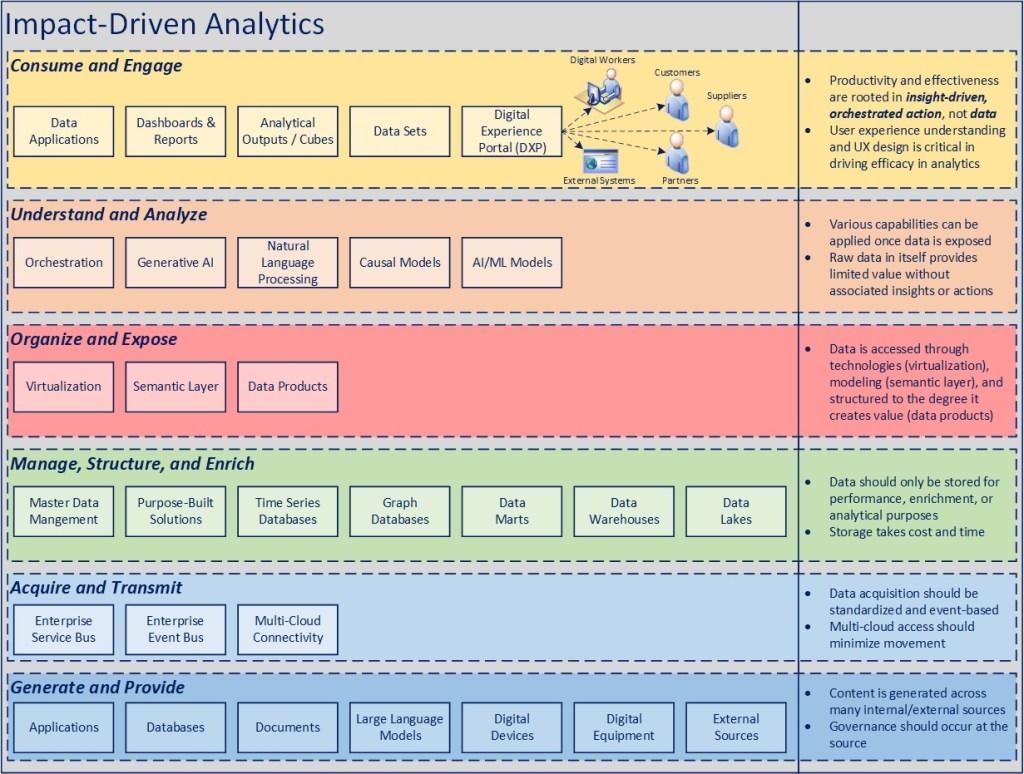
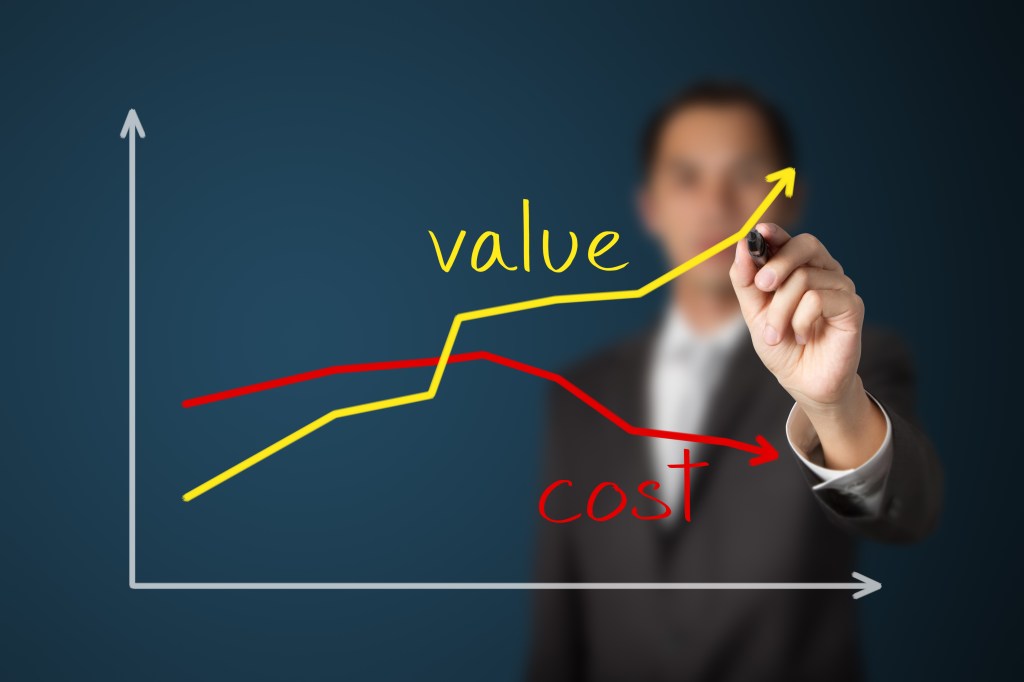


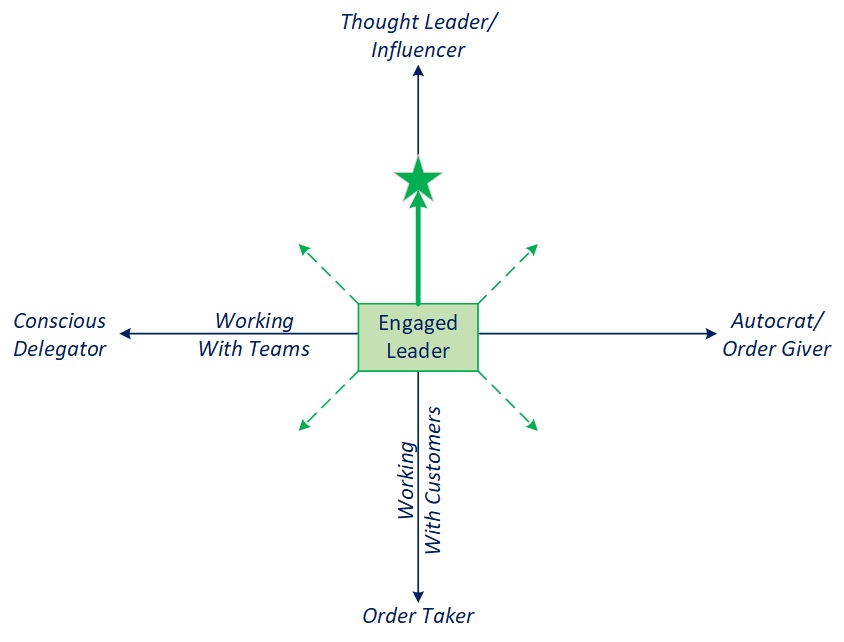
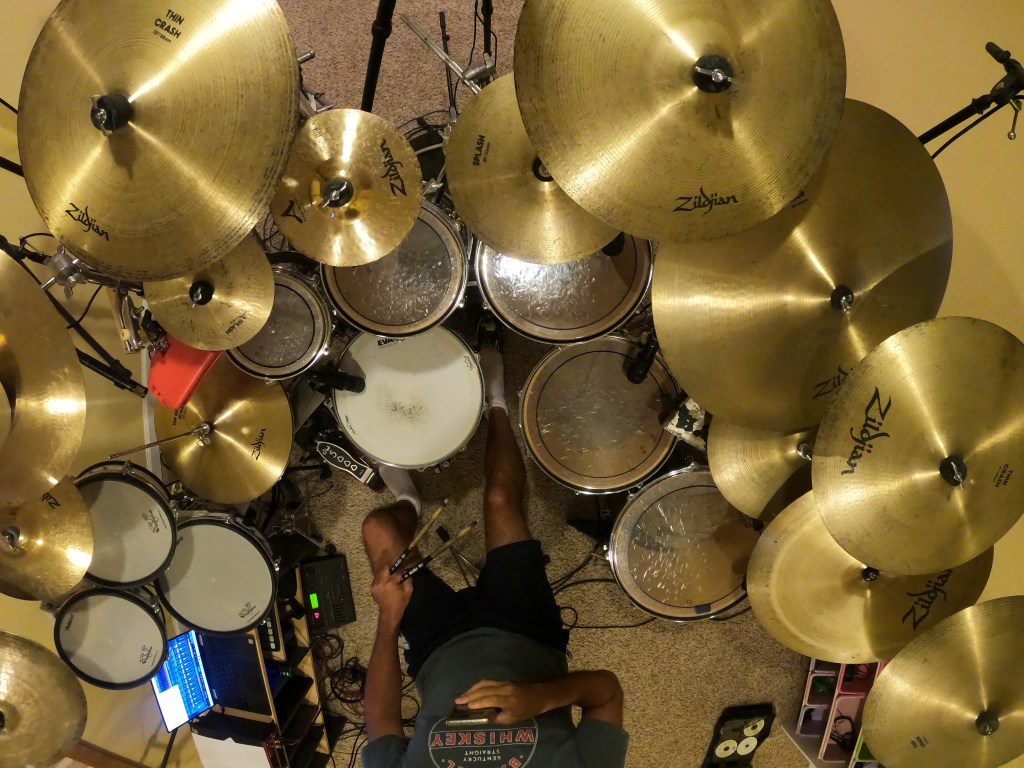


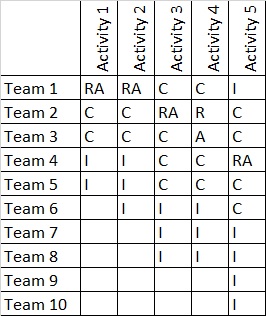



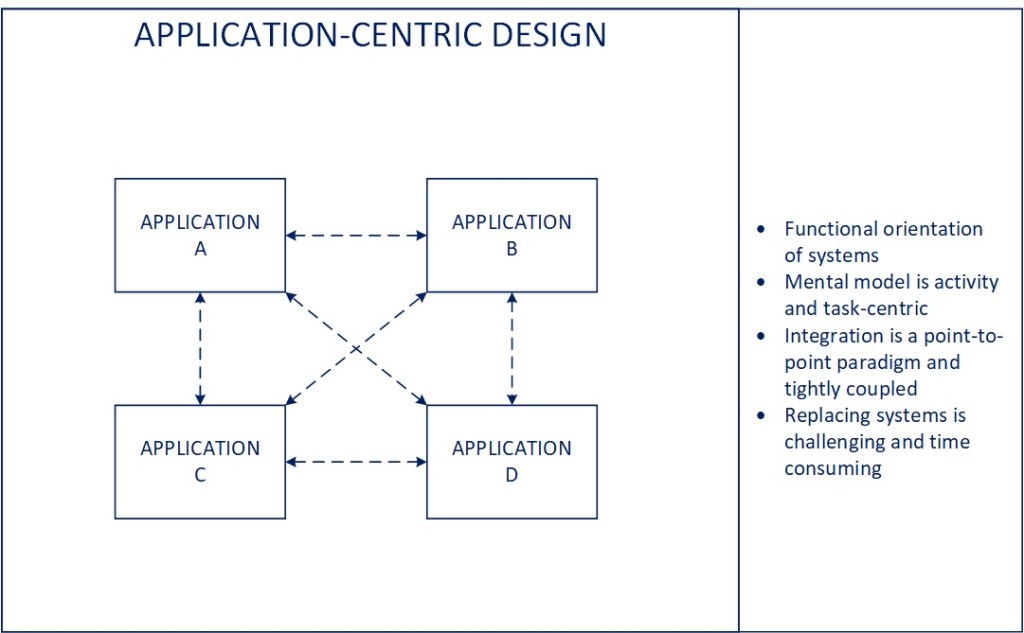

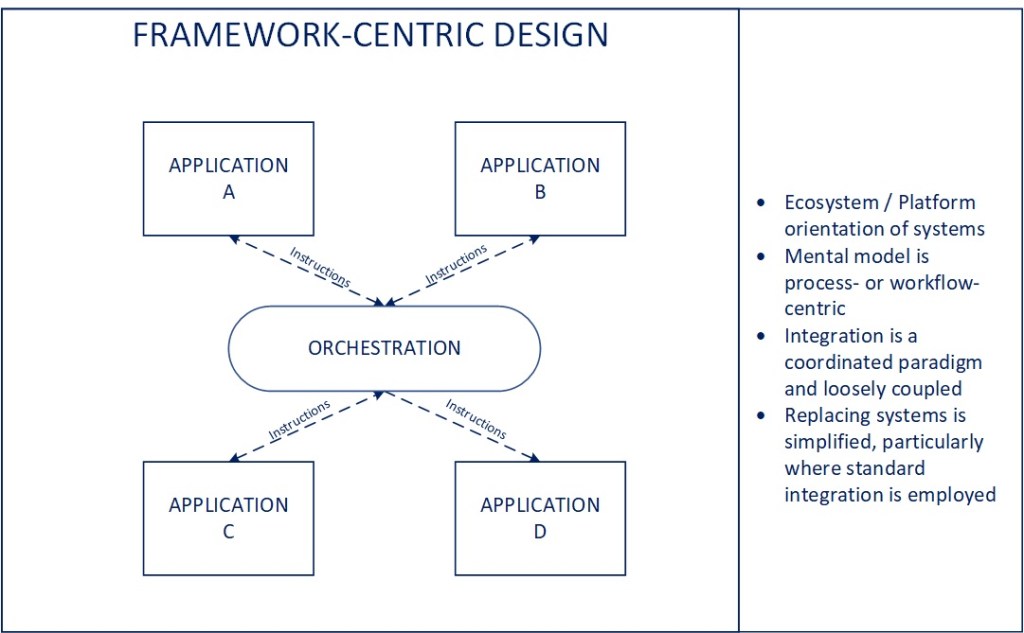
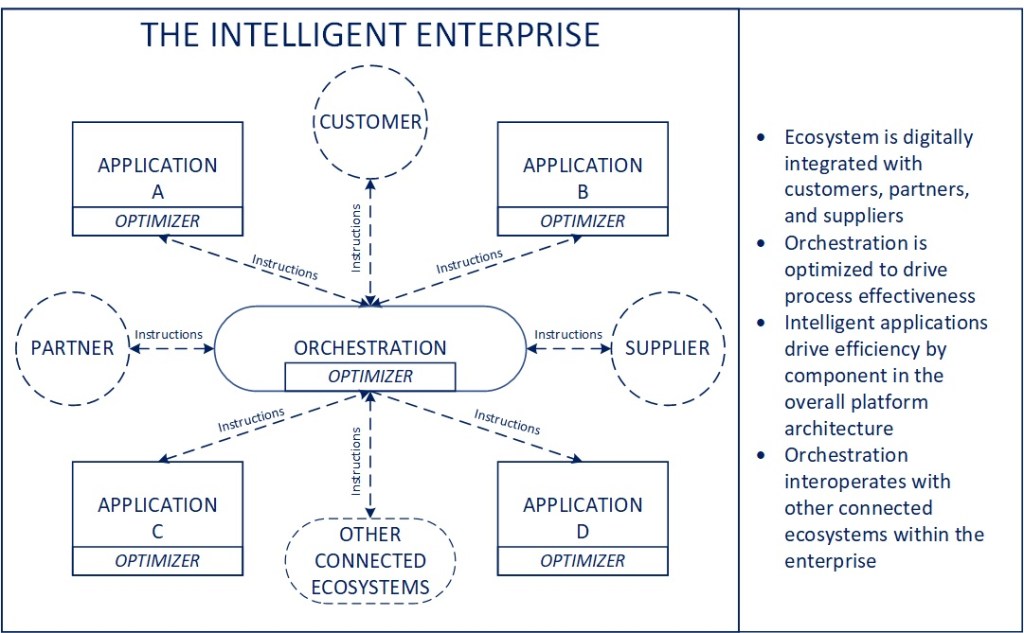

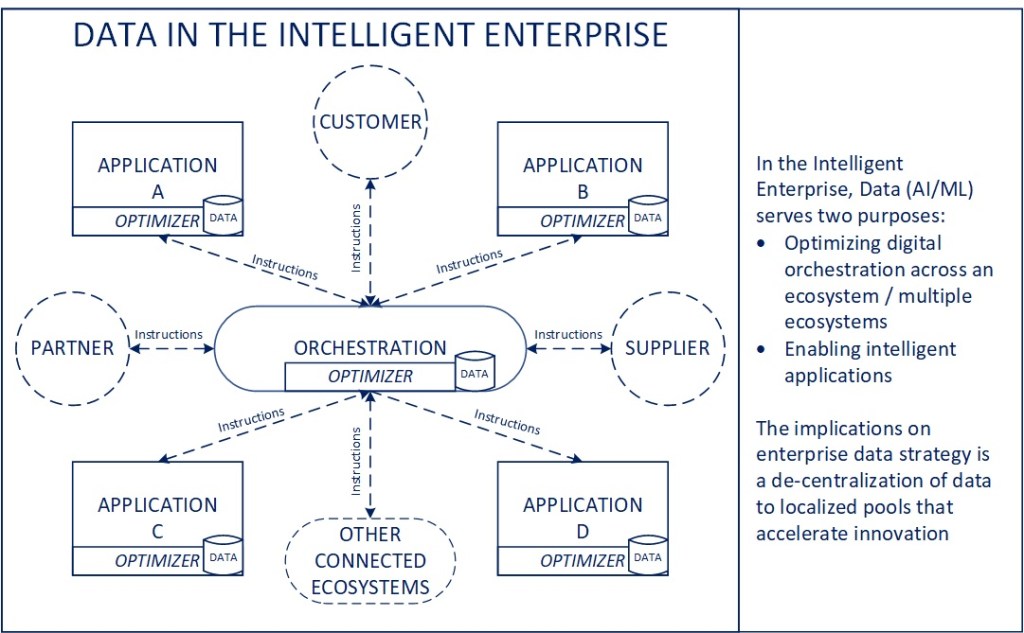
 Organized Chaos