In my recent article on Exploring Artificial Intelligence, I covered several dimensions of how I think about the direction of AI, including how models will evolve from general-purpose and broad-based to be more value-focused and end consumer-specific as the above diagram is intended to illustrate.
The purpose of this article is to dive a little deeper into a mental model for how I believe the technology could become more relevant and valuable in an end-user (or end consumer) specific context.
Before that, a few assertions related to the technology and end user application of the technology:
The more we can passively collect data in the interest of simplifying end-user tasks and informing models, the better. People can be both inconsistent and unreliable in how they capture data. In reality, our cell phones are collecting massive amounts of data on an ongoing basis that is used to drive targeted advertising and other capabilities to us without our involvement. In a business context, however, the concept of doing so can be met with significant privacy and other concerns and it’s a shame because, while there is data being collected on our devices regardless, we aren’t able to benefit from it in the context of doing our work
Moving from a broad- or persona-based means of delivering technology capabilities to a consumer-specific approach is a potentially significant advancement in enabling productivity and effectiveness. This would be difficult or impossible to achieve without leveraging an adaptive approach that synthesizes various technologies (personalization, customization, dynamic code generation, role-based access control, AI/ML models, LLMs, content management, and so forth) to create a more cohesive and personalized user experience
While I am largely focusing on end-user application of the technology, I would argue that the same concepts and approach could be leveraged for the next generation of intelligent devices and digital equipment, such as robotics in factory automation scenarios
To make the technology both performant and relevant, part of the design challenge is to continually reduce and refine to level of “model” information that is needed at the next layer of processing so as not to overload the end computing device (presumably a cell phone or tablet) with a volume of data that isn’t required to enable effective action on behalf of the data consumer.
The rest of this article will focus on providing a mental model for how to think about the relationship across the various kinds of models that may make up the future state of AI.
Starting with a “Real World” example
Having spent a good portion of my time off traveling across the U.S., while I had a printed road atlas in my car, I was reminded of the trust I place in Google Maps more than once, particularly when driving through an “open range” gravel road with cattle roaming about in northwest Nebraska on my way to South Dakota. In many ways, navigation software represents a good starting point for where I believe intelligent applications will eventually go in the business environment.
Maps is useful as a tool because it synthesizes what data is has on roads and navigation options with specific information like my chosen destination, location, speed traps, delays, and accident information that is specific to my potential routes, allowing for a level of customization if I prefer to take routes that avoid tolls and so on. From an end-user perspective, it provides a next recommended action, remaining contextually relevant to where I am and what I need to do, along with how long it will be both until that action needs to be taken as well as the distance remaining and time I should arrive at my final destination.
In a connected setting, navigation software pulls pieces of its overall model and applies data on where I am and where I’m going, to (ideally) help me get where I’m going as efficiently as possible. The application is useful because it is specific to me, to my destination, and to my preferred route, and is different than what would be delivered to a car immediately behind me, despite leveraging the same application and infrastructure. This is the direction I believe we need to go with intelligent applications, to drive individual productivity and effectiveness.
Introducing the “Tree of Knowledge” concept
The Overall Model
The visual above is meant to represent the relationship of general-purpose and foundational models to what ultimately are delivered to an end-user (or piece of digital equipment) in a distributed fashion.
Conceptually, I think of the relationship across data sets as if it were a tree.
The general-purpose model (e.g., LLM) provides the trunk that establishes a foundation for downstream analytics
Domain-specific models (e.g., RAG) act as the branches that rely on the base model (i.e., the trunk) to provide process- or function-specific capabilities that can span a number of end-user applications, but have specific, targeted outcomes in mind
A “micro”-model is created when specific branches of the tree are deployed to an end-user based on their profile. This represents the subset that is relevant to that data consumer given their role, permissions, experience level, etc.
The data available at the end point (e.g., mobile device) then provides the leaves that populate the branches of the “micro”-models that have been deployed to create an adaptive model used to inform the end user and drive meaningful and productive action.
The adaptive model should also take into account user preferences (via customization options) and personalization to tune their experience as closely as possible to what they need and how they work.
In this way, the progression of models moves from general to very specific, end-user focused solutions that are contextualized with real-time data much the same as the navigation example above.
It is also worth noting that, in addition to delivering these capabilities, the mobile device (or endpoint) may collect and send data back to further inform and train the knowledge models by domain (e.g., process performance data) and potentially develop additional branches based on gaps that may surface in execution.
Applying the Model
Having set context on the overall approach, there are some notable differences from how these capabilities could create a different experience and level of productivity than today, namely:
Rather than delivering content and transactional capabilities based on an end-user’s role and persona(s), those capabilities would be deployed to a user’s device (the branches of the “micro”-model), but synthesized with other information (the “leaves”) like the user’s experience level, preferences, location, training needs, equipment information (in a manufacturing-type context), to generate an interface specific to them that continually evolves to optimize their individual productivity
As new capabilities (i.e., “branches”) are developed centrally, they could be deployed to targeted users and their individual experiences would adapt to incorporate in ways that work best for them and their given configuration, without having to relearn the underlying application(s)
Going Back to Navigation
On the last point above, a parallel example would be the introduction of weather information into navigation.
At least in Google Maps, while there are real-time elements like speed traps, traffic delays, and accidents factored into the application, there is currently no mechanism to recognize or warn end users about significant weather events that also may surface along the route. In practice, where severe weather is involved, this could represent safety risk to the traveler and, in the event that the model was adapted to include a “branch” for this kind of data, one would hope that the application would behave the same from an end-user standpoint, but with the additional capability integrated into the application.
Wrapping Up
Understanding that we’re still early in the exploration of how AI will change the way we work, I believe that defining a framework for how various types of models can integrate and work across purposes would enable significant value and productivity if designed effectively.
I hope the ideas were worth considering. Thanks for spending the time to read them. Feedback is welcome as always.
It’s impossible to scroll through a news feed and miss the energy surrounding AI and its potential to transform. The investment in technology as a strategic differentiator is encouraging to see, particularly as a person who thrives on change and innovation. It is, however, also concerning that the ways in which it is often described are reminiscent of other technology advances of the past… CRM, BigData, .com… where there was an immediate surge in spending without a clear set of outcomes in mind, operating approach, or business architecture established for how to leverage it effectively. Consequently, while a level of experimentation is always good in the interest of learning and exploring, a lot of money and time can be wasted (and technical debt created) without necessarily creating any meaningful business value through the process.
For the purposes of this article, I’m going to focus on five dimensions of AI and how I’m thinking about them:
Framing the Problem – Thinking about how AI will be used in practice
The Role of Compute – Considering the needs for processing moving forward
Revisiting Data Strategy – Putting AI in the context of the broader data landscape
Simplifying “Intelligence” – Exploring the end user impact of AI
Thinking About Multi-Cloud – Contemplating how to approach AI in a distributed environment
This topic is very extensive, so I’ll try to keep the thoughts at a relatively high-level to start and dive into more specifics in future articles as appropriate.
Framing the Problem
Considering the Range of Opportunities
While a lot of the attention surrounding Generative AI over the last year has been focused on content generation for research, communication, software development, and other purposes, I believe the focus for how AI can create business value will shift substantially to be more outcome-driven and directed at specific business problems. In this environment, smaller, more focused data sets (e.g., incorporating process, market, equipment, end user, and environmental data) will be analyzed to understand causal relationships in the interest of producing desired business outcomes (e.g., optimizing process efficiency, improving risk management, increasing safety) and content (e.g., just in time training, adaptive user experiences). Retrieval-Augmented Generation (RAG) models are an example of this today, with a purpose-built model leveraging a foundational large language model to establish context for a more problem-specific solution.
This is not to suggest that general purpose models will decline in utility, but rather that I believe those applications will be better understood, mature, and become integrated where they create the most value (in relatively short order). The focus will then shift towards areas where more direct business value can be obtained through an evolution of these technologies.
For that to occur, the fundamentals of business process analysis need to regain some momentum to overcome the ‘silver bullet’ mentality that seems largely prevalent with these technologies today. It is, once again, a rush towards “the cool versus the useful” towards my opening remark about how current AI discussions feel a lot like conversations at the start of the .com era, and the sooner we shift towards a disciplined approach to leveraging these technology advancements, the better.
The opportunity will be to look at how we can leverage what these models provide, in terms of understanding multi-dimensional relationships across large sets of data, but then extending the concept to become more deterministic in terms of what decisions under a given set of conditions are most likely to bring about desired outcomes (i.e., causal models). This is not where we are today, but is where I believe these technologies are meant to go in the near future. Ultimately, we don’t just want to produce content, we want to influence processes and business results with support from artificial intelligence.
As purpose-built models evolve, I believe there will be a base set of business insights that are made available across communities of end users, and then an emergence of secondary insights that are developed in a derivative fashion. In this way, rather than try to summit Mount Everest in a direct ascent, we will establish one of more layers of outcomes (analogous to having multiple base camps) that facilitate the eventual goal.
Takeaways
General purpose AI and large language models (LLMs) will continue to be important and become integrated with how we work and consume technology, but reach a plateau of usefulness fairly rapidly in the next year or so
Focus will shift towards integrating transactional, contextual, and process data with the intention of predicting business outcomes (causal AI) in a much more targeted way
The overall mindset will pivot from models that do everything to ones that do something much more specific, with a desired outcome in mind up front
The Role of Compute
Considering the Spectrum of Needs
Having set the context of general versus purpose-built AI and the desire to move from content to more outcome-focused intelligence, the question is what this means for computing. There is a significant amount of attention going to specialized processors (e.g., GPUs) at the moment, with the presumption that there are significant computing requirements to generate models based on large sets of data in a reasonable amount of time. That being said, while content-focused outcomes may be based on a large volume of data and only need to be refreshed on a periodic basis, the more we want AI to assist in the performance of day-to-day tasks, the more we need the insights to be produced on a near-real time basis and available on a mobile device or embedded on a piece of digital equipment.
Said differently, as our focus shifts to smaller and more specific business problems, so should the data sets involved, making it possible to develop purpose-built models on more “standard” computing platforms that are commercially available, where the models are refreshed on a more frequent basis, taking into account relevant environmental conditions, whether that’s production plans or equipment status in manufacturing, market conditions in financial services, or weather patterns or other risk factors in insurance.
The Argument for a “Micro-Model”
Assuming a purpose-built model can be developed with a particular business outcome or process in mind, where things could take an interesting leap forward would be extending those models into edge computing environments, like a digital worker in a manufacturing facility, where the specific end user knowledge and skills, geo-location, environmental conditions, equipment status could be fed into a purpose-built model and then extended to create a more adaptive model that provides a user-specific set of insights and instructions to drive productivity, safety, and effectiveness.
Ultimately, AI needs to be focused on the individual and run on something as accessible as a mobile device to truly realize it’s potential. The same would also be true for extending models that could be embedded within a piece of industrial equipment to run as part of a digital facility. That is beyond anything we can do today, it makes insights personalized and specific to an individual, and that concept holds a significant amount more business value than targeting a specific user group or persona from an application development standpoint. Said differently, the concept is similar to integrating personalization, workflow, presentation, and insights into one integrated technology.
With this in mind, perhaps the answer will ultimately still result in highly specialized computing, but before rushing in the direction of quantum computing and buying a significant number of GPUs, I’d definitely consider the ultimate outcome we want, which is to put the power of insights in the hands of end users in day-to-day activities, but being much more effective in what they are able to do. That is not a once-a-month refresh of a massive amount of data. It is a constantly evolving model that is based on learnings from the past, but the current realities and conditions of the moment and the specific individual taking action on those things.
Takeaways
Computing requirements will shift from centralized processing of large data volumes to smaller, curated data sets that are refreshed more often and targeted to specific business goals
Ultimately, the goal should be to enable end users with a highly personalized model that is focused on them, the tasks they need to accomplish, and the current conditions under which they are operating
Processing for artificial intelligence will therefore be distributed across a spectrum of environments from large scale centralized methods to distributed edge appliances and mobile devices
Revisiting Data Strategy
Business Implications of AI
The largest risk with artificial intelligence that I see today is no different than anything else in regards to data: the value of new technology is only as good as the underlying data quality, and that’s a business issue (for the most part).
Said differently, in the case of AI, if the underlying data sets upon which models are developed has data quality issues and there is a lack of data management and data governance in place, the inferences drawn will likely be of limited value.
Ultimately, the more we move from general purpose to purpose-built solutions, the ability to identify relevant and necessary data to be incorporated into a model can be a significant accelerator of value. This is because the “give me all the data” approach would likely both increase time to develop and produce models as well as introduce significant overhead in ensuring data quality and governance to confirm the usefulness of the resulting models.
If, as an example, I wanted to use AI to ingest all the training materials developed across a set of manufacturing facilities in the interest of synthesizing, standardizing, and optimizing them across an enterprise, the underlying quality of those materials becomes critically important in deriving the right outcomes. There may be out of date procedures, unique steps specific to a location, quality issues in some of the source content, etc. The technology itself doesn’t solve these issues. Arguably, a level of data wrangling or quality tools could be helpful in identifying and surfacing these issues, but the point is that data governance and curation are required before the infrastructure would produce the desired business outcomes.
Technology Implications of AI
As the diagram intends to indicate, whether AI lives as a set of intelligent agents that run as separate stove pipes in parallel with existing applications and data solutions, the direction for how things will evolve is an important element of data strategy to consider, particularly in a multi-cloud environment (something I’ll address in the final section).
As discussed in The Intelligent Enterprise, I believe that the eventual direction for AI (as we already see somewhat evidenced with Copilot in Microsoft Office 365), is to move from separate agents and data apps (“intelligent agents”) to having those capabilities integrated into the workflow of applications themselves (making them “intelligent applications”), where they can create the most overall value.
What this suggests to me is that transaction data from applications will make its way into models, and be exposed back into consuming applications via AI services. Whether the data ultimately moves into a common repository that can handle both the graph and relational data within the same data solution remains to be seen, but having personally developed an integrated object- and relational-database for a commercial software package thirty years ago at the start of my career, I can foresee that there may be benefits in thinking through the value of that kind of solution.
Where things get more complicated on an enterprise level is when you scale these concepts out. I will address the end user and multi-cloud aspects of this in the next two sections, but it’s critically important in data strategy to consider how too many point solutions in the AI domain could significantly increase cost and complexity (not to mention have negative quality consequences). As data sets and insights are meant to extend outside an individual application to cross-application and cross-ecosystem levels, the ways in which that data is stored, accessed, and exposed likely will become significant. My article on Perspective on Impact-Driven Analytics attempted to establish a layered approach to how to think about the data landscape, from production to consumption, that may provide a starting point for evaluating alternatives in this regard.
Takeaways
While AI provides new technology capabilities, business ownership / stewardship of data and the processes surrounding data quality, data management, and data governance are extremely critical in an AI-enabled world
As AI capabilities move within applications, the need to look across applications for additional insights and optimization opportunities will emerge. To the extent that can be designed and architected in a consistent approach, it will be significantly more cost-effective and create more value over time at an enterprise level
Experimentation is appropriate in the AI domain for the foreseeable future, but it is important to consider how these capabilities will ultimately become integrated with the application and data ecosystems in medium to larger organizations in the interest of getting the most long-term value from the investments
Simplifying “Intelligence”
Avoiding the Pitfalls of Introducing New Technologies to End Users
The diagram above is meant to help conceptualize what could ultimately occur if AI capabilities are introduced as various data apps or intelligent agents, running separate from applications versus becoming an integrated part of the way intelligent applications behave over time.
At an overall level, expecting users to arbitrate new capabilities without integrating them thoughtfully into the workflow and footprint that exists creates the conditions for significant change management and productivity issues. This is always true when introducing change, but the expectations associated with the disruptive potential of AI (at the moment) are quite high, and that could set the stage for disappointment if there isn’t a thoughtful design in place for how the solutions are meant to make the consumer more effective on a workflow and task level.
Takeaways
Intelligence capabilities will move inside applications rather than be adjacent to them, providing more of a “guided path” approach to end users
To the degree that “micro-models” are eventually in place, that could include making the presentation layer of applications personalized to the individual user based on their profile, experience level, role, and operating conditions
The role of “Intelligent Agents” will take on a higher-level, cross-application focus, which could be (as an example) optimizing notifications and alerts coming from various applications to a more thoughtful set of prioritized actions intended to maximize individual performance
Thinking About Multi-Cloud
Working Across Environments
With the introduction of AI capabilities at an enterprise level, the challenge becomes how to leverage and integrate these technologies, particularly given that data may exist across a number of hosted and cloud-based environments. For simplicity’s sake, I’m going to assume that any cloud capability required for data management and AI services can be extended to the edge (via containers), though that may not be fully true today.
At an overall level, as it becomes desirable to extend models to include data resident both in something like Microsoft Office 365 (running on Azure) and corporate transactional data (largely running in AWS if you look at market share today), the considerations and costs for moving data between platforms could be significant if not architected in a purposeful manner.
To that end, my suggestion is to look at business needs in one of three ways:
Those that can be addressed via a single cloud platform, in which case it would likely be appropriate to design and deliver solutions leveraging the AI capabilities available natively on that platform
To the extent a solution extends across multiple providers, it may be possible to look at layering the solutions such that each cloud platform performs a subset of the analysis, resulting in pre-processed data that could then be published to a centralized, enterprise cloud environment where the various data sets are pulled into a single enterprise model that is used to address the overall need
If a partitioning approach isn’t possible, then some level of cost, capability, and performance analysis would likely make sense to determine where data should reside to enable the necessary integrated models to be developed
Again, the point is to step back from individual solutions and projects to consider the enterprise strategy for how data will be managed, models will be developed, and deployed overall. The alternative approach of deploying too many point solutions could lead to considerable cost and complexity (i.e., technical debt) over time.
Takeaways
AI capabilities are already available on all the major cloud platforms. I believe they will reach relative parity from a capability standpoint in the foreseeable future, to the point that they shouldn’t be a primary consideration in how data and models are managed and deployed
The more the environment can be designed with standards in mind, modularity, integration, interoperability, and a level of composability, the better. Technology solutions will continue to be introduced that an organization will want to leverage without having to abandon or migrate everything that is already in place
It is extremely probably that AI models will be deployed across cloud platforms, so having a deliberate strategy for how to manage and facilitate this should be given consideration
A lack of overall multi-cloud strategy will likely create complexity and cost that may be difficult to unwind over time
Wrapping Up
If you’ve made it this far, thank you for taking the time, hopefully some of the concepts were thought provoking. In Excellence by Design, I talk about ‘Relentless Innovation’…
Admittedly, there is so much movement in this space, that it’s very possible some of what I’ve written is obsolete, obvious, far-fetched, or some combination of all of the above, but that’s also part of the point of sharing the ideas: to encourage the dialogue. My experience in technology over the last thirty-two years, especially with emerging capabilities like artificial intelligence, is that we can lose perspective on value creation in the rush to adopt something new and the tool becomes a proverbial hammer in search of a nail.
What would be far better is to envision a desired end state, identify what we’d really like to be able to do from a business capability standpoint, and then endeavor to make that happen with advanced technology. I do believe there is significant power in these capabilities for the organizations that leverage them effectively.
I hope the ideas were worth considering. Thanks for spending the time to read them. Feedback is welcome as always.
Having had multiple recent discussions related to portfolio management, I thought I’d share some thoughts relative to disciplined operations, in terms of the aforementioned subject and on the associated toolsets as well. This is a substantial topic, but I’ll try to hit the main points and address more detailed questions as and when they arise.
In getting started, given all the buzz around GenAI, I asked ChatGPT “What are the most important dimensions of portfolio management in technology?” What was interesting was that the response aligned with most discussions I’ve had over time, which is to say that it provided a process-oriented perspective on strategic alignment, financial management, and so on (a dozen dimensions overall), with a wonderfully summarized description of each (and it was both helpful and informative). The curious part was that it missed the two things I believe are most important: courageous leadership and culture.
The remainder of this article will focus more on the process dimensions (I’m not going to frame it the same as ChatGPT for simplicity), but I wanted to start with a fundamental point: these things have to be about partnership and value first and process second. If the focus becomes the process, there is generally something wrong in the partnership or the process is likely too cumbersome in how it is designed (or both).
Portfolio Management
Partnership
Portfolio management needs to start with a fundamental partnership and shared investment between business and technology leaders on the intended outcome. Fortunately, or unfortunately, where the process tends to get the most focus (and part of why I’ve heard it so much in the last couple years) is in a difficult market/economy where spend management is the focus, and the intention is largely related to optimizing costs. Broadly speaking, when times are good and businesses grow, the processes for prioritization and governance can become less rigorous in a speed-to-market mindset, the demand for IT services increases, and a significant amount of inefficiency, delivery and quality issues can arise as a result. The reality is that discipline should always be a part of the process because it’s in the best interest of creating value (long- and short-term) for an organization. That isn’t to suggest artificial constraints, unnecessary gates in a process, or anything to hinder speed-to-market. Rather, the goal of portfolio management should be to have a framework in place to manage demand through delivery in a way that facilitates predictable, timely, and quality delivery and a healthy, secure, robust, and modern underlying technology footprint that creates significant business value and competitive advantage over time. That overall objective is just as relevant during a demand surge as it is when spending is constrained.
This is where courageous leadership becomes the other critical overall dimension. It’s never possible to do everything and do it well. The key is to maintain the right mix of work, creating the right outcomes, at a sustainable pace, with quality. Where technology leaders become order takers is where a significant amount of risk can be introduced that actually hurts a business over time. The primary results being that taking on too much without thoughtful planning can result in critical resources being spread too thin, missed delivery commitments, poor quality, and substantial technical debt, all of which eventually undermine the originally intended goal of being “responsive”. This is why partnership and mutual investment in the intended outcomes matters. Not everything has to be “perfect” (and the concept itself doesn’t really exist in technology anyway), but the point is to make conscious choices on where to spend precious company resources to optimize the overall value created.
End-to-End Transparency
Shifting focus from the direction to the execution, portfolio management needs to start with visibility in three areas:
Demand management – the work being requested
Delivery monitoring – the work being executed
Value realization – the impact of what was delivered
In demand management, the focus should ideally be on both internal and external factors (e.g., business priorities, customer needs, competitive and industry trends), a thoughtful understanding of the short- and long-term value of the various opportunities, the requirements (internal and external) necessary to make them happen, and the desired timeframe for those results to be achieved. From a process standpoint, notice of involvement and request for estimate (RFE) processes tend to be important (depending on the scale and structure of an organization), along with ongoing resource allocation and forecast information to evaluate these opportunities as they arise.
Delivery monitoring is important, given the dependencies that can and do exist within and across efforts in a portfolio, the associated resource needs, and the expectations they place on customers, partners, or internal stakeholders once delivered. As and when things change, there should be awareness as to the impact of those changes on upcoming demand as well as other efforts within a managed portfolio.
Value realization is a generally underserved, but relatively important part of portfolio management, especially in spending constrained situations. This level of discipline (at an overall level) is important for two primary reasons: first, to understand the efficacy of estimation and planning processes in the interest of future prioritization and planning and, second, to ensure investments were made effectively in the right priorities. Where there is no “retrospective”, a lot of learnings may be being lost in the interest of continuous improvement and operational efficiency and effectiveness over time (ultimately having an adverse impact on business value created).
Maintaining a Balanced Portfolio
Two concepts that I believe are important to consider in how work is ultimately allocated/prioritized within an IT portfolio:
Portfolio allocation – the mix of work that is being executed on an ongoing basis
Prioritization – how work is ultimately selected and the process for doing so
A good mental model for portfolio allocation is a jigsaw puzzle. Some pieces fit together, others don’t, and whatever pieces are selected, you ultimately are striving to have an overall picture that matches what you originally saw “on the box”. While you also can operate in multiple areas of a puzzle at the same time, you also generally can’t focus in on all of them concurrently and expect to be efficient on the whole.
What I believe a “good” portfolio should include is four key areas (with an optional fifth):
Innovation – testing and experimenting in areas where you may achieve significant competitive advantage or differentiation
Business Projects – developing solutions that create or enable new or enhanced business capabilities
Modernization – using an “urban renewal” mindset to continue to maintain, simplify, rationalize, and advance your infrastructure to avoid significant end of life, technical debt, or other adverse impacts from an aging or diverse technology footprint
Security – continuing to leverage tools and technologies that manage the ever increasing exposure associated with cyber security threats (internal and external)
Compliance (where appropriate) – investing in efforts to ensure appropriate conformance and controls in regulatory environments / industries
I would argue that, regardless of the level of overall funding, these categories should always be part of an IT portfolio. There can obviously be projects or programs that provide forward momentum in more than one category above, but where there isn’t some level of investment in the “non-business project” areas, likely there will be a significant correction needed at some point of time that could be very disruptive from a business standpoint. It is probably also worth noting that I am not calling out a “technology projects” category above on purpose. From my perspective, if a project doesn’t drive one of the other categories, I’d question what value it creates. There is no value in technology for technology’s sake.
From a prioritization standpoint, I’ve seen both ends of the spectrum over the course of time: environments where there is no prioritization in place and everything with a positive business case (and even some without) are sent into execution to ones where there is an elaborate “scoring” methodology, with weights and factors and metrics organized into highly elaborate calculations that create a false sense of “rigor” in the efficacy of the process. My point of view overall is that, with the above portfolio allocation model in place, ensuring some balance in each of the critical categories of spend, a prioritization process should include some level of metrics, with an emphasis on short- and long-term business/financial impact as well as a conscious integration of the resource commitments required to execute the effort by comparison with other alternatives. As important as any process, however, is the discussions that should be happening from a business standpoint to ensure the engagement, partnership, and overall business value being delivered through the portfolio (the picture on the box) in the decisions made.
Release Management
Part of arriving at the right set of work to do also comes down to release management. A good analogy for release management is the game Tetris. In Tetris, you have various shaped blocks dropping continually into a grid, with the goal of rotating and aligning them to fit as cleanly with what is already on the radar as possible. There are and always will be gaps and the fit will never be perfect, but you can certainly approach Tetris in a way that is efficient and well-aligned or in a way that is very wasteful of the overall real estate with which you have to work.
This is great mental model for how project planning should occur. If you do a good job, resources are effectively utilized, outcomes are predictable, there is little waste, and things run fairly smoothly. If you don’t think about the process and continually inject new work into a portfolio without thoughtful planning as to dependencies and ongoing commitments, there can and likely will be significant waste, inefficiency, collateral impact, and issues in execution.
Release management comes down to two fundamental components:
Release strategy – the approach to how you organize and deliver major and minor changes to various stakeholder groups over time
Release calendar – an ongoing view of what will be delivered at various times, along with any critical “T-minus” dates and/or delivery milestones that can be part of a progress monitoring or gating process used in conjunction with delivery governance processes
From a release strategy standpoint, it is tempting in a world of product teams, DevSecOps, and CI/CD pipelines to assume everything comes down to individual product plans and their associated release schedules. The two primary issues here are the time and effort it generally takes to deploy new technology and the associated change management impact to the end users who are expected to adopt those changes as and when they occur. The more fragmented the planning process, the more business risk there is that ultimately end users or customers will be either under or overserved at any given point in time, where a thoughtful release strategy can help create predictable, manageable, and sustainable levels of change over time across a diverse set of stakeholders being served.
The release calendar, aside from being an overall summary of what will be delivered when and to whom, also should ideally provide transparency into other critical milestones in the major delivery efforts so that, in the event something moves off plan (which is a very normal occurrence in technology and medium to larger portfolios), the relationship to other ongoing efforts can be evaluated from a governance standpoint to determine whether any rebalancing or slotting of work is required.
Change Management
While I won’t spend a significant amount of time on this point, change management is often an area where I’ve seen the process managed very well and relatively poorly. The easy part is generally managing change relative to a specific project or program and that governance often exists in my experience. The issue that can arise is when the leadership overseeing a specific project is only taking into account the implications of change on that effort alone, and not the potential ripple effect of a schedule, scope, or financial adjustment on the rest of the portfolio, future demand, or on end users in the event that releases are being adjusted.
On Tooling
Pivoting from processes to tools, at an overall level, I’m generally not a fan of over-engineering the infrastructure associated with portfolio management. It is very easy for such an infrastructure to take a life of its own, become a significant administrative burden that creates little value (beyond transparency), or contain outdated and inaccurate information to the degree that the process involves too much data without underlying ownership and usage of the data obtained.
The goal is the outcome, not the tools.
To the extent that a process is being established, I’d generally want to focus on transparency (demand through delivery) and a healthy ongoing discussion of priorities in the interest of making informed decisions. Beyond that, I’ve seen a lot of reporting that doesn’t generally result in any level of actions being taken, which I consider to be very ineffective from a leadership and operational standpoint.
Again, if the process is meant to highlight a relationship problem, such as a dashboard being created requiring a large number of employees to capture timesheets to be rolled up, marked to various projects, all to have a management discussion to say “we’re over allocated and burning out our teams”, my question would be why all of that data and effort was required to “prove” something, whether there is actual trust and partnership, whether there are other underlying delivery performance issues, and so on. The process and tools are there to enable effective execution and the creation of business value, not drain effort and energy that could better be applied in delivery with administrivia.
Wrapping Up
Overall, having spent a number of years seeing well developed and executed processes as well as less robust versions of the same, effective portfolio management comes down to value creation. When the focus becomes about the process, the dashboard, the report, the metrics, something is amiss in my experience. It should about informing engaged leadership, fostering partnership, enabling decisions, and creating value. That is not to say that average utilization of critical resources (as an example) isn’t a good thing to monitor and keep in mind, but it’s what you do with that information that matters.
I hope the ideas were worth considering. Thanks for spending the time to read them. Feedback is welcome as always.
Having covered a couple future-oriented topics on Transforming Manufacturing and The Future of IT, I thought it would good to come back to where we are with Enterprise Architecture as a critical function for promoting excellence in IT.
Overall, there is a critical balance to be struck in technology strategy today: technology-driven capabilities are advancing faster than any organization can reasonably adopt and integrate them (as is the exposure in cyber security), even if you could, the change management issues you’d cause on end users would be highly disruptive, and thereby undermine your desired business outcomes, and, in practice rapidly evolving, sustainable change is the goal, not any one particular “implementation” of the latest thing. This is what Relentless Innovation is about, referenced in my article on Excellence by Design.
Connecting Architecture back to Strategy
In the article, Creating Value Through Strategy, I laid out a framework for thinking about IT strategy at an overall level that can be used to create some focal points for enterprise architecture efforts in practice, namely:
Innovate – leveraging technology advancements in ways that promote competitive advantage
Accelerate – increasing speed to market/value to be more responsive to changing needs
Optimize – improving the value/cost ratio to drive return on technology investments overall
Inspire – creating a workplace that promotes retention and enables the above objectives
Perform – ensuring reliability, security, and performance in the production environment
The remainder of this article will focus on how enterprise architecture (EA) plays a role in enabling each of these dimensions given the pace of change today.
Breaking it Down
Innovate
Adopting new technologies for maximum business advantage is certainly the desired end game in this dimension, but unless there is a very unique, one-off situation, the role of EA is fairly critical in making these advancements leverageable, scalable, and sustainable. It’s worth noting, by the way, that I’m specifically referring to “enterprise architecture” here, not “solution architecture”, which I would consider to be the architecture and design of a specific business solution. One should not exist without the other and, to the degree that solution architecture is emphasized without a governing enterprise architecture framework in place, the probability of significant technical debt, delivery issues, lack of reliability, and a host of other issues will skyrocket.
Where EA plays a role in promoting innovation is minimally in exploring market trends and looking for enabling technologies that can promote competitive advantage, but also, and very critically in establishing the standards and guidelines by which new technologies should be introduced and integrated into the existing environment.
Using a “modern” example, I’ve seen a number of articles of late on the role of GenAI in “replacing” or “disrupting” application development, from the low-code/no code type solutions to the SaaS/package software domain, to everywhere. While this sounds great in theory, it shouldn’t take long for the enterprise architecture questions to surface:
How do I integrate that accumulated set of “point solutions” in any standard way?
How do I meaningfully run analytics on the data associated with these applications?
How do I secure these applications in a way that I’m not exposed to vulnerabilities that I would with any open-source technology (i.e., they are generated by an engine that may have inherent security gaps)?
How do I manage the interoperability between these internally-developed/generated solutions and standard packages (ERP, CRM, etc.) that are likely a core part of any sizeable IT environment?
In the above example, even if I find way to replace existing low-code/no code solutions with a new technology, it doesn’t mean that I don’t have the same challenges as exist with leveraging those technologies today.
In the case of innovation, the highest priorities for EA are therefore: looking for new disruptive technologies in the market, defining standards to enable their effective introduction and use, and then governing that delivery process to ensure standards are followed in practice.
Accelerate
Speed to market is a pressing reality in any environment I’ve seen, though it can lead to negative consequences as I discussed in Fast and Cheap… Isn’t Good. Certainly, one of the largest barriers to speed is complexity, and complexity can come in many forms depending on the makeup of the overall IT landscape, the standards, processes, and governance in place related to delivery, and the diversity in solutions, tools, and technologies that are involved in the ecosystem as a whole.
While I talk about standards, reuse, and governance in the broader article on IT strategy, I would argue that the largest priority for EA in terms of accelerating delivery is in rationalization of solutions, tools, and technologies in use overall.
The more diverse the enterprise ecosystem is, the more difficult it becomes to add, replace, or integrate new solutions over time, and ultimately this will slow delivery efforts down to a snail’s pace (not to mention making them much more expensive and higher risk over time).
Using an example of a company that has performed many acquisitions over time, looking for opportunities to simplify and standardize core systems (e.g., moving to a single ERP versus having multiple instances and running consolidations through a separate tool) can lead to significant reduction in complexity over time, not to mention making it possible to redeploy resources to new capability development versus being spread across multiple redundant production solutions.
Optimize
In the case of increasing the value/cost ratio, the ability to rationalize tools and solutions should definitely lead to reduced cost of ownership (beyond the delivery benefit mentioned above), but the largest priority should be in identifying ways to modernize on a continual basis.
Again, in my experience, modernization is difficult to prioritize and fund until there is an end-of-life or end-of-support scenario, at which point it becomes a “must do” priority, and causes a significant amount of delivery disruption in the process.
What I believe is a much better and healthier approach to modernization is a more disciplined, thoughtful approach that is akin to “urban renewal”, where there is an annual allocation of work directed at modernization on a prioritized basis (the criteria for which should be established through EA, given an understanding of other business demand), such that significant “events” are mitigated and it becomes a way of working on a sustained basis. In this way, the delineation between “keep the lights on” (KTLO) support, maintenance (which is where modernization efforts belong), and enhancement/ build-related work is important. In my experience, that second maintenance bucket is too often lumped into KTLO work, it is underserved/underfunded, and ultimately that creates periodic crises in IT to remediate things that should’ve been addressed far sooner (as a much lower cost) if a more disciplined portfolio management strategy was in place.
Inspire
In the interest of supporting the above objectives, having the right culture and skills to support ongoing evolution is imperative. To that end, the role of EA should be in helping to inform and guide the core skills needed to “lean forward” into advanced technology, while maintaining the right level of competency to support the footprint in place.
Again, this is where having a focus on modernization can help, as it creates a means to sunset legacy tools and technologies, to enable that continuous evolution of the skills the organization needs to operate (whether internally or externally sourced).
Perform
Finally, the role of EA in the production setting could be more or less difficult depending on how well the above capabilities are defined and supported in an enterprise. To the degree standards, rationalization, modernization, and the right culture and skills are in place, the role of EA would be helping to “tune” the environment to perform better and at a lower cost to operate.
Where there is a priority need for EA is ensuring there is an integrated approach to cyber security that aligns to development processes (e.g., DevSecOps) and a comprehensive, integrated strategy to monitor and manage performance in the production environment so that production incidents (using ITIL-speak) can be minimized and mitigated to the maximum degree possible.
Wrapping Up
Looking back on the various dimensions and priorities outlined above in relation to the role of EA, perhaps there isn’t much that I can argue is very different than what the role entailed five or ten years ago… establish standards, simplify / rationalize, modernize, retool, govern… that being said, the pace at which these things need to be accomplished and the criticality of doing them well is more important than ever with the increasing role technology plays in the digital enterprise. Like other dimensions required to establish excellence in IT, courageous leadership is where this needs to start, because it takes discipline to do things “right” while still doing them at a pace and with an agility that discerns the things that matter to an enterprise versus those that are simply ivory tower thinking.
I hope the ideas were worth considering. Thanks for spending the time to read them. Feedback is welcome as always.
I’ve been thinking about writing this article for a while, with the premise of “what does IT look like in the future?” In a digital economy, the role of technology in The Intelligent Enterprise will certainly continue to be creating value and competitive business advantage. That being said, one can reasonably assume a few things that are true today for medium to large organizations will continue to be part of that reality as well, namely:
The technology footprint will be complex and heterogenous in its makeup. To the degree that there is a history of acquisitions, even more so
Cost will always be a concern, especially to the degree it exceeds value delivered (this is explored in my article on Optimizing the Value of IT)
Agility will be important in adopting and integrating new capabilities rapidly, especially given the rate of technology advancement only appears to be accelerating over time
Talent management will be complex given the variety of technologies present will be highly diverse (something I’ve started to address in my Workforce and Sourcing Strategy Overview article)
My hope is to provide some perspective in this article on where I believe things will ultimately move in technology, in the underlying makeup of the footprint itself, how we apply capabilities against it, and how to think about moving from our current reality to that environment. Certainly, all of the five dimensions of what I outlined in my article on Creating Value Through Strategy will continue to apply at an overall strategy level (four of which are referenced in the bullet points above).
A Note on My Selfish Bias…
Before diving further into the topic at hand, I want to acknowledge that I am coming from a place where I love software development and the process surrounding it. I taught myself to program in the third grade (in Apple Basic), got my degree in Computer Science, started as a software engineer, and taught myself Java and .Net for fun years after I stopped writing code as part of my “day job”. I love the creative process for conceptualizing a problem, taking a blank sheet of paper (or white board), designing a solution, pulling up a keyboard, putting on some loud music, shutting out distractions, and ultimately having technology that solves that problem. It is a very fun and rewarding thing to explore those boundaries of what’s possible and balance the creative aspects of conceptual design with the practical realities and physical constraints of technology development.
All that being said, insofar as this article is concerned, when we conceptualize the future of IT, I wanted to put a foundational position statement forward to frame where I’m going from here, which is:
Just because something is cool and I can do it, doesn’t mean I should.
That is a very difficult thing to internalize for those of us who live and breathe technology professionally. Pride of authorship is a real thing and, if we’re to embrace the possibilities of a more capable future, we need to apply our energies in the right way to maximize the value we want to create in what we do.
The Producer/Consumer Model
Where the Challenge Exists Today
The fundamental problem I see in technology as a whole today (I realize I’m generalizing here) is that we tend to want to be good at everything, build too much, customize more than we should, and throw caution to the wind when it comes to things like standards and governance as inconveniences that slow us down in the “deliver now” environment in which we generally operate (see my article Fast and Cheap, Isn’t Good for more on this point).
Where that leaves us is bloated, heavy, expensive, and slow… and it’s not good. For all of our good intentions, IT doesn’t always have the best reputation for understanding, articulating, or delivering value in business terms and, in quite a lot of situations I’ve seen over the years, our delivery story can be marred with issues that don’t create a lot of confidence when the next big idea comes along and we want to capitalize on the opportunity it presents.
I’m being relatively negative on purpose here, but the point is to start with the humility of acknowledging the situation that exists in a lot of medium to large IT environments, because charting a path to the future requires a willingness to accept that reality and to create sustainable change in its place. The good news, from my experience, is there is one thing going for most IT organizations I’ve seen that can be a critical element in pivoting to where we need to be: a strong sense of ownership. That ownership may show up as frustration in the status quo depending on the organization itself, but I’ve rarely seen an IT environment where the practitioners themselves don’t feel ownership for the solutions they build, maintain, and operate or have a latent desire to make them better. There may be a lack of a strategy or commitment to change in many organizations, but the underlying potential to improve is there, and that’s a very good thing if capitalized upon.
Challenging the Status Quo
Pivoting to the future state has to start with a few critical questions:
Where does IT create value for the organization?
Which of those capabilities are available through commercially available solutions?
To what degree are “differentiated” capabilities or features truly creating value? Are they exceptions or the norm?
Using an example from the past, a delivery team was charged with solving a set of business problems that they routinely addressed through custom solutions, even though the same capabilities could be accomplished through integration of one or more commercially available technologies. From an internal standpoint, the team promoted the idea that they had a rapid delivery process, were highly responsive to the business needs they were meant to address, etc. The problem is that the custom approach actually cost more money to develop, maintain, and support, was considerably more difficult to scale. Given solutions were also continually developed with a lack of standards, their ability to adopt or integrate any new technologies available on the market was non-existent. Those situations inevitably led to new custom solutions and the costs of ownership skyrocketed over time.
This situation begs the question: if it’s possible to deliver equivalent business capability without building anything “in house”, why not do just that?
In the proverbial “buy versus build” argument, these are the reasons I believe it is valid to ultimately build a solution:
There is nothing commercially available that provides the capability at a reasonable cost
I’m referencing cost here, but it’s critical to understand the TCO implications of building and maintaining a solution over time. They are very often underestimated.
There is a commercially available solution that can provide the capability, but something about privacy, IP, confidentiality, security, or compliance-related concerns makes that solution infeasible in a way that contractual terms can’t address
I mention contracting purposefully here, because I’ve seen viable solutions eliminated from consideration over a lack of willingness to contract effectively, and that seems suboptimal by comparison with the cost of building alternative solutions instead
Ultimately, we create value in business capability enabled through technology, “who” built them doesn’t matter.
Rethinking the Model
My assertion is that we will obtain the most value and acceleration of business capabilities when we shift towards a producer/consumer model in technology as a whole.
What that suggests is that “corporate IT” largely adopts the mindset of the consumer of technologies (specifically services or components) developed by producers focused purely on building configurable, leverageable components that can be integrated in compelling ways into a connected ecosystem (or enterprise) of the future.
What corporate IT “produces” should be limited to differentiated capabilities that are not commercially available, and a limited set of foundational capabilities that will be outlined below. By trying to produce less and thinking more as a consumer, this should shift the focus internally towards how technology can more effectively enable business capability and innovation and externally towards understanding, evaluating, and selecting from the best-of-breed capabilities in the market that help deliver on those business needs.
The implication, of course for those focused on custom development, would be to move towards those differentiated capabilities or entirely towards the producer side (in a product-focused environment), which honestly could be more satisfying than corporate IT can be for those with a strong development inclination.
The cumulative effect of these adjustments should lead to an influx of talent into the product community, an associated expansion of available advanced capabilities in the market, and an accelerated ability to eventually adopt and integrate those components in the corporate environment (assuming the right infrastructure is then in place), creating more business value than is currently possible where everyone tries to do too much and sub-optimizes their collective potential.
Learning from the Evolution of Infrastructure
The Infrastructure Journey
You don’t need to look very far back in time to remember when the role of a CTO was largely focused on managing data centers and infrastructure in an internally hosted environment. Along the way, third parties emerged to provide hosting services and alleviate the need to be concerned with routine maintenance, patching, and upgrades. Then converged infrastructure and the software-defined data center provided opportunities to consolidate and optimize that footprint and manage cost more effectively. With the rapid evolution of public and private cloud offerings, the arguments for managing much of your own infrastructure beyond those related specifically to compliance or legal concerns are very limited and the trajectory of edge computing environments is still evolving fairly rapidly as specialized computing resources and appliances are developed. The learning being: it’s not what you manage in house that matters, it’s the services you provide relative to security, availability, scalability, and performance.
Ok, so what happens when we apply this conceptual model to data and applications? What if we were to become a consumer of services in these domains as well? The good news is that this journey is already underway, the question is how far we should take things in the interest of optimizing the value of IT within an organization.
The Path for Data and Analytics
In the case of data, I think about this area in two primary dimensions:
How we store, manage, and expose data
How we apply capabilities to that data and consume it
In terms of storage, the shift from hosted data to cloud-based solutions is already underway in many organizations. The key levers continue to be ensuring data quality and governance, finding ways to minimize data movement and optimize data sharing (while facilitating near real-time analytics), and establishing means to expose data in standard ways (e.g., virtualization) that enable downstream analytic capabilities and consumption methods to scale and work consistently across an enterprise. Certainly, the cost of ingress and egress of data across environments is a key consideration, especially where SaaS/PaaS solutions are concerned. Another opportunity continues to be the money wasted on building data lakes (beyond archival and unstructured data needs) when viable platform solutions in that space are available. From my perspective, the less time and resources spent on moving and storing data to no business benefit, the more energy that can be applied to exposing, analyzing, and consuming that data in ways that create actual value. Simply said, we don’t create value in how or where we store data, we create value in how consume it.
On the consumption side, having a standards-based environment with a consistent method for exposing data and enabling integration will lend itself well to tapping into the ever-expanding range of analytical tools on the market, as well as swapping out one technology for another as those tools continue to evolve and advance in their capabilities over time. The other major pivot being to minimize the amount of “traditional” analytical reporting and business intelligence solutions to more dynamic data apps that leverage AI to inform meaningful end-user actions, whether that’s for internal or external users of systems. Compliance-related needs aside, at an overall level, the primary goal of analytics should be informed action, not administrivia.
The Shift In Applications
The challenge in the applications environment is arbitrating the balance between monolithic (“all in”) solutions, like ERPs, and a fully distributed component-based environment that requires potentially significant management and coordination from an IT standpoint.
Conceptually, for smaller organizations, where the core applications (like an ERP suite + CRM solution) represent the majority of the overall footprint and there aren’t a significant number of specialized applications that must interoperate with them, it likely would be appropriate and effective to standardize based on those solutions, their data model, and integration technologies.
On the other hand, the more diverse and complex the underlying footprint is for a medium- to large-size organization, there is value in looking at ways to decompose these relatively monolithic environments to provide interoperability across solutions, enable rapid integration of new capabilities into a best-of-breed ecosystem, and facilitate analytics that span multiple platforms in ways that would be difficult, costly, or impossible to do within any one or two given solutions. What that translates to, in my mind, is an eventual decline of the monolithic ERP-centric environment to more of a service-driven ecosystem where individually configured capabilities are orchestrated through data and integration standards with components provided by various producers in the market. That doesn’t necessarily align to the product strategies of individual companies trying to grow through complementary vertical or horizontal solutions, but I would argue those products should create value at an individual component level and be configurable such that swapping out one component of a larger ecosystem should still be feasible without having to abandon the other products in that application suite (that may individually be best-of-breed) as well.
Whether shifting from a highly insourced to a highly outsourced/consumption-based model for data and applications will be feasible remains to be seen, but there was certainly a time not that long ago when hosting a substantial portion of an organization’s infrastructure footprint in the public cloud was a cultural challenge. Moving up the technology stack from the infrastructure layer to data and applications seems like a logical extension of that mindset, placing emphasis on capabilities provided and value delivered versus assets created over time.
Defining Critical Capabilities
Own Only What is Essential
Making an argument to shift to a consumption-oriented mindset in technology doesn’t mean there isn’t value in “owning” anything, rather it’s meant to be a call to evaluate and challenge assumptions related to where IT creates differentiated value and to apply our energies towards those things. What can be leveraged, configured, and orchestrated, I would buy and use. What should be built? Capabilities that are truly unique, create competitive advantage, can’t be sourced in the market overall, and that create a unified experience for end users. On the final point, I believe that shifting to a disaggregated applications environment could create complexity for end users in navigating end-to-end processes in intuitive ways, especially to the degree that data apps and integrated intelligence becomes a common way of working. To that end, building end user experiences that can leverage underlying capabilities provided by third parties feels like a thoughtful balance between a largely outsourced application environment and a highly effective and productive individual consumer of technology.
Recognize Orchestration is King
Workflow and business process management is not a new concept in the integration space, but it’s been elusive (in my experience) for many years for a number of reasons. What is clear at this point is that, with the rapid expansion in technology capabilities continuing to hit the market, our ability to synthesize a connected ecosystem that blends these unique technologies with existing core systems is critical. The more we can do this in consistent ways, the more we shift towards a configurable and dynamic environment that is framework-driven, the more business flexibility and agility we will provide… and that translates to innovation and competitive advantage over time. Orchestration is a critical piece of deciding which processes are critical enough that they shouldn’t be relegated to the internal workings of a platform solution or ERP, but taken in-house, mapped out, and coordinated with the intention of creating differentiated value that can be measured, evaluated, and optimized over time. Clearly the scalability and performance of this component is critical, especially to the degree there is a significant amount of activity being managed through this infrastructure, but I believe the transparency, agility, and control afforded in this kind of environment would greatly outweigh the complexity involved in its implementation.
Put Integration in the Center
In a service-driven environment, clearly the infrastructure for integration, streaming in particular, along with enabling a publish and subscribe model for event-driven processing, will be critical for high-priority enterprise transactions. The challenge in integration conversations in my experience tends to be defining the transactions that “matter”, in terms of facilitating interoperability and reuse, and those that are suitable for point-to-point, one off connections. There is ultimately a cost for reuse when you try to scale, and there is discipline needed to arbitrate those decisions to ensure they are appropriate to business needs.
Reassess Your Applications/Services
With any medium to large organization, there is likely technology sprawl to be addressed, particularly if there is a material level of custom development (because component boundaries likely won’t be well architected) and acquired technology (because of the duplication it can cause in solutions and instances of solutions) in the landscape. Another complicating factor could be the diversity of technologies and architectures in place, depending on whether or not a disciplined modernization effort exists, the level of architecture governance in place, and rate and means by which new technologies are introduced into the environment. All of these factors call for a thoughtful portfolio strategy, to identify critical business capabilities and ensure the technology solutions meant to enable them are modern, configurable, rationalized, and integrated effectively from an enterprise perspective.
Leverage Data and Insights, Then Optimize
With analytics and insights being a critical capability to differentiated business performance, an effective data governance program with business stewardship, selecting the right core, standard data sets to enable purposeful, actionable analytics, and process performance data associated with orchestrated workflows are critical components of any future IT infrastructure. This is not all data, it’s the subset that creates significant business value to justify the investment in making it actionable. As process performance data is gathered through the orchestration approach, analytics can be performed to look for opportunities to evolve processes, configurations, rules, and other characteristics of the environment based on key business metrics to improve performance over time.
Monitor and Manage
With the expansion of technologies and components, internal and external to the enterprise environment, having the ability to monitor and detect issues, proactively take action, and mitigate performance, security, or availability issues will become increasingly important. Today’s tools are too fragmented and siloed to achieve the level of holistic understanding that is needed between hosted and cloud-based environments, including internal and external security threats in the process.
Secure “Everything”
While zero trust and vulnerability management risk is expanding at a rate that exceeds an organization’s ability to mitigate it, treating security as a fundamental requirement of current and future IT environments is a given. The development of a purposeful cyber strategy, prioritizing areas for tooling and governance effectively, and continuing to evolve and adapt that infrastructure will be core to the DNA of operating successfully in any organization. Security is not a nice to have, it’s a requirement.
The Role of Standards and Governance
What makes the framework-driven environment of the future work is ultimately having meaningful standards and governance, particularly for data and integration, but extending into application and data architecture, along with how those environments are constructed and layered to facilitate evolution and change over time. Excellence takes discipline and, while that may require some additional investment in cost and time during the initial and ongoing stages of delivery, it will easily pay itself off in business agility, operating cost/ cost of ownership, and risk/exposure to cyber incidents over time.
The Lending Example
Having spent time a number of years ago understanding and developing strategy in the consumer lending domain, the similarities in process between direct and indirect lending, prime and specialty / sub-prime, from simple products like credit card to more complex ones like mortgage is difficult to ignore. That being said, it isn’t unusual for systems to exist in a fairly siloed manner, from application to booking, from document preparation, into the servicing process itself.
What’s interesting, from my perspective, is where the differentiation actually exists across these product sets: in the rules and workflow being applied across them, while the underlying functions themselves are relatively the same. As an example, one thing that differentiates a lender is their risk management policy, not necessarily the tool they use to assess to implement their underwriting rules or scoring models per se. Similarly, whether pulling a credit score is part of the front end of the process in something like credit card and an intermediate step in education lending, having a configurable workflow engine could enable origination across a diverse product set with essentially the same back-end capabilities and likely at a lower operating cost.
So why does it matter? Well, to the degree that the focus shifts from developing core components that implement relatively commoditized capability to the rules and processes that enable various products to be delivered to end consumers, the speed with which products can be developed, enhanced, modified, and deployed should be significantly improved.
Ok, Sounds Great, But Now What?
It Starts with Culture
At the end of the day, even the best designed solutions come down to culture. As I mentioned above, excellence takes discipline and, at times, patience and thoughtfulness that seems to contradict the speed with which we want to operate from a technology (and business) standpoint. That being said, given the challenges that ultimately arise when you operate without the right standards, discipline, and governance, the outcome is well worth the associated investments. This is why I placed courageous leadership as the first pillar in the five dimensions outlined in my article on Excellence by Design. Leadership is critical and, without it, everything else becomes much more difficult to accomplish.
Exploring the Right Operating Model
Once a strategy is established to define the desired future state and a culture to promote change and evolution is in place, looking at how to organize around managing that change is worth consideration. I don’t necessarily believe in “all in” operating approaches, whether it is a plan/build/run, product-based orientation, or some other relatively established model. I do believe that, given leadership and adaptability are critically needed for transformational change, looking at how the organization is aligned to maintaining and operating the legacy environment versus enabling establishment and transition to the future environment is something to explore. As an example, rather than assuming a pure product-based orientation, which could mushroom into a bloated organization design where not all leaders are well suited to manage change effectively, I’d consider organizing around a defined set of “transformation teams” that operate in a product-oriented/iterative model, but basically take on the scope of pieces of the technology environment, re-orient, optimize, modernize, and align them to the future operating model, then transition those working assets to different leaders that maintain or manage those solutions in the interest of moving to the next set of transformation targets. This should be done in concert with looking for ways to establish “common components” teams (where infrastructure like cloud platform enablement can be a component as well) that are driven to produce core, reusable services or assets that can be consumed in the interest of ultimately accelerating delivery and enabling wider adoption of the future operating model for IT.
Managing Transition
One of the consistent challenges with any kind of transformative change is moving between what is likely a very diverse, heterogenous environment to one that is standards-based, governed, and relatively optimized. While it’s tempting to take on too much scope and ultimately undermine the aspirations of change, I believe there is a balance to be struck in defining and establishing some core delivery capabilities that are part of the future infrastructure, but incrementally migrating individual capabilities into that future environment over time. This is another case where disciplined operations and disciplined delivery come into play so that changes are delivered consistently but also in a way that is sustainable and consistent with the desired future state.
Wrapping Up
While a certain level of evolution is guaranteed as part of working in technology, the primary question is whether we will define and shape that future or be continually reacting and responding to it. My belief is that we can, through a level of thoughtful planning and strategy, influence and shape the future environment to be one that enables rapid evolution as well as accelerated integration of best-of-breed capabilities at a pace and scale that is difficult to deliver today. Whether we’ll truly move to a full producer/consumer type environment that is service based, standardized, governed, orchestrated, fully secured, and optimized is unlikely, but falling short of excellence as an aspiration would still leave us in a considerably better place than where we are today… and it’s a journey worth making in my opinion.
I hope the ideas were worth considering. Thanks for spending the time to read them. Feedback is welcome as always.
My father ran his own business when I was growing up. His business had two components: first, he manufactured pinion wire (steel or brass rods of various diameters with teeth from which gears are cut) and, second, as a producer of specialty gears that were used in various applications (e.g., the timing mechanism of an oil pump). It was something he used to raise and support a large Italian family and it was pretty much a one-man show, with help from his kids as needed, whether that was counting and quality testing gears with mating parts or cutting, packing, and shipping material to various customers across North America. He acquired and learned how to operate screw machines to produce pinion wire but eventually shifted to a distribution business, where he would buy finished material in quantity and then distribute to middle market customers at lower volumes at a markup.
His business was as low tech as you could get, with a little card file he maintained that had every order by customer written out on an index card, tracking the specific item/part, volume, and pricing so he had a way to understand history as new requests for quotes and orders came in and also understand purchase patterns over time. It was largely a relationship business, and he took his customer commitments to heart at a level that dinner conversation could easily deflect into a worry about a disruption in his supply chain (e.g., something not making it to the electroplater on time) and whether he might miss his promised delivery date. Integrity and accountability were things that mattered and it was very clear his customers knew it. He had a note pad on which he’d jot things down to keep some subset of information on customer / prospect follow ups, active orders, pending quotes, and so on, but to say there was a system outside what he kept in his head would be unfairto his mental capacity, which was substantial.
It was a highly manual business and, as a person who taught myself how to write software in the third grade, I was always curious what he could do to make things a little easier, more structured, and less manual, even though that was an inescapable part of running his business on the whole. That isn’t to say he had that issue or concern, given he’d developed a system and way of operating over many years, knew exactly how it worked, and was entirely comfortable with it. There was also a small point of my father being relatively stubborn, but that didn’t necessarily deter me from suggesting things could be improved. I do like a challenge, after all…
As it happened, when I was in high school, we got our first home computer (somewhere in the mid-1980s) and, despite its relatively limited capacity, I thought it would be a good idea to figure out a way to make something about running his business a little easier with technology. To that end, I wrote a piece of software that would take all of his order management off of the paper index cards and put it into an application. The ability to look up customer history, enter new orders, look at pricing differences across customers, etc. were all things I figured would make life a lot easier, not mention reducing the need to maintain this overstuffed card file that seemed highly inefficient to me.
By this point, I suspect it’s clear to the reader what happened… which is that, while my father appreciated the good intentions and concept, there was no interest in changing the way he’d been doing business for decades in favor of using technology he found a lot more confusing and intimidating than what he already knew (and that worked to his level of satisfaction). I ended up relatively disappointed, but learned a valuable lesson, which is that, the first challenge in transformation is changing mindsets… without that, the best vision in the world will fail, no matter what value it may create.
It Starts with Mindset
I wanted to start this article with the above story because, despite nearly forty years having passed since I tried to introduce a little bit of automation to my father’s business, manufacturing in today’s environment can be just as antiquated and resistant to change as it was then, seeing technology as an afterthought, a bolt on, or cost of doing business rather than the means to unlock the potential that exists to transform a digital business in even the most “low tech” of operating environments.
While there is an inevitable and essential dependence on people, equipment, and processes, my belief is that we have a long way to go on understanding the critical role technology plays in unlocking the potential of all of those things to optimize capacity, improve quality, ensure safety, and increase performance in a production setting.
The Criticality of Discipline
Having spent a number of years understanding various approaches to digital manufacturing, one point that I wanted to raise prior to going into more of the particulars is the importance of operating with a holistic vision and striking the balance between agility and long-term value creation. As I addressed in my article Fast and Cheap Isn’t Good, too much speed without quality can lead to complexity, uncontrolled and inflated TCO, and an inability to integrate and scale digital capabilities over time. Wanting something “right now” isn’t an excuse not to do things the right way and eventually there is a price to pay for tactical thinking when solutions don’t scale or produce more than incremental gains.
This is also related to “Framework-Driven Design” that I talk about in my article on Excellence by Design. It is rarely the case that there is an opportunity to start from scratch in modernizing a manufacturing facility, but I do believe there is substantial value in making sure that investments are guided by an overall operating concept, technology strategy, and evolving standards that will, over time, transform the manufacturing environment as a whole and unlock a level of value that isn’t possible where incremental gains are always the goal. Sustainable change takes time.
The remainder of this article will focus on a set of areas that I believe form the core of the future digital manufacturing environment. Given this is a substantial topic, I will focus on the breadth of the subject versus going too deep into any one area. Those can be follow-up articles as appropriate over time.
Leveraging Data Effectively
The Criticality of Standards
It is a foregone conclusion that you can’t optimize what you can’t track, measure, and analyze in real-time. To that end, starting with data and standards is critical in transforming to a digital manufacturing environment. Without standards, the ability to benchmark, correlate, and analyze performance will be severely compromised. This can be a basic as how a camera system, autonomous vehicle, drone, conveyor, or digital sensor is integrated within a facility, to the representation of equipment hierarchies, or how operator roles and processes are tracked across a set of similar facilities. Where standards for these things don’t exist, value will be constrained to a set of individual point solutions, use cases, and one-off successes. Where standards are, however, implemented and scaled over time, the value opportunity will eventually cross over into exponential gains that aren’t otherwise possible, because the technical debt associated with retrofitting and mapping across various standards in place will create a significant maintenance effort that limits focus on true innovation and optimization. This isn’t to suggest that there is a one-size-fits-all way to thinking about standards and that every solution needs to conform for the sake of an ivory tower ideal. The point is that it’s worth slowing down the pace of “progress” at times to understand the value in designing solutions for longer-term value creation.
The Role of Data Governance
It’s impossible to discuss the criticality of standards without also highlighting the need for active, ongoing data governance, both to ensure standards are followed, that data quality at the local and enterprise level is given priority (especially to the degree that analytical insights and AI become core to informed decision making), and also to help identify and surface additional areas of opportunity where standards may be needed to create further insights and value across the operating environment. The upshot of this is that there need to be established roles and accountability for data stewards at the facility and enterprise level if there is an aspiration to drive excellence in manufacturing, no matter what the present level of automation is across facilities.
Modeling Distributed Operations
Applying Distributed Computing
There is a power in distributed computing that enables you to scale execution at a rate that is beyond the capacity you can achieve with a single machine (or processor). The model requires an overall coordinator of activity to distribute work and monitor execution and then the individual processors to churn out calculations as rapidly as they are able. As you increase processors, you increase capacity, so long as the orchestrator can continue to manage and coordinate the parallel activity effectively.
From a manufacturing standpoint, the concept applies well across a set of distributed facilities, where the overall goal is to optimize the performance and utilization of available capacity given varying demand signals, individual operating characteristics of each facility, cost considerations, preventative maintenance windows, etc. It’s a system that can be measured, analyzed, and optimized, with data gathered and measured locally, a subset of which is used to inform and guide the macro-level process.
Striking the Balance
While I will dive into this a little further towards the tail end of this article, the overall premise from an operating standpoint is to have a model that optimizes the coordination of activity between individual operating units (facilities) that are running as autonomously as possible at peak efficiency, while distributing work across them in a way that maximizes production, availability, cost, or whatever other business parameters are most critical.
The key point being that the technology infrastructure for distributing and enabling production across and within facilities should ideally be a matter of business parameters that can be input and adjusted at the macro-level and the entire system of facilities be adjusted in real-time in a seamless, integrated way. Conversely, the system should be a closed loop where a disruption at the facility level can inform a change across the overall ecosystem such that workloads are redistributed (if possible) to minimize the impact on overall production. This could be manifest in one or more micro-level events (e.g., a higher than expected occurrence of unplanned outages) that informs production scheduling and distribution of orders to a major event (e.g., a fire or substantial facility outage) that redirects work across other facilities to minimize end customer impact. Arguably there are elements that exist within ERP systems that can account for some of this today, but the level and degree of customization required to make it a robust and inclusive process would be substantial, given much of the data required to inform the model exists outside the ERP ecosystemitself, in equipment, devices, processes, and execution within individual facilities themselves.
Thinking about Mergers, Acquisitions, and Divestitures
As I mentioned in the previous section on data, establishing standards is critical to enabling a distributed paradigm for operations, the benefit of which is also the speed at which an acquisition could be leveraged effectively in concert with an existing set of facilities. This assumes there is an ability to translate and integrate systems rapidly to make the new facility function as a logical extension of what is already in place, but ultimately a number of those technology-related challenges would have to be worked through in the interest of optimizing individual facility performance regardless. The alternative to having this macro-level dynamic ecosystem functioning would likely be excess cost, inefficiency, and wasted production capacity.
Advancing the Digital Facility
The Role of the Digital Facility
At a time when data and analytics can inform meaningful action in real-time, the starting point for optimizing performance is the individual “processor”, which is a digital facility. While the historical mental model would focus on IT and OT systems and integrating them in a secure way, the emergence of digital equipment, sensors, devices, and connected workers has led to more complex infrastructure and an exponential amount of available data that needs to be thoughtfully integrated to maximize the value it can contribute over time. With this increased reliance on technology, likely some of which runs locally and some in the cloud, the reliability of wired and wireless connectivity has also become a critical imperative of operating and competing as a digital manufacturer.
Thinking About Auto Maintenance
Drawing on a consumer example, I brought my car in for maintenance recently. The first thing the dealer did was plug in and download a set of diagnostic information that was gathered over the course of my road trips over the last year and a half. The data was collected passively, provided the technicians with input on how various engine components were performing, and also some insight on settings that I could adjust given my driving habits that would enable the car to perform better (e.g., be more fuel efficient). These diagnostics and safety systems are part of having a modern car and we take them for granted.
Turning back to a manufacturing facility, a similar mental model should apply for managing data at a local and enterprise level, which is that there should be a passive flow of data to a central repository that is mapped to processes, equipment, and operators in a way that enables ongoing analytics to help troubleshoot problems, identify optimization and maintenance opportunities, and look across facilities for efficiencies that could be leveraged at broader scale.
Building Smarter Equipment
Taking things a step further… what if I were to attach a sensor under the hood of my car, take the data, build a model, and try to make driving decisions using that model and my existing dashboard as input? The concept seems a little ridiculous given the systems already in place within a car to help make the driving experience safe and efficient. That being said, in a manufacturing facility with legacy equipment, that intelligence isn’t always built in, and the role of analytics can become an informed guessing game of how a piece of equipment is functioning without the benefit of the knowledge of the people who built the equipment to begin with.
Ultimately, the goal should be for the intelligence to be embedded within the equipment itself, to enable a level of self-healing or alerting, and then within control systems to look at operating conditions across a connected ecosystem to determine appropriate interventions as they occur, whether that be a minor adjustment to operating parameters or a level of preventative maintenance.
The Role of Edge Computing and Facility Data
The desire to optimize performance and safety at the individual facility level means that decisions need to be informed and actions taken in near real-time as much as possible. This premise then suggests that facility data management and edge computing will continue to increase in criticality as more advanced uses of AI become part of everyday integrated work processes and facility operations.
Enabling Operators with Intelligence
The Knowledge Challenge
With the general labor shortage in the market and retirement of experienced, skilled laborers, managing knowledge and accelerating productivity is a major issue to be addressed in manufacturing facilities. There are a number of challenges associated with this situation, not the least of which can be safety related depending on the nature of the manufacturing environment itself. Beyond that, the longer it takes to make an operator productive in relation to their average tenure (something that statistics would suggest is continually shrinking over time), the effectiveness of the average worker can become a limiting factor in the operating performance of a facility overall.
Understanding Operator Overload
One way that things have gotten worse is the proliferation of systems that comes with “modernizing” the manufacturing environment itself. When confronted with the ever-expanding set of control, IT, ERP, and analytical systems, all of which can be sending alerts and requesting action (to varying degrees of criticality) on a relatively continuous basis, the pressure being created on individual operators and supervisors in a facility has increased substantially (with the availability of exponential amounts of data itself). This is further complicated in situations where an individual “wears multiple hats” in terms of fulfilling multiple roles/personas within a given facility and arbitrating which actions to take against that increased number of demands can be considerably more complex.
Why Digital Experience Matters
While the number of applications that are part of an operating environment may not be something that is easy to reduce or simplify without significant investment (and time to make change happen), it is possible to look at things like digital experience platforms (DXPs) as a means to manage multiple applications into a single, integrated experience, inclusive of AR/VR/XR technologies as appropriate. Organizing around an individual operator’s responsibilities can help reduce confusion, eliminate duplicated data entry, improve data quality, and ultimately improve productivity, safety, and effectiveness by extension.
The Role of the Intelligent Agent
With a foundation in place to organize and present relevant information and actions to an operator on a real-time basis, the next level of opportunity comes with the integration of intelligent agents (AI-enabled tools) into a digital worker platform to inform meaningful and guided actions that will ultimate create the most production and safety impact on an ongoing basis. Again, there is a significant dependency on edge computing, wireless infrastructure, facility data, mobile devices, a delivery mechanism (the DXP mentioned above), and a sound underlying technology strategy to enable this at scale, but it is ultimately where AI tools can have a major impact in manufacturing moving forward.
Optimizing Performance through Orchestration
Why Orchestration Matters
Orchestration itself isn’t a new concept in manufacturing from my perspective, as the legacy versions of it are likely inherent in control and MES systems themselves. The challenge occurs when you want to scale that concept out to include digital equipment, digital workers, digital devices, control systems, and connected applications into one, seamless, integrated end-to-end process. Orchestration provides the means to establish configurable and dynamic workflow and associated rules into how you operate and optimize performance within and across facilities in a digital enterprise.
While this is definitely a capability that would need to be developed and extended over time, the concept is to think of the manufacturing ecosystem as a seamless collaboration of operators and equipment to ultimately drive efficient and safe production of finished goods. Having established the infrastructure to coordinate and track activity, the process performance can be automatically recorded and analyzed to inform continuous improvement on an ongoing basis.
Orchestrating within the Facility
The number of uses of orchestration within a facility can be as simple as coordinating and optimizing material movement between autonomous vehicles and fork lifts within a facility, to computer vision applications for safety and quality management. With the increasing number of connected solutions within a facility,having the means to integrate and coordinate activity between and across them offers a significant opportunity in digital manufacturing moving forward.
Orchestrating across the Enterprise
Scaling back out to the enterprise level, looking across facilities, there are opportunities to look at things like procurement of MRO supplies and optimizing inventory levels, managing and optimizing production planning across similar facilities, benchmarking and analyzing process performance and looking for improvements that can be applied across facilities in a way that will create substantially greater impact than is possible if the focus is limited to the individual facility alone. Given that certain enterprise systems like ERPs tend to operate at largely a global versus local level, having infrastructure in place to coordinate activity across both can create visibility to improvement opportunities and thereby substantial value over time.
Coordinated Execution
Finally, to coordinate between the local and global levels of execution, a thoughtful approach to managing data and the associated analytics needs to be taken. As was mentioned in the opening, the overall operating model is meant to leverage a configurable, distributed paradigm, so the data that is shared and analyzed within and across layers is important to calibrate as part of the evolving operating and technology strategy.
Wrapping Up
There is a considerable amount of complexity associated with moving between a legacy, process and equipment-oriented mindset to one that is digitally enabled and based on insight-driven, orchestrated action. That being said, the good news is that the value that can be unlocked with a thoughtful digital strategy is substantial given we’re still on the front-end of the evolution overall.
I hope the ideas were worth considering. Thanks for spending the time to read them. Feedback is welcome as always.
In my article on Excellence by Design, the fifth dimension I reference is “Delivering at Speed”, basically understanding the delicate balance to be struck in technology with creating value on a predictable, regular basis while still ensuring quality.
One thing that is true is software development is messy and not for the faint of heart or risk averse. The dynamics of a project, especially if you are doing something innovative, tend to be in flux at a level that requires you to adapt on the fly, make difficult decisions, accept tradeoffs, and abandon the idea that “perfection” even exists. You can certainly try to design and build out an ivory tower concept, but the probability is that you’ll never deliver it or, in the event you do, that it will take you so long to make it happen that your solution will be obsolete by the time you finally go live.
To that end, this article is meant to share a set of delivery stories from my past. In three cases, I was told the projects were “impossible” or couldn’t be delivered at the outset. In the other two, the level of complexity or size of the challenge was relatively similar, though they weren’t necessarily labeled “impossible” at any point. In all cases, we delivered the work. What will follow, in each case, are the challenges we faced, what we did to address them, and what I would do differently if the situation happened again. Even in success, there is ample opportunity to learn and improve.
Looking across these experiences, there is a set of things I would say apply in nearly all cases:
Commitment to Success
It has to start here, especially with high velocity or complex projects. When you decide you’re going to deliver day one, every obstacle is a problem you solve, and not a reason to quit. Said differently, if you are continually looking for reasons to fail, you will.
Adaptive Leadership
Change is part of delivering technology solutions. Courageous leadership that embraces humility, accepts adversity, and adapts to changing conditions will be successful far more than situations where you hold onto original assumptions beyond their usefulness
Business/Technology Collaboration
Effective communication, a joint investment in success, and partnership make a significant difference in software delivery. The relationships and trust it takes can be an achievement in itself, but the quality of the solution and ability to deliver is definitely stronger where this is in place
Timely Decision Making
As I discuss in my article On Project Health and Transparency, there are “points of inflection” that occur on projects of any scale. Your ability to respond, pivot, and execute in a new direction can be a critical determinant to delivering
Allowing for the Unknown
With any project of scale or reasonable complexity, there will be pure “unknown” (by comparison with “known unknown”) that is part of the product scope, the project scope, or both. While there is always a desire to deliver solutions as quickly as possible with the lowest level of effort (discussed in my article Fast and Cheap Isn’t Good), including some effort or schedule time proactively as contingency for the unknown is always a good idea
Excessive Complexity
One thing that is common across most of these situations is that the approach to the solution was building a level of flexibility or capability that probably was beyond what was needed in practice. This is not unusual on new development, especially where significant funding is involved, because those bells and whistles create part of the appeal that justifies the investment to begin with. That being said, if a crawl-walk-run type approach that evolves to a more feature-rich solution is possible, the risk profile for the initial efforts (and associated cost) will likely be reduced substantially. Said differently, you can’t generate return on investment for a solution you never deliver
The remainder of this article is focused on sharing a set of these delivery stories. I’ve purposefully reordered and made them a bit abstract in the interest of maintaining a level of confidentiality on the original efforts involved. In practice, these kinds of things happen on projects all the time, the techniques referenced are applicable in many situations, and the specifics aren’t as important.
Delivering the “Impossible”
Setting the Stage
I’ll always remember how this project started. I had finished up my previous assignment and was wondering what was next. My manager called me in and told me about a delivery project I was going to lead, that it was for a global “shrink wrap” type solution, that a prototype had been developed, that I needed to design and build the solution… but not to be too concerned because the timeframe was too short, the customer was historically very difficult to work with, and there was “no way to deliver the project on time”. Definitely not a great moment for motivating and inspiring an employee, but my manager was probably trying to manage my expectations given the size of the challenge ahead.
Some challenges associated with this effort:
The nature of what was being done, in terms of automating an entirely manual process had never been done before. As such, the requirements didn’t exist at the outset, beyond a rudimentary conceptual prototype that demonstrated the desired user interface behavior
I was completely unfamiliar with the technology used for the prototype and needed to immediately assess whether to continue forward with it or migrate into a technology I knew
The timeframe was very aggressive and the customer was notorious for not delivering on time
We needed everything we developed to fit on a single 3.5-inch diskette for distribution, and it was not a small application to develop
What Worked
Regardless of any of the mechanics, having been through a failed delivery early in my career, my immediate reaction to hearing the project was doomed from the outset was that there was no way we were going to allow that to happen.
Things that mattered in the delivery:
Within the first two weeks, I both learned the technology that was used for the prototype and was able to rewrite it (it was a “smoke and mirrors” prototype) into a working, functional application. Knowing that the underlying technology could do what was needed in terms of the end user experience, we took the learning curve impact in the interest of reducing the development effort that would have been required to try and create a similar experience using other technologies we were using at the time
Though we struggled initially, eventually we brought a leader from the customer team to our office to work alongside us (think Agile before Agile) so we could align requirements with our delivery iterations and produce application sections for testing in relatively complete form
We had to develop everything as compact as possible given the single disk requirement so the distribution costs wouldn’t escalate (10s of thousands of disks were being shipped globally)
All of the above having helped, the thing that made the largest difference was the commitment of the team (ultimately me and three others) to do whatever was required to deliver. The brute force involved was substantial, and we worked increasing hours, week-after-week, until we pulled seven all night sessions in the last ten days leading up to shipping the software to the production company. It was an exceptionally difficult pace to sustain, but we hit the date, and the “impossible” was made possible.
What I Would Change
While there is a great deal of satisfaction that comes from meeting a delivery objective, especially an aggressive one, there are a number of things I would have wanted to do differently in retrospect:
We grew the team over time in a way that created additional pressure in the latter half of the project. Given we started with no requirements and were doing something that had never been done, I’m not sure how we could have estimated the delivery to know we needed more help sooner, but minimally, from a risk standpoint, there was too much work spread too thinly for too long, and it made things very challenging later on to catch up
As I mentioned above, we eventually transitioned to have an integrated business/technology team that delivered the application with tight collaboration. This should have happened sooner, but we collectively waited until it became a critical issue before it escalated to a level than anyone really addressed it. That came when we actually ran out of requirements late one night (it was around 2am) to the point that we needed to stop development altogether. The friction this created between the customer and development team was difficult to work through and is something the change in approach made much better, just too late in the project
From a software standpoint, given it was everyone on the team’s first foray into new technology (starting with me), there was a lot we could have done to design the solution better, but we were unfortunately learning on the job. This is another one that I don’t know how we could have offset, beyond bringing in an expert developer to help us work through the design and sanity check our work, but it was such new technology at the time, that I don’t know that was really a viable option or that such expertise was available
This was also my first global software solution and I didn’t appreciate the complexities of localization enough to avoid making some very basic mistakes that showed up late in the delivery process.
Working Outside the Service Lines
Setting the Stage
This project honestly was sort of an “accidental delivery”, in that there was no intention from a services standpoint to take on the work to begin with. Similar to my product development experience, there was a customer need to both standardize and automate what was an entirely manual process. Our role, and mine in particular, was to work with the customer, understand the current process across the different people performing it, then look for a way to both standardize the workflow itself (in a flexible enough way that everyone could be trained and follow that new process), then to define the opportunities to automate it such that a lot of the effort done in spreadsheets (prone to various errors and risks) could be built into an application that would make it much easier to perform the work.
The point of inflection came when we completed the process redesign and, with no implementation partner in place (and no familiarity with the target technologies in the customer team), the question became “who is going to design and build this solution?” Having a limited window of time, a significant amount of seasonal business that needed to be processed, and the right level of delivery experience, I offered to shift from a business analyst to the technology lead on the project. With a substantial challenge ahead, I was again told what we were trying to do could never be done in the time we had. Having had previous success in that situation, I took it as a challenge to figure out what we needed to do to deliver.
Some challenges associated with this effort:
The timeframe was the biggest challenge, given we had to design and develop the entire application from scratch. The business process was defined, but there was no user interface design, it was built using relatively new technology, and we needed to provide the flexibility users were used to having in Excel while still enforcing a new process
Given the risk profile, the customer IT manager assumed the effort would fail and consequently provided only a limited amount of support and guidance until the very end of the project, which created some integration challenges with the existing IT infrastructure
Finally, given that there were technology changes occurring in the market as a whole, we encountered a limitation in the tools (given the volume of data we were processing) that nearly caused us to hit a full stop mid-development
What Worked
Certainly, an advantage I had coming into the design and delivery effort was that I helped develop the new process and was familiar with all the assumptions we made during that phase of the work. In that respect, the traditional disconnect between “requirements” and “solution” was fairly well mitigated and we could focus on how to design the interface, not the workflow or data required across the process.
Things that mattered in the delivery:
One major thing that we did well from the outset was work in a prototype-driven approach, engaging with the end customer, sketching out pieces of the process, mocking them up, confirming the behavior, then moving onto the next set of steps while building the back end of the application offline. Given we only had a matter of months, the partnership with the key business customer and their investment in success made a significant difference in the efficiency of our delivery process (again, very Agile before Agile)
Despite the lack of support from customer IT leadership standpoint, a key member of their team invested in the work, put in a tremendous amount of effort, and helped keep morale positive despite the extreme hours we worked for essentially the entire duration of the project
While not as pleasant, another thing that contributed to our success was managing performance actively. Wanting external expertise (and needing the delivery capacity), we pulled in additional contracting help, but had inconsistent experience with the commitment level of the people we brought in. Simply said: you can’t deliver high velocity project with a half-hearted commitment. It doesn’t work. The good news is that we didn’t delay decisions to pull people where the contributions weren’t where they needed to be
On the technology challenges, when serious issues arose with our chosen platform, I took a fairly methodical approach to isolating and resolving the infrastructure issues we had. The result was a very surgical and tactical change to how we deployed the application without needing to do a more complex (and costly) end user upgrade that initially appeared to be our only option
What I Would Change
While the long hours and months without a day off ultimately enabled us to deliver the project, there were certainly learnings from this effort that I took away despite our overall success.
Things I would have wanted to do differently in retrospect:
While the customer partnership was very effective overall, one area that where we didn’t engage early enough was with the customer analytics organization. Given the large volume of data, heavy reliance on computational models, and the capability for users to select data sets to include in the calculations being performed, we needed more support than expected to verify our forecasting capabilities were working as expected. This was actually a gap in the upstream process design work itself, as we identified the desired capability (the “feature”) and where it would occur within the workflow, but didn’t flesh out the specific calculations (the “functionality”) that needed to be built to support it. As a result, we had to work through those requirements during the development process itself, which was very challenging
From a technology standpoint, we assumed a distributed approach for managing data associated with the application. While this reduced the data footprint for individual end users and simplified some of the development effort, it actually made the maintenance and overall analytics associated with the platform more complex. Ultimately, we should have centralized the back end of the application. This is something that was done subsequent to the initial deployment, though I’m not certain if we would have been able to take that approach with the initial release and still made the delivery date
From a services standpoint, while I had the capability to lead the design and delivery of the application, the work itself was outside the core service offerings of our firm. Consequently, while we delivered for the customer, there wasn’t an ability to leverage the outcome for future work, which is important in consulting in building your business. In retrospect, while I wouldn’t have learned and gotten the experience, we should have engaged a partner in the delivery and played a different role in implementation
Project Extension
Setting the Stage
Early in my experience of managing projects, I had the opportunity to take on an effort where the entire delivery team was coming off a very difficult, long project. I was motivated and wanted to deliver, everyone else was pretty tired. The guidance I received at the outset was not to expect very much, and that the road ahead was going to be very bumpy.
Some challenges associated with this effort:
As I mentioned above, the largest challenge was a lack of motivation, which was a strength in other high pressure deliveries I’d encountered before. I was unused to dealing with it from a leadership standpoint and didn’t address it as effectively as I should have
From a delivery standpoint, the technical solution was fairly complex, which made the work and testing process challenging, especially in the timeframe we had for the effort
At a practical level, the team was larger than I had previous experience leading. Leading other leaders wasn’t something I had done before, which led me to making all the normal mistakes that comes with doing so for the first time, which didn’t help on either efficiency or sorely needed motivation
What Worked
While the project started with a team that was already burned out, the good news is that the base application was in place, the team understood the architecture, and the scope was to buildout existing capabilities on top of a reasonably strong foundation. There was a substantial amount of work to be performed in a relatively short timeframe, but the good news is that we weren’t starting from scratch and there was recent evidence that the team could deliver.
Things that mattered in the delivery:
The client partnership was strong, which helped both in addressing requirements gaps and, more importantly, in performing customer testing in both an efficient and effective manner given the accelerated timeframe
At the outset of the effort, we revisited the detailed estimates and realigned the delivery team to balance the work more effectively across sub-teams. While this required some cross-training, we reduced overall risk in the process
From a planning standpoint, we enlisted the team to try out an aggressive approach where we set all the milestones slightly ahead of their expected delivery date. Our assumption was that, by trying to beat our targets, we could create some forward momentum that would create “effort reserve” to use for unexpected issues and defects later in the project
Given the pace of the work and size of the delivery team, we had the benefit of strong technical leads who helped keep the team focused and troubleshoot issues as and when we encountered them
What I Would Change
Like other projects I’m covering in this article, the team put in the effort to deliver on our commitments, but there were definitely learnings that came through the process.
Things I would have wanted to do differently in retrospect:
Given it was my first time leading a larger team under a tight timeline, I pushed where I should have inspired. It was a learning experience that I’ve used for the benefit of others many times since. While I don’t know what impact it might have had on the delivery itself, it might have made the experience of the journey better overall
From a staffing standpoint, we consciously stuck to the team that helped deliver the initial project. Given the burnout was substantial and we needed to do a level of cross-training anyway, it might have been a good idea for us to infuse some outside talent to provide fresh perspective and much needed energy from a development standpoint
Finally, while it was outside the scope of work itself, this project was an example of a situation I’ve encountered a few times over the years where the requirements of the solution and its desired capabilities were overstated and translated into a lot of complexity in architecture and design. My guess is that we built a lot of flexibility that wasn’t required in practice
Modernization Program
Setting the Stage
What I think of as another “impossible” delivery came with a large-scale program that started off with everyone but the sponsors assuming it would fail.
Some challenges associated with this effort:
The largest thing stacked against us was two failed attempts to deliver the project in the past, with substantial costs associated with each. Our business partners were well aware of those failures, some having participated in them, and the engagement was tentative at best when we started to move into execution
We also had significant delivery issues with our primary technology partner that resulted in them being transitioned out mid-implementation. Unfortunately, they didn’t handle the situation gracefully, escalated everywhere, told the CIO the project would never be successful, and the pressure on the team to hit the first release on schedule was increased by extension
From an architecture standpoint, the decision was made to integrate new technology with existing legacy software wherever possible, which added substantial development complexity
The scale and complexity for a custom development effort was very significant, replacing multiple systems with one new, integrated platform, and the resulting planning and coordination was challenging
Given the solution replaced existing production systems, there was a major challenge in keeping capabilities in sync between the new application and ongoing enhancementsbeing implemented in parallel by the legacy application delivery team
What Worked
Things that mattered in the delivery:
As much as any specific decision or “change”, what contributed to the ultimate success of the program was our continuous evolution of the approach as we encountered challenges. With a program of the scale and complexity we were addressing, there was no reasonable way to mitigate the knowledge and requirements risks that existed at the outset. What we did exceptionally well was to pivot and work through obstacles as they appeared… in architecture, requirements, configuration management, and other aspects of the work. That adaptive leadership was critical in meeting our commitments and delivering the platform
The decision to change delivery partners was a significant disruption mid-delivery that we managed with a weekly transition management process to surface and address risks and issues on an ongoing basis. The governance we applied was very tight across all the touchpoints into the program and it helped us ultimately onboard the new partner and reduce risk on the first delivery date, which we ultimately met
To accelerate overall development across the program, we created both framework and common components teams, leveraging reuse to help reduce risk and effort required in each of the individual product teams. While there was some upfront coordination to decide how to arbitrate scope of work, we reduced the overall effort in the program substantially and could, in retrospect, have built even more “in common” than we did
Finally, to keep the new development in sync with the current production solutions, we integrated the program with ongoing portfolio management processes from work-intake and estimation through delivery as if we were already in production. This helped us avoid rework that would have come if we had to retrofit those efforts post-development in the pre-production stage of the work
The net result of a lot of adjustments and a very strong, committed set of delivery teams was that we met our original committed launch date and moved into the broader deployment of the program.
What I Would Change
The learnings from a program of this scale could constitute an article all on their own, so I’ll focus on a subset that were substantial at an overall level.
Things I would have wanted to do differently in retrospect:
As I mentioned in the point on common components above, the mix between platform and products wasn’t right. Our development leadership was drawn from the legacy systems, which helped, given they were familiar with the scope and requirements, but the downside was that the new platform ended up being siloed in a way that mimicked the legacy environment. While we started to promote a culture of reuse, we could have done a lot more to reduce scope in the product solutions and leverage the underlying platform more
Our product development approach should have been more framework-centric, being built towards broader requirements versus individual nuances and exceptions. There was a considerable amount of flexibility architected into the platform itself, but given the approach was focused on implementing every requirement as if it was an exception, the complexity and maintenance cost of the resulting platform was higher than it should have been
From a transition standpoint, we should have replaced our initial provider earlier, but given the depth and nature of their relationships and a generally risk-averse mindset, we gave them a matter of months to fail, multiple times, before making the ultimate decision to change. Given there was a substantial difference in execution once we completed transition, we waited longer than we should have
Given we were replacing multiple existing legacy solutions, there was a level of internal competition that was unhealthy and should have been managed more effectively from a leadership standpoint. The impact was that there were times the legacy teams were accelerating capabilities on systems we knew were going to be retired in what appeared to be an effort to undermine the new platform
Project Takeover
Setting the Stage
We had the opportunity in consulting to bid on a development project from our largest competitor that was stopped mid-implementation. As part of the discovery process, we received sample code, testing status, and the defect log at the time the project was stopped. We did our best to make conservative assumptions on what we were inheriting and the accuracy of what we received, understanding we were in a bidding situation and had to lean into discomfort and price the work accordingly. In practice, the situation we took over was far worse than expected.
Some challenges associated with this effort:
While the quality of solution was unknown at the outset, we were aware of a fairly high number of critical defects. Given the project didn’t complete testing and some defects were likely to be blocking the discovery of others, we decided to go with a conservative assumption that the resulting severe defect count could be 2x the set reported to us. In practice the quality was far worse and there were 6x more critical defects than were reported to us at the bidding stage
In concert with the previous point, while the testing results provided a mixed sense of progress, with some areas being in the “yellow” (suggesting a degree of stability) and others in the “red” (needing attention), in practice, the testing regimen itself was clearly not thorough and there wasn’t a single piece of the application that was better than a “red” status, most of them more accurately “purple” (restart from scratch), if such a condition even existed.
Given the prior project was stopped, there was a very high level of visibility, and the expectation to pick up and use what was previously built was unrealistic to a large degree, given the quality of work was so poor
Finally, there was considerable resource contention with the client testing team not beingdedicated to the project and, consequently, it became very difficult to verify the solution as we progressed through stabilizing the application and completing development
What Worked
While the scale and difficulty of the effort was largely underrepresented at the outset of the work, as we dug in and started to understand the situation, we made adjustments that ultimately helped us stabilize and deliver the program.
Things that mattered in the delivery:
Our challenges in testing aside, we had the benefit of a strong client partnership, particularly in program management and coordination, which helped given the high level of volatility we had in replanning as we progressed through the effort
Given we were in a discovery process for the first half of the project, our tracking and reporting methods helped manage expectations and enable coordination as we continued to revise the approach and plan. One specific method we used was showing the fix rate in relation to the level of undiscovered defects and then mapping that additional effort directly to the adjusted plan. When we visibly accounted for it in the schedule, it helped build confidence that we actually were “on plan” where we had good data and making consistent progress where we had taken on additional, unforeseen scope as well. Those items were reasonably outside our control as a partner, so the transparency helped us given the visibility and pressure surrounding the work was very high
Finally, we mitigated risk in various situations by making the decision to rewrite versus fix what was handed over at the outset of the project. The code quality being as poor as it was and requirements not being met, we had to evaluate whether it was easier to start over and work with a clean slate versus trying to reverse engineer something we knew didn’t work. These decisions helped us reduce effort and risk, and ultimately deliver the program
What I Would Change
Things I would have wanted to do differently in retrospect:
As is probably obvious, the largest learning was that we didn’t make conservative enough assumptions in what we were inheriting with the project, the accuracy of testing information provided, or the code samples being “representative” of the entire codebase. In practice, though, had we estimated the work properly and attached the actual cost for doing the project, we might not have “sold” the proposal either…
We didn’t factor changing requirements into our original estimates properly, partially because we were told the project was mid-testing, and largely built prior to our involvement. This added volatility into the project as we already needed to stabilize the application without realizing the requirements weren’t frozen. In retrospect, we should have done a better job probing on this during the bidding process itself
Finally, we had challenges maintaining momentum where a dedicated client testing team would have made the iteration process more efficient. It may have been necessary to lean on augmentation or a partner to help balance ongoing business and the project, but the cost of extending the effort was substantial enough that it likely was worth investigating
Wrapping Up
As I said at the outset, having had the benefit of delivering a number of “impossible” projects over the course of my career, I’ve learned a lot about how to address the mess that software development can be in practice, even with disciplined leadership. That being said, the great thing about having success is that it also tends to make you a lot more fearless the next time a challenge comes up, because you have an idea what it takes to succeed under adverse conditions.
I hope the stories were worth sharing. Thanks for spending the time to read them. Feedback is welcome as always.
It’s been nearly 20 years since I first worked on workforce and sourcing strategy for IT at Allstate Insurance and I’ve had this topic in my backlog for quite some time. Unfortunately (or fortunately depending on how you want to see it), in organizing my thoughts on the various dimensions that come into play, it became clear that this is a large landscape to cover, mostly because you can’t establish a workforce and sourcing strategy without exploring your overall IT operating model, so I’m going to break it down into a series of articles that will hopefully make sense independently as part of the whole.
Overall, this series should address a set of fundamental challenges facing IT today, namely:
How to address emerging technologies in relation to an existing portfolio of IT work
Advances like Artificial Intelligence (AI), Cloud Computing, and Cyber Security have added complexity to the IT landscape that isn’t easy to integrate into organizations effectively without a clear strategy
How to optimize value/cost in a challenging economic environment
Cost consciousness can drive adjustments in workforce and sourcing strategies that can have detrimental impact on operating performance if it not handled in a thoughtful manner
How to leverage sourcing to drive competitive advantage and enable relentless innovation
Sourcing capabilities in a thoughtful manner creates organizational agility whereas an ineffective strategy can do the opposite
How to monitor, govern, and manage change over time
Finally, even if all of the above are identified and approached effectively, technology capabilities continue to advance more rapidly than any organization can integrate it and the ability to evolve a strategy is critical if there will be sustainability over time
The remainder of this article will provide a brief overview of each of the areas I will explore in future posts.
Where You Are
Like any other strategy work, a foundation needs to be established on the current state, both in terms of internal and external capabilities. Without transparency, managing the overall workforce and understanding the labor components of operating cost becomes extremely difficult.
Some key questions that will be addressed in this area:
How to organize information around the mix of skills in place across IT and where they are coming from (internally, externally)
How and when a competency model becomes useful for core IT roles (business analyst, PM/Scrum Master, architect, data engineer, data scientist, etc.)
How organizational scale and demand fluctuation affects an IT operating model
How organizational design influences an IT operating model
How to think about the engagement of third-party providers (augmentation, consultants, integrators, product/service providers)
How to think about the distribution of resources against an overall IT portfolio of work
How enterprise standards and governance play a role in a sourced IT environment
As one would expect, laying the foundation for understanding the current IT operating model is a significant step in setting the stage for transforming and optimizing it and, consequently, how the data is organized can be important.
What You Need
This is the “crystal ball” step, because it involves a blend of the tangible and intangible, the combination of what you know (in terms of current and projected business demand and your overall technology strategy) and what is based on a level of speculation (in terms of industry/competitive strategy and technology innovation/trends). The good news is that, if you think about your workforce and sourcing strategy as a “living” thing you manage, govern, and adjust over time, the need to establish direction doesn’t need to be a cumbersome, time-consuming process, because it’s a snapshot meant to inform near-term decisions based on longer-term assumptions that can be adjusted as required. This is where a lot of strategy work breaks down in my experience: over-analyzing past the point of value being created, with a significant loss in agility being created in the process. “Operating with Agility” (as I refer to it in my Excellence By Design article) is really about understanding how to build for resiliency and adaptability, because change is a constant reality that no “long-term planning” is ever going to address. The goal is to build an IT operating model and associated culture that flexes and adjusts continuously, with minimal friction as changes in direction inevitably occur.
Some key questions that will be addressed in this area:
How to think about the relationship of internal needs and external business conditions in establishing demand for IT capabilities
How to align technology strategy and ongoing marketplace trends to evaluate the mix of capabilities and skills required in the near- and long-term
How to determine where it makes sense to retain versus source various capabilities required of IT over time
How to think about the level, role, and importance of standards and governance in an overall portfolio, especially where sourcing is involved
Again, the critical concept from my perspective in establishing strategy is not to ever assume it is a static, fixed thing. I think of strategy development as establishing goals and an associated operating framework that allows you to adjust as required without requiring a disruptive level of change, because the more disruptive a change is, the more likely it will have a negative impact on your ability to deliver meaningful business value, potentially for an extended period of time. Culture is an important component to all this as well because I’ve experienced situations over the years where, because a strategy has a significant investment associated with it (financial or otherwise), there is a reticence to evolve or adapt it. This is predicated on the presumption that evolution is a sign of poor leadership or a lack of vision in the original articulation of an opportunity when, in fact, the ability to adapt to changing circumstances is exactly the opposite, provided the overall value to be obtained is still there.
How You Supply It
In establishing a strategy, I think of it in three basic components: what you do yourself (your workforce strategy), what you leverage partners for (your sourcing strategy), and how you purchase those products/services (your procurement strategy). Again, my experience has been varied in this regard, where I’ve seen fairly developed and defined strategies in place and then ones that are not well defined. The consequence of a poorly defined strategy in any of these areas translates directly into adverse performance, excess cost, lost agility, or some combination of those things based on the circumstances, governance model, and partners involved.
Some key questions that will be addressed in this area:
How to think about the capabilities and skills that should be retained within an organization versus those that can be supplied by external providers
How to structure and organize a sourcing strategy to manage cost/quality, as well as provide resiliency and agility in relation to an IT portfolio
How to think about captive IT scenarios by comparison with outsourcing or working in a distributed team environment
How contracting and procurement decisions play a role in influencing quality and sustainability
The good news is that a workforce and sourcing strategy isn’t and doesn’t need to be rocket science. The bad news is that developing one takes a level of discipline and transparency that isn’t always easy to manage, especially in larger organizations. I would argue that the cost efficiency and quality/service level gains easily justify any necessary investments to having them established, but the hurdle to overcome, as with many things with pursuing excellence in IT, is in having the leadership mindset to make deliberate choices at an enterprise- (rather than at a transactional/project- or program-) level.
How You Develop It
“People are our greatest asset”… I’m sure at least half the readers of this article have heard that said (or seen it written) at least once if not many, many times if you’ve worked enough years and/or in multiple organizations. Unfortunately, the number of times I’ve seen either that or a variation of it expressed where no actual commitment to employee development or associated framework to provide for learning and development was in place is why I can’t write or say the expression without cringing. Again, the good news is that having a talent strategy isn’t complicated, the bad news is that the leadership commitment to living into one is generally the issue.
Some key questions that will be addressed in this area:
How to think about specialization versus core skills in the context of an IT operating model
How to organize an education curriculum in terms of just-in-time versus mandatory training
How to frame education needs in relation to ongoing delivery work
How to integrate employee development as part of a workforce strategy
How to think about demographics in the context of a workforce strategy
From my experiences of education requirements in my software development days at Price Waterhouse thirty-two years ago to the TechFluency program that was part of my team’s responsibilities (most recently) as the CTO of Georgia-Pacific, including what I experienced in various consulting and other organizations along the way, I’ve definitely seen a lot of variations in approach. What I would say at an overall level (connecting to “Investing in Employee Development” in my Creating Value Through Strategy article) is that, however structured and defined a talent strategy is, what shows up to employees is the commitment to their development in practice. Classes and coursework that no one is given time to take and development that isn’t supported as a core part of an organization’s culture will definitely have a negative impact on retention and operating performance over time.
Where You Want to Be
While the majority of topics (and associated articles) to this point will likely focus on concepts, structure, and operating mechanics related to people, this area is where I mostly likely will lean towards a point of view on “what good looks like” in terms of an IT operating model and how I think about it being constructed based on various scenarios/business needs. As with anything, there is no “right answer” in how to structure, staff, and source a technology organization, the point is thinking about how to do so in a way that is thoughtful, deliberate, and is aligned to the needs of the organization it supports.
Some key questions that will be addressed in this area:
How to think about the mix of skills (existing and emerging) in relation to your workforce
How to align partners to the right work in the right way to enable innovation and agility, while optimizing value/cost
My point of view on cloud computing, analytics, and cyber security in relation to an IT talent pool
Again, as there is no “right” way to define an IT organization, likely the way I will approach this topic is to consider a few different scenarios in terms of organizational/business needs and then offer ways to think about staffing and sourcing IT to support and enable those needs, likely with some core elements (like courageous leadership) that are critical for establishing a culture of excellence under any circumstance.
How You Manage It
With a model being establish for how to structure and operate an IT organization, there is a need to establish the ongoing mechanism to evolve over time. From an IT operation standpoint, this is made up of three primary component from my perspective: how you ensure you’re creating business value and desired outcomes (your IT governance processes), how you manage internal talent (your performance management process), and how you work with third-party partners (your vendor management process). There is a nuance on the third dimension where captive entities are involved, but for the sake of simplicity at a high-level, it’s reasonable to assume that can be managed through either the second or third capability or some combination thereof, depending on the operating model. Again, in my experience, I’ve seen and helped establish fairly robust processes for each of these things but also seen far less structured models as well. As with any form of governance, my personal bias is to focus on how these things enable delivery and create value, not to create administrative overhead.
Some key questions that will be addressed in this area:
How to clarify the relationship between workforce and sourcing strategy and business metrics that matter from an IT standpoint
How to think about where standards and governance are important in overall IT performance in relation to a portfolio of work
How proactive versus reactiveperformance management affects IT effectiveness and value/cost from a business standpoint
How to structure and approach partner governance in a consistent manner that promotes overall service and product quality
In my article on Optimizing the Value of IT, I write about the continuous improvement cycle that begins with transparency and governance that ultimately inform changes that will subsequently lead to future improvement and so on. There is little as important to establishing excellence in IT as managing the workforce and sourcing of work effectively. That being said, since technology is an ever-evolving landscape of change, the ability to monitor and adjust the various levers influencing operating performance is equally important. To the degree these dimensions are considered (e.g., “how are we going to measure that attribute/decision on an ongoing basis” or “how will we know that’s been successful”) when establishing the strategy itself can help promote the learning and adjustments needed to remain agile and responsive to change over time.
“Peeling the Onion”
With all of the above questions established, here is a quick preview of the next layer of the model being described above. What has been covered in the previous section is largely a level below each of the boxes presented, but this framework represents how I’ve broken down the topic for future exploration and discussion.
Wrapping Up
Having even written this overview, it’s probably clear why workforce and sourcing strategy has been on my backlog for such a long time. It’s a topic akin to describing the ocean. There isn’t a way to define and explore it at a high-level that does justice to the nuances and complexities involved, particularly if you want to develop one in a disciplined way that creates the most value. That being said, I believe having a structured approach is well worth the investment in the business value it unlocks (at the right level of cost).
How the subsequent articles will unfold is to be determined, as I haven’t written any of them yet, but I’m looking forward to seeing where the journey will lead and discussion that may ensue.
I hope the ideas were worth considering. Thanks for spending the time to read them. Feedback is welcome as always.
Having touched on the importance of quality in accelerating value in my latest article Creating Value Through Strategy, I wanted to dive a little deeper into the topic of “speed versus quality”.
For those who may be unfamiliar, there is a general concept in project delivery that the three primary dimensions against which you operate are good (the level of effort you put into ensuring a product is well architected and meets functional and non-functional requirements at the time of delivery), fast (how quickly or often you produce results), and cheap (your ability to deliver the product/solution at a reasonable cost).
The general assumption is that the realities of delivery lead you to having to prioritize two of the three (e.g., you can deliver a really good product fast, but it won’t be cheap; or you can deliver a really good product at a low cost, but it will take a lot of time [therefore not be “fast”]). What this translates to, in my experience, has nearly always been that speed and cost are prioritized highest, with quality being the item compromised.
Where this becomes an issue is in the nature of the tradeoff that was made and the longer-term implications of those decisions. Quality matters. My assertion is that, where quality is compromised, “cheap” is only true in the short-term and definitely not the case overall.
The remainder of this article will explore several dimensions to consider when making these decisions. This isn’t to say that there aren’t cases where there is a “good enough” level of quality to deliver a meaningful or value-added product or service. My experience, however, has historically been that the concepts like “we didn’t have the time” or “we want to launch and learn” are often used as a substitute for discipline in delivery and ultimately undermine business value creation.
Putting Things in Perspective
Dimensions That Matter
I included the diagram above to put how I think of product delivery into perspective. In the prioritization of good, fast, and cheap, what often occurs is that too much focus and energy goes into the time spent getting a new capability or solution to market, but not enough on what happens once it is there and the implications of that. The remainder of this section will explore aspects of that worth considering in the overall context of product/solution development.
Some areas to consider in how a product is designed and delivered:
Architecture
Is the design of the solution modular and component- or service-based? This is important to the degree that capabilities may emerge over time that surpass what was originally delivered and, in a best-of-breed environment, you would ideally like to be able to replace part of a solution without having to fundamentally rearchitect or materially refactor the overall solution
Does the solution conform to enterprise standards and guidelines? I’ve seen multiple situations where concurrent, large-scale efforts were designed and developed without consideration for their interoperability and adherence to “enterprise” standards. By comparison, developing on a “program-“ or “project-level”, or in working with a monolithic technology/solution (e.g., with a relatively closed ERP system), creates technology silos that lead to a massive amount of technical debt as it is almost never the case that there is leadership appetite for refactoring or rewriting core aspects of those solutions over time
Is the solution cloud-native and does it support containerization to enable deployment of workloads across public and private clouds as well as the edge? In the highly complex computing environments of today, especially in industries like Manufacturing, the ability to operate and distribute solutions to optimize availability, performance, and security (at a minimum) is critical. Where these dimensions aren’t taken into account, there would likely be almost an immediate need for modernization to offset the risk of technology obsolescence at some point in the next year or two
Security
Does the product or service leverage enterprise technologies and security standards? Managing vulnerabilities and migrating towards “zero trust” is a critical aspect of today’s technology environment, especially to the degree that workloads are deployed on the public cloud. Where CI/CD pipelines are developed as part of a standard cloud platform strategy with integrated security tooling, the enterprise level ability to manage, monitor, and mitigate security risk will be significant improved
Integration
Does the product or service leverage enterprise technologies and integration standards? Interoperability with other internal and external systems, as well as your ability to introduce and leverage new capabilities and rationalize redundant solutions over time is fundamentally dependent on the manner in which applications are architected, designed, and integrated with the rest of a technology footprint. Having worked in environments with well-defined standards and strictly enforced governance versus ones where neither were in place, the level of associated complexity and costs in the ultimate operating environments was materially different
Data Standards
Does the product or service align to overall master data requirements for the organization? Master data management can be a significant challenge from a data governance standpoint, which is why giving this consideration up front in a product development lifecycle is extremely important. Where it isn’t considered in design, the end result could be master data that doesn’t map or align to other hierarchies in place, complicating integration and analytics intended to work across solutions and the “cleanup” required of data stewards (to the degree that they are in place) could be expensive and difficult post-deployment
Are advanced analytics aspirations taken into account in the design process itself? This is an area becoming increasingly important given AI-enabled (“intelligent”) applications as discussed in my article on The Intelligent Enterprise. Designing with data standards in mind and an eye towards how it will be used to enable and drive analytics, likely in concert with data in other adjacent or downstream systems is a step that can save considerable effort and cost downstream when properly addressed early in the product development cycle
“Good Enough”/Responsive Architecture
All the above points noted, I believe architecture needs to be appropriate to the nature of the solution being delivered. Having worked in environments where architecture standards were very “ivory tower”/theoretical in nature and made delivery extremely complex and costly versus ones where architecture was ignored and the delivery environment was essentially run with an “ask for forgiveness” or cowboy/superhero mentality, the ideal state in my mind should be somewhere in between, where architecture is appropriate to the delivery circumstances, but also mindful of longer-term implications of the solution being delivered so as to minimize technical debt and further interoperability in a connected enterprise ecosystem environment.
Thinking Total Cost of Ownership
What makes product/software development challenging is the level of unknowns that exist. At any given time, when estimating a new endeavor, you have the known, the known unknown, and the complete unknown (because what you’re doing is outside your team’s collective experience). The first two components can be incorporated into an estimation model that can be used for planning and the third component can be covered through some form of “contingency” load that is added to an estimate to account for those blind spots to a degree.
Where things get complicated is, once execution begins, the desire to meet delivery commitments (and the associated pressure thereof) can influence decisions being made on an ongoing basis. This is complicated by the normal number of surprises that occur during any delivery effort of reasonable scale and complexity (things don’t work as expected, decisions or deliverables are delayed, requirements become increasingly clear over time, etc.). The question is whether a project has both disciplined, courageous leadership in place and the appropriate level of governance to make sure that, as decisions need to made in the interest of arbitrating quality, cost, time, and scope, that they are done with total cost of ownership in mind.
As an example, there was a point in the past where I encountered a large implementation program ($100MM+ in scale) with a timeline of over a year to deploy an initial release. During the project, the team announced that all the pivotal architecture decisions needed to be made within a one-week window of time, suggesting that the “dates wouldn’t be met” if that wasn’t done. That logic was then used at a later point to decide that standards shouldn’t be followed for other key aspects of the implementation in the interest of “meeting delivery commitments”. What was unfortunate in this situation was that, not only were good architecture and standards not implemented, the project encountered technical challenges (likely due to one or two of those root causes, among other things) that caused it to be delivered over a year late regardless. The resulting solution was more difficult to maintain, integrate, scale, or leverage for future business needs. In retrospect, was any “speed” obtained through that decision making process and the lack of quality in the solution? Certainly not, and this situation unfortunately isn’t unique to larger scale implementations in my experience. In these cases, the ongoing run rate of the program itself can become an excuse to make tactical decisions that ultimately create a very costly and complex solution to manage and maintain in the production environment, none of which anyone typically wants to remediate or rewrite post-deployment.
So, given the above example, the argument could be made that the decisions were a result of inexperience or pure unknowns that existed when the work was estimated and planned to begin with, which is a fair point. Two questions come to mind in terms of addressing this situation:
Are ongoing changes being reviewed through a change control process in relation to project cost, scope, and deadline, or are the longer-term implications in terms of technical debt and operating cost of ownership also considered? Compromise is a reality of software delivery and there isn’t a “perfect world” situation pretty much ever in my experience. That being said, these choices should be conscious ones, made with full transparency and in a thoughtful manner, which is often not the case, especially when the pressures surrounding a project are high to begin with.
Are the “learnings” obtained on an ongoing basis factored into the estimation and planning process so as to mitigate future needs to compromise quality when issues arise? Having been part of and worked closely with large programs over many years, there isn’t a roadmap that ever plays out in practice how it is drawn up on paper at the outset. That being said, every time the roadmap is revised, as pivot points in the implementation are reached and plans adjusted, are learnings being incorporated such that mistakes or sacrifices to quality aren’t being repeated over and over again. This is a tangible thing that can be monitored and governed over time. In the case of Agile-driven efforts, it would be as simple as looking for patterns in the retrospectives (post-sprint) to see whether the process is improving or repeating the same mistakes (a very correctible situation with disciplined delivery leadership)
Speed on the Micro- Versus Macro-Scale
I touched on this somewhat in the previous point, but the point to call out here is that tactical decisions made in the interest of compromising quality for the “upcoming release” can and often do create technical issues that will ultimately make downstream delivery more difficult (i.e., slower and more costly).
As an example, there was a situation in the past where a team integrated technology from multiple vendors that provided the same underlying capability (i.e., the sourcing strategy didn’t have a “preferred provider”, so multiple buys were done over time using different partners, sometimes in parallel). In each case, the desire from the team was to deliver solutions as rapidly as possible in the interest of “meeting customer demand” and they were recognized and rewarded for doing so at speed. The problem with this situation was that the team perceived standards as an impediment to the delivery process and, therefore, either didn’t leverage any or did so on a transactional or project-level basis. Where this became problematic was where there became a need to:
Replace a given vendor – other partners couldn’t be leveraged because they weren’t integrated in a common way
Integrate across partners – the technology stack was different and defined unique to each use case
Run analytics across solutions – data standards weren’t in place so that underlying data structures were in a common format
The point of sharing the example is that, at a micro-level, the team’s approach seems fast, cheap, and appropriate. The accumulation of the technical debt, however, is substantial when you scale and operate under that mindset for an extended period of time, and it does both limit your ability to leverage those investments, migrate to new solutions, introduce new capabilities quickly and effectively, and integrate across individual point solutions where needed. Some form of balance should be in place to optimize the value created and cost of ownership over time. Without it, the technical debt will undermine the business value in time.
Consulting Versus Corporate Environments
Having worked in both corporate and consulting environments, it’s interesting to me that there can be a different perspective on quality depending on where you sit (and the level of governance in place) in relation to the overall delivery.
Generally speaking, it’s somewhat common on the corporate side of the equation to believe that consultants lack the knowledge of your systems and business to deliver solutions you could yourself “if you had the time”. By contrast, on the consulting side, ideally, you believe that clients are thinking of you as a “hired gun” when it comes to implementations, because you’re bringing in necessary skills and capacity to deliver on something they may not have the experience or bench strength to deliver on their own.
So, with both sides thinking they know more than the other and believing they are capable of doing a quality job (no one does a poor job on purpose), why is quality so often left unattended on larger scale efforts?
On this point:
The delivery pressures and unknowns I mentioned above apply regardless of who is executing a project.
A successful delivery in many cases requires a blend of internal and external resources (to the extent they are being leveraged) so there is a balance of internal knowledge and outside expertise to deliver the best possible solution from an objective standpoint.
Finally, you can’t deliver to standards of excellence that aren’t set. I’ve seen and worked in environments (both as a “client” and as a consultant) where there were very exacting standards and expectations of quality and ones where quality wasn’t governed at the level it should be
I didn’t want to belabor this aspect of delivery, but it is interesting how the perspective and influence over quality decisions can be different depending on one’s role in the delivery process (client, consultant, or otherwise).
Wrapping Up
Bringing things back to the overall level, the point of writing this article was to provide some food for thought on the good, fast, cheap concept and the reality that, in larger and more complex delivery situations, the cost of speed isn’t always evaluated effectively. There is no “perfect world”, for certain, but having discipline, thinking through some of the dimensions above, and making sure the tradeoffs made are thoughtful and transparent in nature could help improve value/cost delivered over time.
I hope the ideas were worth considering. Thanks for spending the time to read them. Feedback is welcome as always.
One of the things that I’ve come to appreciate over the course of time is the value of what I call “actionable strategy”. By this, I mean a blend of the conceptual and practical,a framework that can be used to set direction and organize execution without being too prescriptive, while still providing a vision and mental model for leadership and teams to understand and align on the things that matter.
Without a strategy, you can have an organization largely focused on execution, but that tends to create significant operating or technical debt and complexity over time, ultimately having an adverse impact on competitive advantage, slowing delivery, and driving significant operating cost. Similarly, a conceptual strategy that doesn’t provide enough structure to organize and facilitate execution tends to create little impact over time as teams don’t know how to apply it in a practical sense, or it can add significant overhead and cost in the administration required to map its strategic objectives to the actual work being done across the organization (given they aren’t aligned up front or at all). The root causes of these situations can vary, but the important point is to recognize the criticality of an actionable business-aligned technology strategy and its role in guiding execution (and thereby the value technology can create for an organization).
In reality, there are so many internal and external factors that can influence priorities in an organization over time, that one’s ability to provide continuity of direction with clear conceptual outcomes (while not being too hung up on specific “tasks”) can be important in both creating the conditions for transformation and sustainable change without having to “reset” that direction very often. This is the essence of why framework-centric thinking is so important in my mind. Sustainable change takes time, because it’s a mindset, a culture, and way of operating. If a strategy is well-conceived and directionally correct, the activities and priorities within that model may change, but the ability to continue to advance the organization’s goals and create value should still exist. Said differently: Strategies are difficult to establish and operationalize. The less you have to do a larger-scale reset of them, the better. It’s also far easier to adjust priorities and activities than higher-level strategies, given the time it takes (particularly in larger organizations) to establish awareness of a vision and strategy. This is especially true if the new direction represents a departure from what has been in place for some time.
To be clear, while there is a relationship between this topic and what I covered in my article on Excellence By Design, the focus there is more on the operation and execution of IT within an organization, not so much the vision and direction of what you’d ideally like to accomplish overall.
The rest of this article will focus on the various dimensions that I believe compromise a good strategy, how I think about them, and ways that they could create measurable impact. There is nothing particularly “IT-specific” about these categories (i.e., this is conceptually akin to ‘better, faster, cheaper’) and I would argue they could apply equally well to other areas of a business, but differ in how they translate on an operating level.
In relation to the Measures outlined in each of the sections below, a few notes for awareness:
I listed several potential areas to consider and explore in each section, along with some questions that come to mind with each.
The goal wasn’t to be exhaustive or suggest that I’d recommend tracking any or all of them on an “IT Scorecard”, rather to provide some food for thought
My general point of view is that it’s better to track as little as possible from an “IT reporting” standpoint,unless there is intention to leverage those metrics to drive action and decisions. My experience with IT metrics historically is that they are overreported and underleveraged (and therefore not a good use of company time and resources). I touch on some of these concepts in the article On Project Health and Transparency
Innovate
What It Is and Why It Matters
Stealing from my article on Excellence By Design: “Relentless innovation is the notion that anything we are doing today may be irrelevant tomorrow, and therefore we should continuously improve and reinvent our capabilities to ones that create the most long-term value.”
Technology is evolving at a rate faster than most organizations’ ability to adopt or integrate those capabilities effectively. As a result, a company’s ability to leverage these advances becomes increasingly challenging over time, especially to the degree that the underlying environment isn’t architected in a manner to facilitate their integration and adoption.
The upshot of this is that the benefits to be achieved could be marginalized as any attempts to capitalize on these innovations will likely become point solutions or one-off efforts that don’t scale or create a different form of technical debt over time. This is very evident in areas like analytics where capabilities like GenAI and other artificial intelligence-oriented solutions are only as effective as the underlying architecture of the environment into which they are integrated. Are wins possible that could be material from a business standpoint? Absolutely yes. Will it be easy to scale them if you don’t invest in foundational things to enable that? Very likely not.
The positive side of this is that technology is in a much different place than it was ten or twenty years ago, where it can significantly improve or enhance a company’s capabilities or competitive position. Even in the most arcane of circumstances, there likely is an opportunity for technology to fuel change and growth in a digital business environment, whether that is internal to the operations of a company, or through its interactions with customers, suppliers, or partners (or some combination thereof).
Key Dimensions to Consider
Thinking about this area, a number of dimensions came to mind:
Promoting Courageous Leadership
This begins by acknowledging that leadership is critical to setting the stage for innovation over time
There are countless examples of organizations that were market leaders who ultimately lost their competitive advantage due to complacency or an inability to see or respond to changing market conditions effectively
Fueling Competitive Advantage
This is about understanding how technology helps create competitive advantage for a company and focusing in on those areas rather than trying to do everything in an unstructured or broad-based way, which would likely diffuse focus, spread critical resources, and marginalize realized benefits over time
Investing in Disciplined Experimentation
This is about having a well-defined process to enable testing out new business and technology capabilities in a way that is purposeful and that creates longer-term benefits
The process aspect of this important as it is relatively easy to spin up a lot of “innovation and improvement” efforts without taking the time to understand and evaluate the value and implications of those activities in advance. The problem of this being that you can either end up wasting money where the return on investment isn’t significant or that you can develop concepts that can’t easily be scaled to production-level solutions, which will limit their value in practice
Enabling Rapid Technology Adoption
This dimension is about understanding the role of architecture, standards, and governance in integrating and adopting new technical capabilities over time
As an example, an organization with an established component (or micro-service) architecture and integration strategy should be able to test and adopt new technologies much faster than one without them. That isn’t to suggest it can’t be done, but rather that the cost and time to execute those objectives will increase as delivery becomes more of a brute force situation than one enabled by a well-architected environment
Establishing a Culture of Sustainability
Following onto the prior point, as new solutions are considered, tested, and adopted, product lifecycle considerations should come into play.
Specifically, as part of the introduction of something new, is it possible to replace or retire something that currently exists?
At some point, when new technologies and solutions are introduced in a relatively ungoverned manner, it will only be a matter of time before the cost and complexity of the technology footprint will choke an organization’s ability to continue to both leverage those investments and to introduce new capabilities rapidly.
Measuring Impact
Several ways to think about impact:
Competitive Advantage
What is a company’s absolute position relative to its competition in markets where they compete and on metrics relative to those markets?
Market Differentiation
Is innovation fueling new capabilities not offered by competitors?
Is the capability gap widening or narrowing over time?
I separated these first two points, though they are arguably flavors of the same thing, to emphasize the importance of looking at both capabilities and outcomes from a competitive standpoint. One can be doing very well from a competitive standpoint relative to a given market, but have competitors developing or extending their capabilities faster, in which case, there could be risk of the overall competitive position changing in time
Reduced Time to Adopt New Solutions
What is the average length of time between a major technology advancement (e.g., cloud computing, artificial intelligence) becoming available and an organization’s ability to perform meaningful experiments and/or deploy it in a production setting?
What is the ratio of investment on infrastructure in relation to new technologies meant to leverage it over time?
Reduced Technical Debt
What percentage of experiments turn into production solutions?
How easy is to scale those production solutions (vertically or horizontally) across an enterprise?
Are new innovations enabling the elimination of other legacy solutions? Are they additive and complementary or redundant at some level?
Accelerate
What It Is and Why It Matters
“Take as much as time as you need, let’s make sure we do it right, no matter what.” This is a declaration that I don’t think I’ve ever heard in nearly thirty-two years in technology. Speed matters, “first mover advantage”, or any other label one could place upon the desire to produce value at a pace that is at or beyond an organization’s ability to integrate and assimilate all the changes.
That being said, the means to speed is not just a rush to iterative methodology. The number of times I’ve heard or seen “Agile Transformation” (normally followed by months of training people on concepts like “Scrum meetings”, “Sprints”, and “User Stories”) posed as a silver bullet to providing disproportionate delivery results goes beyond my ability to count and it’s unfortunate. Similarly, I’ve heard glorified versions of perpetual hackathons championed, where the delivery process involves cobbling together solutions in a “launch and learn” mindset that ultimately are poorly architected, can’t scale, aren’t repeatable, create massive amounts of technical debt, and never are remediated in production. These are cases where things done in the interest of “speed” actually destroy value over time.
That being said, moving from monolithic to iterative (or product-centric) approaches and DevSecOps is generally a good thing to do. Does this remedy issues in a business/IT relationship, solve for a lack of architecture, standards and governance, address an overall lack of portfolio-level prioritization, or a host of other issues that also affect operating performance and value creation over time? Absolutely not.
The dimensions discussed in this section are meant to highlight a few areas beyond methodology that I believe contribute to delivering value at speed, and ones that are often overlooked in the interest of a “quick fix” (which changing methodology generally isn’t).
Key Dimensions to Consider
Dimensions that are top of mind in relation to this area:
Optimizing Portfolio Investments
Accelerating delivery begins by first taking a look at the overall portfolio makeup and ensuring the level of ongoing delivery is appropriate to the capabilities of the organization. This includes utilization of critical knowledge resources (e.g., planning on a named resource versus an FTE-basis), leverage of an overall release strategy, alignment of variable capacity to the right efforts, etc.
Said differently, when an organization tries to do too much, it tends to do a lot of things ineffectively, even under the best of circumstances. This does not help enhance speed to value at the overall level
Promoting Reuse, Standards, and Governance
This dimension is about recognizing the value that frameworks, standards and governance (along with architecture strategy) play in accelerating delivery over time, because they become assets and artifacts that can be leveraged on projects to reduce risk as well as effort
Where these things don’t exist, there almost certainly will be an increase in project effort (and duration) and technical debt that ultimately will slow progress on developing and integrating new solutions into the landscape
Facilitating Continuous Improvement
This dimension is about establishing an environment where learning from mistakes is encouraged and leveraged proactively on an ongoing basis to improve the efficacy of estimation, planning, execution, and deployment of solutions
It’s worth noting that this is as much an issue of culture as of process, because teams need to know that it is safe, expected, and appreciated to share learnings on delivery efforts if there is to be sustainable improvement over time
Promoting Speed to Value
This is about understanding the delivery process, exploring iterative approaches, ensuring scope is managed and prioritized to maximize impact, and so on
I’ve written separately that methodology only provides a process, not necessarily a solution to underlying cultural or delivery issues that may exist. As such, it is part of what should be examined and understood in the interest of breaking down monolithic approaches and delivering value at a reasonable pace and frequency, but it is definitely not a silver bullet. They don’t, nor will they ever exist.
Establishing a Culture of Quality
In the proverbial “Good, Fast, or Cheap” triangle, the general assumption is that you can only choose two of the three as priorities and accept that the third will be compromised. Given that most organizations want results to be delivered quickly and don’t have unlimited financial resources, the implication is that quality will be the dimension that suffers.
The irony of this premise is that, where quality is compromised repeatedly on projects, the general outcome is that technical debt will be increased, maintenance effort along with it, and future delivery efforts will be hampered as a consequence of those choices
As a result, in any environment where speed is important, quality needs to be a significant focus so ongoing delivery can be focused as much as possible on developing new capabilities and not fixing things that were not delivered properly to begin with
Measuring Impact
Several ways to think about impact:
Reduced Time to Market
What is the average time from approval to delivery?
What is the percentage of user stories/use cases delivered per sprint (in an iterative model)? What level of spillover/deferral is occurring on an ongoing basis (this can be an indicator of estimation, planning, or execution-related issues)?
Are retrospectives part of the delivery process and valuable in terms of their learnings?
Increase in Leverage of Standards
Is there an architecture review process in place? Are standards documented, accessible, and in use? Are findings from reviews being implemented as an outcome of the governance process?
What percentage of projects are establishing or leveraging reusable common components, services/APIs, etc.?
Increased Quality
Are defect injection rates trending in a positive direction?
What level of severity 1/2 issues are uncovered post-production in relation to those discovered in testing pre-deployment (efficacy of testing)?
Are criteria in place and leveraged for production deployment (whether leveraging CI/CD processes or otherwise)?
Is production support effort for critical solutions decreasing over time (non-maintenance related)?
Lower Average Project Cost
Is the average labor cost/effort per delivery reducing on an ongoing basis?
Optimize
What It Is and Why It Matters
Along with the pursuit of speed, it is equally important to pursue “simplicity” in today’s complex technology environment. With so many layers now being present, from hosted to cloud-based solutions, package and custom software, internal and externally integrated SaaS and PaaS solutions, digital equipment and devices, cyber security requirements, analytics solutions, and monitoring tools… complexity is everywhere. In large organizations, the complexity tends to be magnified for many reasons, which can create additional complexities in and across the technology footprint and organizations required to design, deliver, and support integrated solutions at scale.
My experience with optimization historically is that it tends to be too reactive of a process, and generally falls by the wayside when business conditions are favorable. The problem with this is the bloat and inefficiency that tends to be bred in a growth environment, that ultimately reduces the value created by IT with increasing levels of spend. That is why a purposeful approach that is part of a larger portfolio allocation strategy is important. Things like workforce and sourcing strategy, modernization, ongoing rationalization and simplification, standardization and continuous improvement are important to offset what otherwise could lead to a massive “correction” the minute conditions change. I would argue that, similar to performance improvement in software development, an organization should never be so cost inefficient that a massive correction is even possible. For that to be the case, something extremely disruptive should have occurred, otherwise the discipline in delivery and operations likely wasn’t where it needed to be leading up to that adjustment.
I’ve highlighted a few dimensions that are top of mind in regard to ongoing optimization, but have written an entire article on optimizing value over cost that is a more thorough exploration of this topic if this is of interest (Optimizing the Value of IT).
Key Dimensions to Consider
Dimensions that are top of mind in relation to this area:
Reducing Complexity
There is some very simple math related to complexity in an IT environment, which is that increasing complexity drives a (sometimes disproportionate) increase in cost and time to deliver solutions, especially where there is a lack of architecture standards and governance
In areas like Integration and Analytics, this is particularly important, given they are both foundational and enable a significant amount of business capabilities when done well
It is also important to clarify that reducing complexity doesn’t necessarily equate to reducing assets (applications, data solutions, technologies, devices, integration endpoints, etc.), because it could be the case that the number of desired capabilities in an organization requires an increasing number of solutions over time. That being said, with the right integration architecture and associated standards, as an example, the ability to integrate and rationalize solutions will be significantly easier and faster than without them (which is complexity of a different kind)
Optimizing Ongoing Costs
I recently wrote an article on Optimizing the Value of IT, so I won’t cover all that material again here
The overall point is that there are many levers available to increase value while managing or reducing technology costs in an enterprise
That being said, aggregate IT spend can and may increase over time, and be entirely appropriate depending on the circumstances, as long as the value delivered increases proportionately (or in excess of that amount)
Continually Modernizing
The mental model that I’ve had for support for a number of years is to liken it to city planning and urban renewal. Modernizing a footprint is never a one-time event, it needs to be a continuous process
Where this tends to break down in many organizations is the “Keep the Lights On” concept, which suggests that maintenance spend should be minimized on an ongoing basis to allow the maximum amount of funding for discretionary efforts that advance new capabilities
The problem with this logic is that it can tend to lead to neglect of core infrastructure and solutions that then become obsolete, unsupportable, pose security risks, and that approach end of life with only very expensive and disruptive paths to upgrade or modernize them
It would be far easier to carve out a portion of the annual spend allocation for a thoughtful and continuous modernization where these become ongoing efforts, are less disruptive, and longer-term costs are managed more effectively at lower overall risk
Establishing and Maintaining a Workforce Strategy
I have an article in my backlog for this blog around workforce and sourcing strategy, having spent time developing both in the past, so I won’t elaborate too much on this right now other than to say it’s an important component in an organizational strategy for multiple reasons, the largest being that it enables you to flex delivery capability (up and down) to match demand while maintaining quality and a reasonable cost structure
Proactively Managing Performance
Unpopular though it is, my experience in many of the organizations in which I’ve worked over the years has been that performance management is handled on a reactive basis
Particularly when an organization is in a period of growth, notwithstanding extreme situations, the tendency can be to add people and neglect the performance management process with an “all hands, on deck” mentality that ultimately has a negative impact on quality, productivity, morale, and other measures that matter
This isn’t an argument for formula-driven processes, as I’ve worked in organizations that have forced performance curves against an employee population, and sometimes to significant, detrimental effect. My primary argument is that I’d rather have an environment with 2% involuntary annual attrition (conceptually), than one where it isn’t managed at all, market conditions change, and suddenly there is a push for a 10% reduction every three years, where competent “average” talent is caught in the crossfire. These over-corrections cause significant disruption, have material impact on employee loyalty, productivity, and morale, and generally (in my opinion) are the result of neglecting performance management on an ongoing basis
Measuring Impact
Several ways to think about impact:
Increased Value/Cost Ratio
Is the value delivered for IT-related effort increasing in relation to cost (whether the latter is increasing, decreasing, or remaining flat)?
Reduced Overall Assets
Have the number of duplicated/functionally equivalent/redundant assets (applications, technologies, data solutions, devices, etc.) reduced over time?
Lower Complexity
Is the percentage of effort on the average delivery project spent on addressing issues related to a lack of standards, unique technologies, redundant systems, etc. reducing over time?
Lower Technical Debt
What percentage of overall IT spend is committed to addressing quality, technology, end-of-life, or non-conformant solutions (to standards) in production on an ongoing basis?
Inspire
What It Is and Why It Matters
Having written my last article on culture, I’m not going to dive deeply into the topic, but I believe the subject of employee engagement and retention (“People are our greatest asset…”) is often spoken about, but not proportionately acted on in deliberate ways. It is far different, as an example, to tell employees their learning and development is important, but then either not provide the means for them to receive training and education or put “delivery” needs above that growth on an ongoing basis. It’s expedient on a short-term level, but the cost to an organization in loyalty, morale, and ultimately productivity (and results) is significant.
Inspiration matters. I fundamentally believe you achieve excellence as an organization by enrolling everyone possible in creating a differentiated and special workplace. Having worked in environments where there was a contagious enthusiasm in what we were doing and also in ones I’d consider relatively toxic and unhealthy, there’s no doubt on the impact it has on the investment people make in doing their best work.
Following onto this, I believe there is also a distinction to be drawn in engaging the “average” employees across the organization versus targeting the “top performers”. I have written about this previously, but top performers, while important to recognize and leverage effectively, don’t generally struggle with motivation (it’s part of what makes them top performers to begin with). The problem is that placing a disproportionate amount of management focus on this subset of the employee population can have a significant adverse impact, because the majority of an organization is not “top performers” and that’s completely fine. If the engagement, output, and productivity of the average employee is elevated even marginally, the net impact to organizational results should be fairly significant in most environments.
The dimensions below represent a few ways that I think about employee engagement and creating an inspired workplace.
Key Dimensions to Consider
Dimensions that are top of mind in relation to this area:
Becoming an Employer of Choice
Reputation matters. Very simple, but relevant point
This becomes real in how employees are treated on a cultural and day-to-day level, compensated, and managed even in the situation where they exit the company (willingly or otherwise)
Having worked for and with organizations that have had a “reputation” that is unflattering in certain ways, the thing I’ve come to be aware of over time is how important that quality is, not only when you work for a company, but the perception of it that then becomes attached to you afterwards
Two very simple questions to employees that could serve as a litmus test in this regard:
If you were looking for a job today, knowing what you know now, would you come work here again?
How likely would you be to recommend this as a place to work to a friend?
Promoting a Healthy Culture
Following onto the previous point, I recently wrote about The Criticality of Culture, so I won’t delve into the mechanics of this beyond the fact that dedicated, talented employees are critical to every organization, of any size, and the way in which they are treated and the environment in which they work is crucial to optimizing the experience for them and the results that will be obtained for the organization as a whole
Investing in Employee Development
Having worked in organizations where there was both an explicit, dedicated commitment to ongoing education and development and others where there was “never time” to invest in or “delivery commitments” that interfered with people’s learning and growth, the consequent impact on productivity and organizational performance has always been fairly obvious and very negative from my perspective
A healthy culture should create space for people to learn and grow their skills, particularly in technology, where the landscape is constantly changing and there is a substantial risk of skills becoming atrophied if not reinforced and evolved as things change.
This isn’t an argument for random training, of course, as there should be applicability for the skills into which an organization invests on behalf of its employees, but it should be an ongoing priority as much as any delivery effort so you maintain your ability to integrate new technology capabilities as and when they become available over time
Facilitating Collaboration
This and the next dimension are both discussed in the above article on culture, but the overall point is that creating a productive workplace goes beyond the individual employee to encouraging collaboration and seeking the kind of results discussed in my article on The Power of N
The secondary benefit from a collaborative environment is the sense of “connectedness” it creates across teams when it’s present, which would certainly help productivity and creativity/solutioning when part of a healthy, positive culture
Creating an Environment of Transparency
Understanding there are always certain things that require confidentiality or limited distribution (or both), the level of transparency in an environment helps create connection between the individual and the organization as well as helping to foster and engender trust
Reinforcing the criticality of communication in creating an inspiring workplace is extremely obvious, but having seen situations where the opposite is in place, it’s worth noting regardless
Measuring Impact
Several ways to think about impact:
Improved Productivity
Is more output being produced on a per FTE basis over time?
Are technologies like Copilot being leveraged effectively where appropriate?
Improved Average Utilization
Are utilization statistics reflecting healthy levels (i.e., not significantly over or under allocated) on an ongoing basis (assuming plan/actuals are reasonably reflected)?
Improved Employee Satisfaction
Are employee surveys trending in a positive direction in terms of job satisfaction?
Lower Voluntary Attrition
Are metrics declining in relation to voluntary attrition?
Perform
What It Is and Why It Matters
Very simply said: all the aspirations to innovate, grow, and develop capabilities don’t mean a lot if your production environment doesn’t support business and customer needs exceptionally well on a day-to-day basis.
As a former account executive and engagement manager in consulting at various organizations, any account strategy for me always began with one statement: “Deliver with quality”. If you don’t block and tackle well in your execution, the best vision and set of strategic goals will quickly be set aside until you do. This is fundamentally about managing infrastructure, availability, performance of critical solutions, and security. In all cases, it can be easy to operate in a reactive capacity and be very complacent about it, rather than looking for ways to improve, simplify, and drive greater stability, security, and performance over time.
As an example, I experienced a situation where an organization spent tens of millions of dollars annually on production support, planning for things that essentially hadn’t broken yet, but had no explicit plan or spend targeted at addressing the root cause of the issues themselves. Thankfully, we were able to reverse that situation, plan for some proactive efforts that ultimately took millions out of that spend by simply executing a couple projects. In that case, the issue was the mindset, assuming that we had to operate in a reactive rather than proactive way, while the effort and dollars being consumed could have been better applied developing new business capabilities rather than continuing to band-aid issues we’d never addressed.
Another situation that is fairly prevalent today is the role of FinOps in managing cloud costs. Without governance, the convenience of spinning up cloud assets and services can add considerable complexity, cost, and security exposure, all under the promise of shifting from a CapEx to OpEx environment. The reality is that the maturity and discipline required to manage it effectively requires focus so it doesn’t become problematic over time.
There are many ways to think about managing and optimizing production, but the dimensions that come to mind as worthy of some attention are expressed below.
Key Dimensions to Consider
Dimensions that are top of mind in relation to this area:
Providing Reliability of Critical Solutions
Having worked with a client where the health of critical production solutions was in a state where that became the top IT priority, this can’t be overlooked as a critical priority in any strategy
It’s great to advance capabilities through ongoing delivery work, but if you can’t operate and support critical business needs on a daily level, it doesn’t matter
Effectively Managing Vulnerabilities
With the increase in complexity in managing technology environments today, internal and external to an organization, cyber exposure is growing at a rate faster than anyone can manage it fully
To that end, having a comprehensive security strategy, from managing external to internal threats, ransomware, etc. (from the “outside-in”) is critical to ensuring ongoing operations with minimal risk
Evolving Towards a “Zero Trust” Environment
Similar to the previous point, while the definition of “zero trust” continues to evolve, managing a conceptual “least privilege” environment (from the “inside-out”) that protects critical assets, applications, and data is an imperative in today’s complex operating environment
Improving Integrated Solution Performance
Again, with the increasing complexity and distribution of solutions in a connected enterprise (including third party suppliers, partners, and customers), the end user experience of these solutions is an important consideration that will only increase in importance
While there are various solutions for application performance monitoring (APM) on the market today, the need for integrated monitoring, analytics, and optimization tools will likely increase over time to help govern and manage critical solutions where performance characteristics matter
Developing a Culture Surrounding Security
Finally, in relation to managing an effective (physical and cyber) security posture, while a deliberate strategy for managing vulnerability and zero trust are the methods by which risk is managed and mitigated, equally there is a mindset that needs to be established and integrated into an organization for risk to be effectively managed
This dimension is meant to recognize the need to provide adequate training, review key delivery processes (along with associated roles and responsibilities), and evaluate tools and safeguards to create an environment conducive to managing security overall
Measuring Impact
Several ways to think about impact:
Increased Availability
Is the reliability of critical production solutions improving over time and within SLAs?
Lower Cybersecurity Exposure
Is a thoughtful plan for managing cyber security in place, being executed, monitored, and managed on a continuous basis?
Do disaster recovery and business continuity plans exist and are they being tested?
Improved Systems Performance
Are end user SLAs met for critical solutions on an ongoing basis?
Lower Unplanned Outages
Are unplanned outages or events declining over time?
Wrapping Up
Overall, the goal of this article was to share some concepts surrounding where I see the value of strategy for IT in enabling a business at an overall level. I didn’t delve into what the makeup of the underlying technology landscape is or should be (things I discuss in articles like The Intelligent Enterprise and Perspective on Impact Driven Analytics), because the point is to think about how to create momentum at an overall level in areas that matter… innovation, speed, value/cost, productivity, and performance/reliability.
Feedback is certainly welcome… I hope this was worth the time to read it.

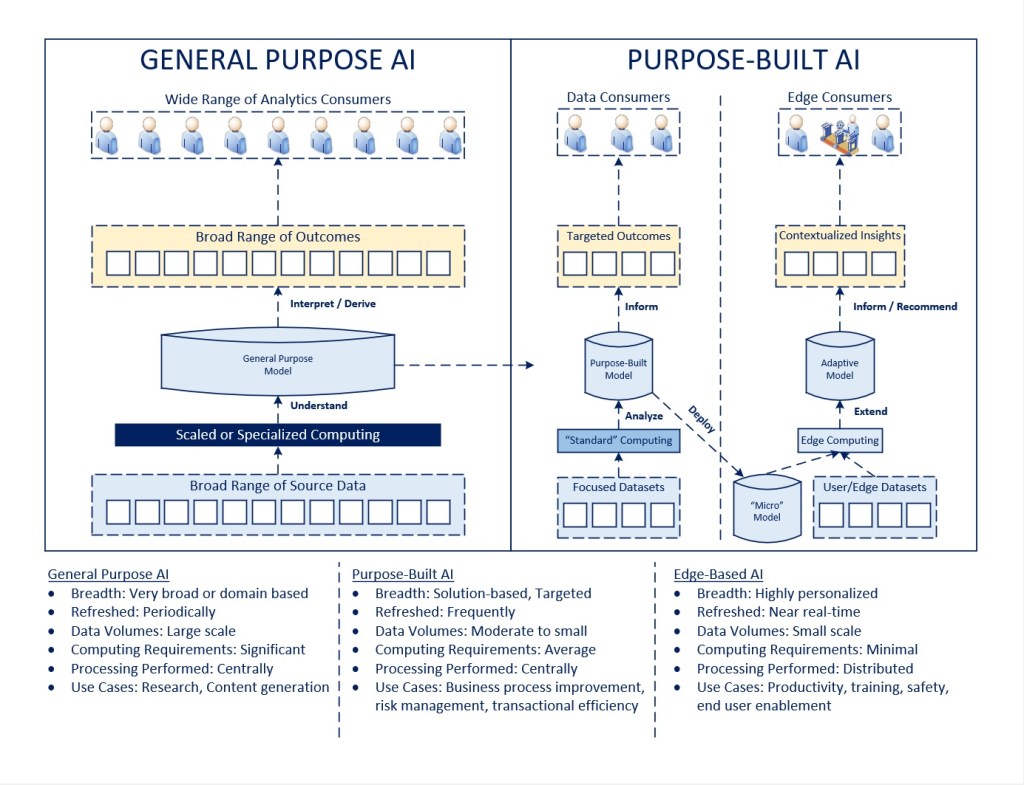
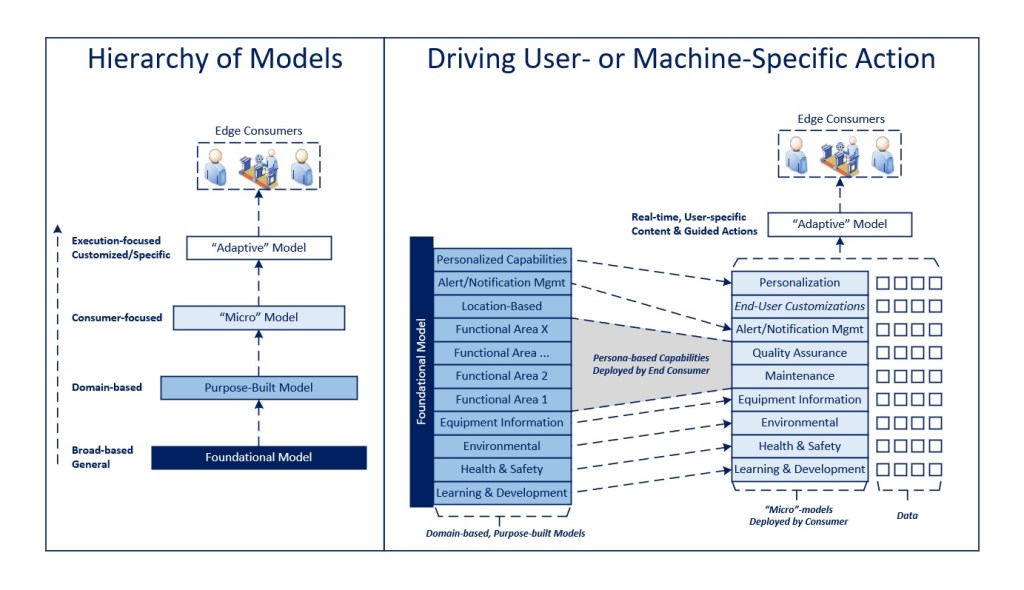

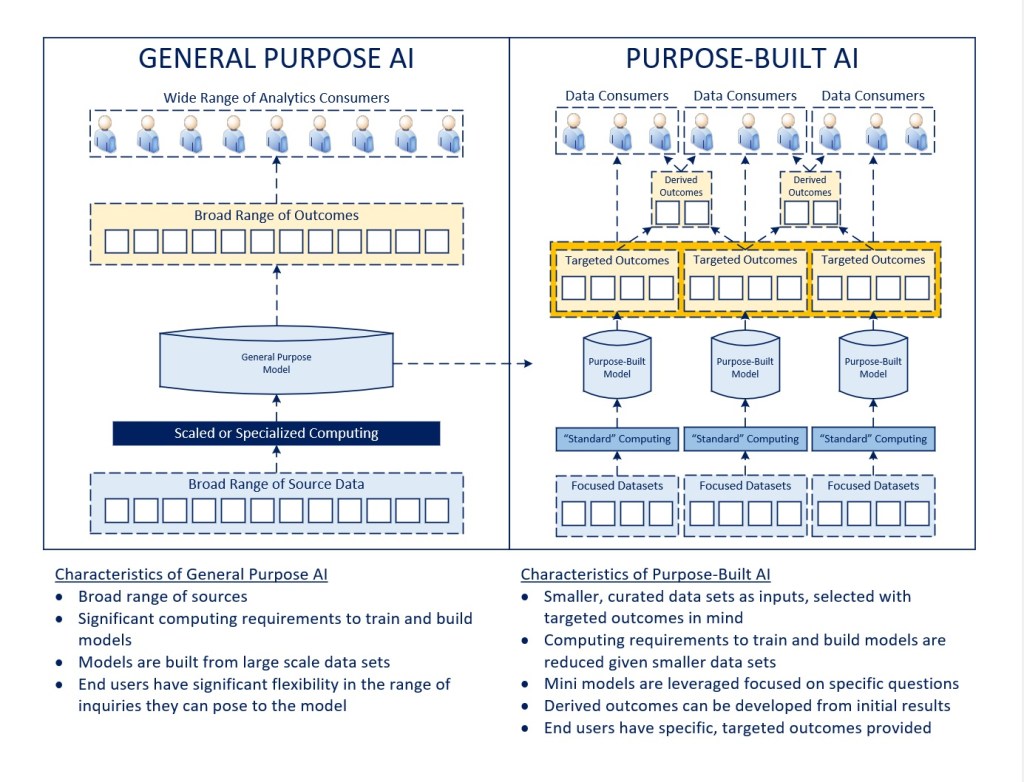

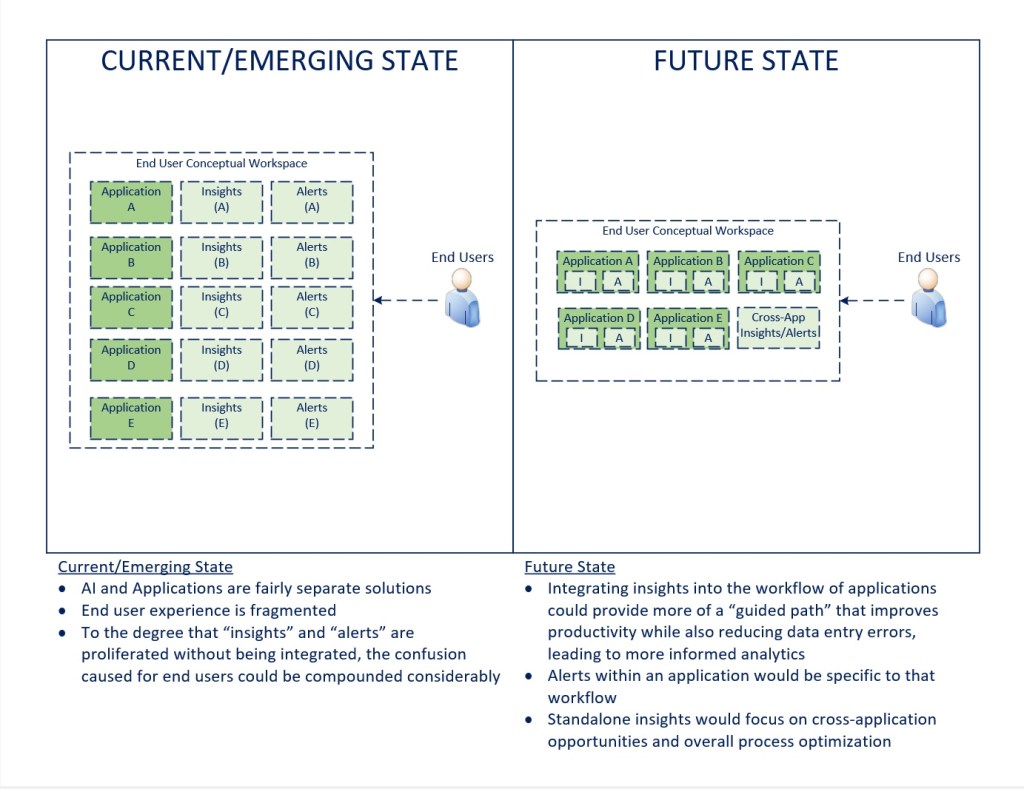



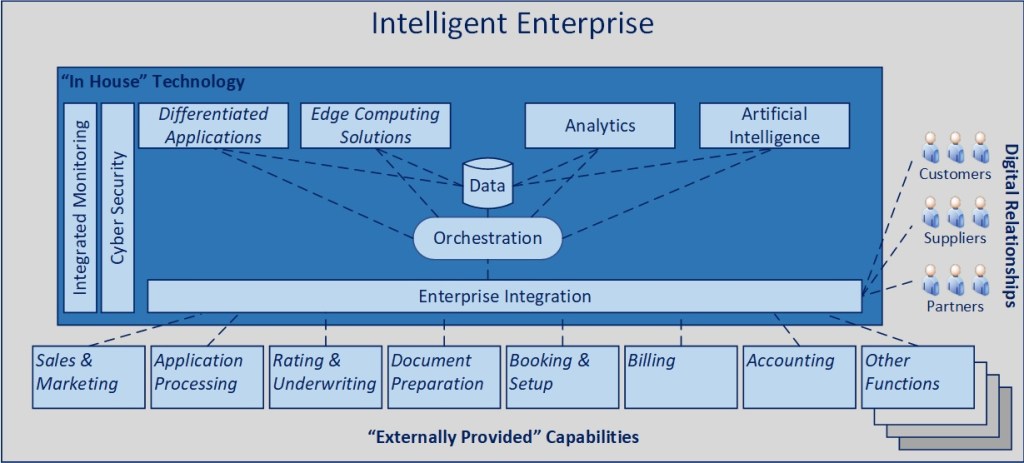


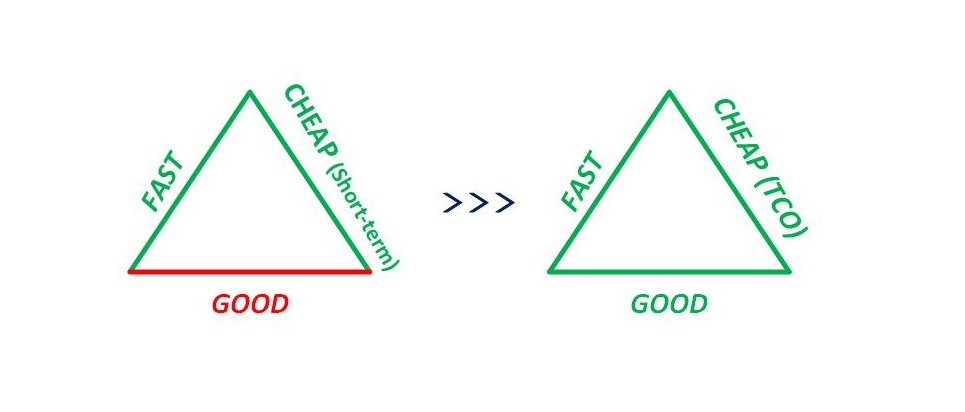
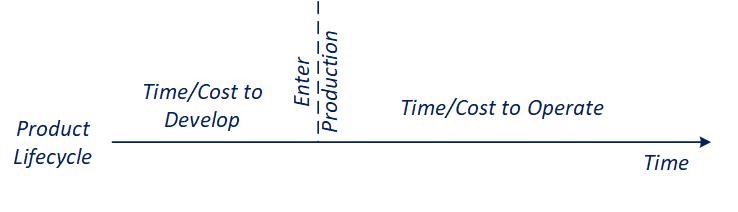
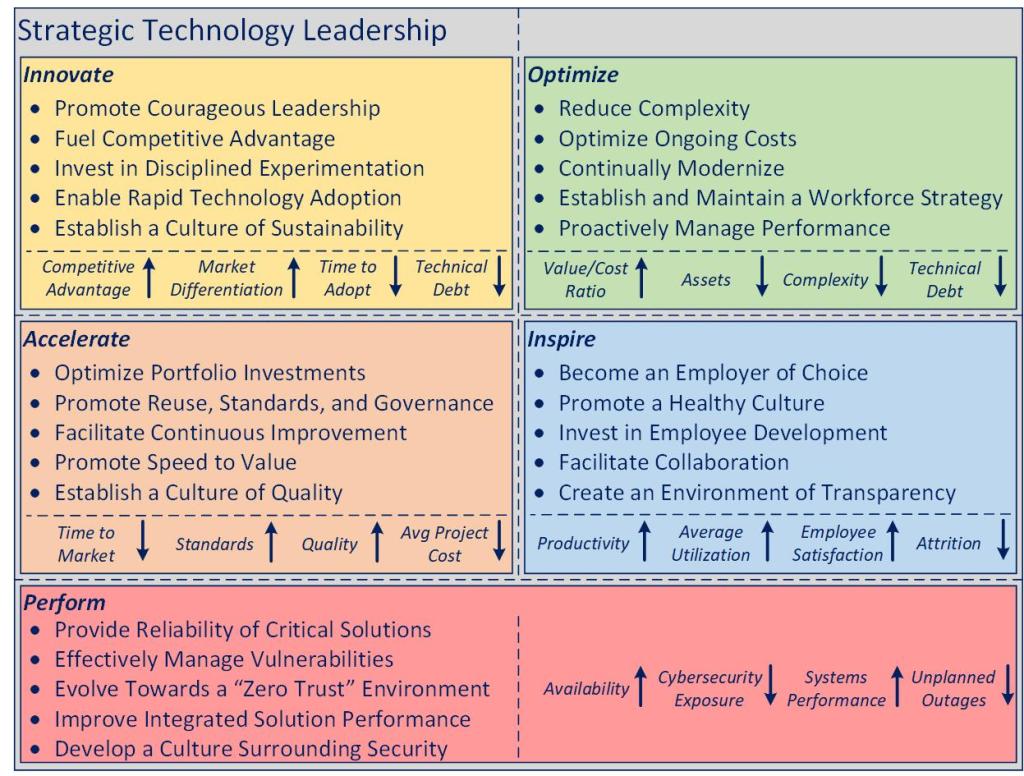


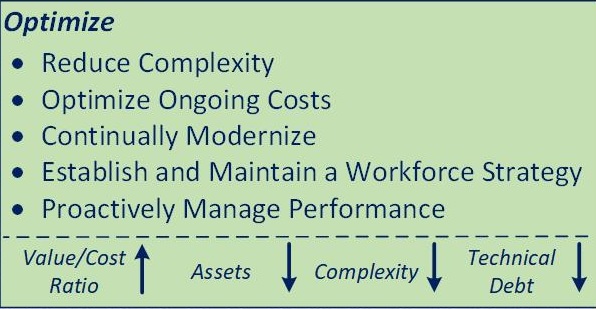
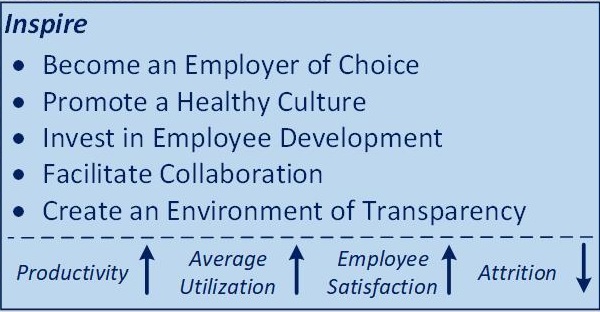
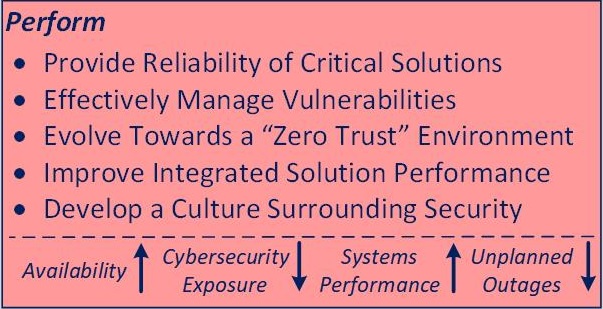
 Organized Chaos